


A Cosmic Game of Spot the Difference
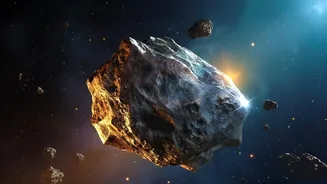
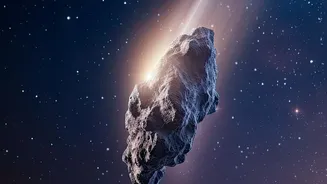
The first line of defense in tracking near-Earth objects (NEOs)—a category that includes asteroids and comets—is a network of powerful ground-based telescopes. Surveys like the Catalina Sky Survey in Arizona and Pan-STARRS in Hawaii act like a celestial
neighborhood watch. These robotic telescopes repeatedly scan large portions of the night sky, taking a series of images minutes apart. Sophisticated software then compares these pictures, searching for tiny points of light that have moved against the fixed background of stars and galaxies. Any moving object is a potential NEO. Once a candidate is flagged, its position is sent to the Minor Planet Center, a global clearinghouse for asteroid data, so other observatories can perform follow-up observations to confirm its path.
The View from Above: Space Telescopes
Ground-based telescopes have a blind spot: the daytime sky. They can't easily spot asteroids approaching from the direction of the Sun. That's where space-based observatories come in. Telescopes in orbit, like NASA’s NEOWISE mission, have played a crucial role in finding hundreds of previously unknown objects. These telescopes often hunt in the infrared spectrum. Many asteroids are as dark as charcoal and reflect very little sunlight, making them nearly invisible to optical telescopes on Earth. However, as they are heated by the Sun, they glow in infrared light, making them stand out. A new generation of asteroid hunters is on its way, including the NEO Surveyor space telescope, slated to launch around 2027. It is specifically designed to find and characterize the majority of potentially hazardous objects.
Listening for Echoes with Radar
Once an object is found and its general path is known, another powerful tool takes over: radar astronomy. Giant radio antennas, like those at NASA's Goldstone Solar System Radar in California, can send powerful radio beams toward a passing asteroid and analyze the returning echoes. This technique is incredibly precise. While optical telescopes can tell us where an asteroid is in the sky, radar tells us its exact distance, speed, size, and even its shape and rotation. This detailed information is vital for accurately predicting an asteroid's future trajectory and determining if it poses any threat to Earth. In some cases, radar imaging is so detailed that it can produce 3D models of the asteroid's surface.
When the Light Goes Out: Tracking Meteors
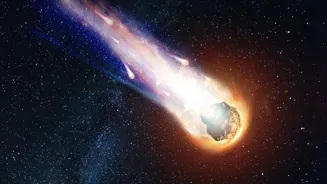
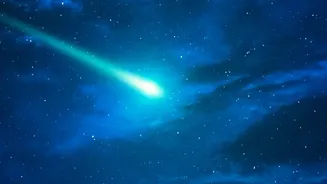
While large telescopes track asteroids far out in space, a different set of tools focuses on the smaller objects that enter our atmosphere as meteors. Networks of all-sky cameras, like NASA's All Sky Fireball Network, are positioned to capture the bright streaks of fireballs. By triangulating data from multiple cameras, scientists can determine a meteor's trajectory and speed. Even weather radar plays a role. After a meteor burns out and stops glowing—a phase called 'dark flight'—the falling meteorite fragments can still be detected by sensitive weather radar systems, which normally track rain and storms. This helps scientists create a 'strewn field' map, guiding meteorite hunters to the landing site so these valuable space samples can be recovered for study.
The Backyard Astronomer Army
Professional observatories don't do all the work alone. Amateur astronomers play a crucial role in planetary defense. While large surveys discover the majority of new asteroids, the global community of skilled amateurs provides essential follow-up observations. Using their own telescopes, often from their backyards, they help confirm the orbits of newly discovered objects, ensuring they aren't 'lost' before their paths can be properly calculated. This allows the large professional telescopes to continue their primary mission of scanning for new threats. In some cases, dedicated amateurs with sophisticated setups even discover new asteroids and comets themselves, contributing directly to the growing catalogue of known celestial objects.