




A Historic Mission into the Unknown
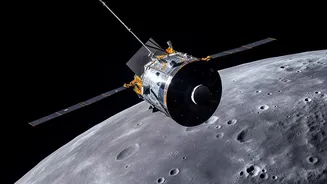
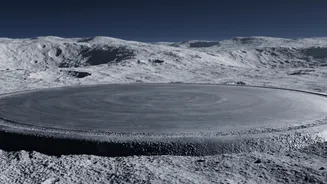
The key to unlocking this lunar mystery arrived in 2024, courtesy of China's Chang'e-6 mission. In a landmark achievement for space exploration, the robotic lander touched down in the vast South Pole-Aitken basin, the oldest and largest impact crater
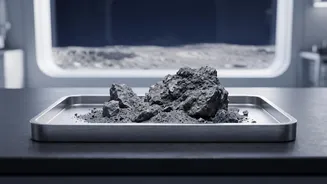
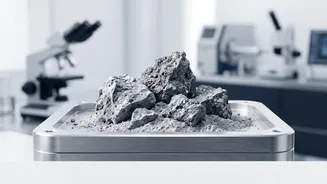
on the Moon. For decades, our understanding of lunar geology was based entirely on samples from the near side, collected by the Apollo and other missions. Chang'e-6 made history by drilling and scooping up nearly two kilograms of rock and soil from the far side and returning it to Earth, offering scientists their first tangible pieces of this unexplored territory. This allowed for a direct, side-by-side comparison of the Moon's two hemispheres for the first time.
A Tale of Two Hemispheres
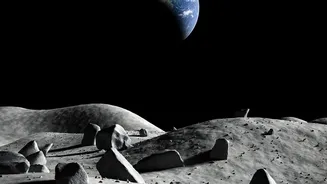
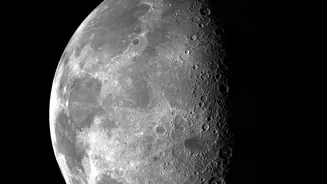
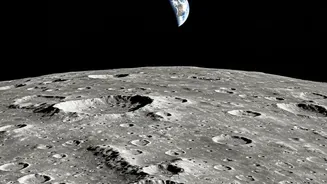
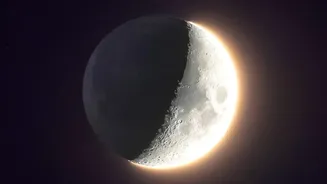
The visual difference is stark: the near side is characterized by vast, dark volcanic plains called 'mare', while the far side is a rugged, heavily cratered landscape with a much thicker crust. For years, a leading theory was that a massive impact or differences in the original magma ocean were responsible. However, the new rock analysis points to a more intricate story. Initial findings published in late 2026 reveal a crucial clue: the underlying mantle, the layer beneath the crust, appears to be chemically similar on both sides. This suggests the dramatic surface differences weren't caused by a deep, fundamental divide in the Moon's core makeup. The answer, it seems, lies closer to the surface.
The Earth's Gravitational Influence
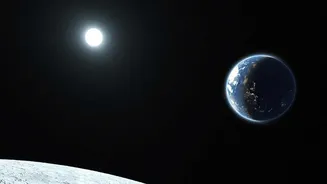
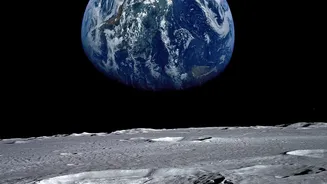
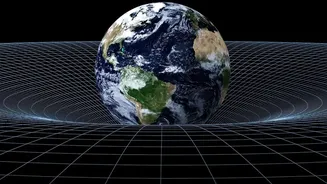
The latest research proposes a compelling model dating back to when the Moon was young and still a molten ocean of rock. Soon after its formation, the Moon became tidally locked, with one side permanently facing Earth. Our planet's powerful gravity exerted a stronger pull on the near side, creating 'tidal heating'. According to a model from researchers at Nanjing University, this uneven heat drove vast currents in the molten rock. These flows effectively pushed lighter, magnesium-rich crustal materials toward the far side, causing its crust to pile up and become thicker. Meanwhile, heavier elements, including heat-producing ones like potassium and thorium (collectively known as KREEP), became concentrated on the near side.
A Legacy of Ancient Volcanism
This concentration of radioactive, heat-producing elements on the near side had a lasting effect. It provided the thermal energy needed for widespread and long-lasting volcanic activity, creating the smooth lava plains we see today. The far side, having a thicker crust and fewer of these elements, had much less volcanic activity, leaving its ancient, cratered surface largely preserved. Analysis of the Chang'e-6 basalts—a type of volcanic rock—confirms this, showing that while volcanism did occur on the far side, the magmas were formed at cooler temperatures compared to their near-side counterparts. This evidence directly from the rocks provides the first physical proof supporting the theory of an ancient thermal imbalance.
Why This Discovery Matters
Solving the mystery of the Moon's two faces does more than satisfy our curiosity. It provides a fundamental new data point for understanding how rocky planets and their moons form and evolve throughout the galaxy. The process of tidal heating and material sorting could be a common feature for any tidally locked world, including many exoplanets. Furthermore, the physical properties of the far-side soil itself are proving different. Studies show the soil particles are more angular and jagged, creating a mechanically stronger ground. This is critical information that will directly influence the engineering and construction of future lunar bases, such as the planned International Lunar Research Station.