







More Than Just a Drink
When rain falls on parched land, it does far more than simply make the ground wet. It fundamentally transforms the soil's physical structure. Imagine trying to push a stick into dry, cracked clay. It’s difficult because the soil particles are locked together
in a hard, compacted mass. This is the challenge a tiny seed faces in dry ground. Water acts as a lubricant, allowing individual soil particles—sand, silt, and clay—to slide past one another. This process, known as slaking, breaks down large, hard clumps of earth into smaller, more pliable aggregates. The entire soil profile becomes looser, less dense, and more welcoming. This physical transformation is the very first reason why rainy soil offers a 'softer landing'.
The Physics of a Gentle Push
The term 'softer landing' is quite literal. Soil scientists measure hardness with a tool called a penetrometer, which essentially gauges the force needed to push through the soil. The resistance of dry, sun-baked soil can be incredibly high, creating a physical barrier that can prevent a seed's first root—the radicle—from successfully emerging and anchoring itself. A failed radicle means a failed plant. Rain drastically reduces this penetration resistance. The softened earth allows the delicate root to push through with minimal energy, directing the seed's precious stored resources towards upward growth instead of a brutal underground battle. It ensures the seedling can establish a strong foundation from which to draw water and nutrients, a critical first step for survival.
An All-Encompassing Embrace
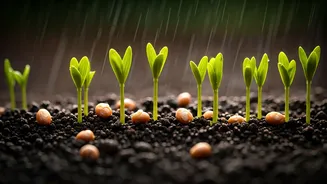
For a seed to germinate, it needs to absorb water through a process called imbibition. This requires direct, uninterrupted contact between the seed coat and moist soil particles. In dry, clumpy soil, a planted seed is often surrounded by air pockets. These gaps are like tiny deserts, preventing water from reaching the seed efficiently and evenly. Moist soil, however, is far more malleable. It settles snugly around the seed, eliminating air pockets and creating what agronomists call good 'seed-to-soil contact'. This intimate embrace ensures that the seed is completely enveloped in a moist environment, allowing water to be absorbed uniformly from all sides. This consistent hydration is the primary trigger that awakens the dormant embryo inside and kick-starts the entire growth process.
The Monsoon Sowing Advantage
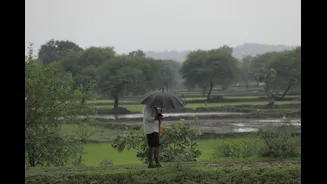
In the context of Indian agriculture, this principle is the cornerstone of kharif sowing. Farmers across the country eagerly await the onset of the monsoon to begin planting crops like rice, cotton, and soybean. Sowing into pre-moistened soil provides an immediate and crucial head start. The germination process begins instantly, without the seed having to wait for the next rainfall. This rapid start helps the young crop out-compete opportunistic weeds for sunlight, water, and nutrients. Furthermore, the cooler temperatures of moist soil are often more favourable for germination than the extreme heat of a dry topsoil layer. By timing their sowing with the first rains, farmers are leveraging nature's own tilling and irrigation system to give their crops the best possible chance of thriving through the growing season.
A Note on 'Too Much of a Good Thing'
While moist soil is ideal, saturated or waterlogged soil can be just as detrimental as dry soil. The wisdom lies in finding the right balance. Seeds, like all living organisms, need to breathe. The germination process requires oxygen for respiration, which provides the energy for growth. When soil is completely saturated with water, the air pockets that normally hold oxygen are filled. This anoxic environment can suffocate the seed, preventing it from germinating or causing it to rot. This is why good drainage is crucial. The ideal condition is a soil that feels like a wrung-out sponge: moist enough to provide water and be pliable, but with enough air-filled pore space for the seed to breathe. The perfect landing, it turns out, is not just soft, but also breathable.