



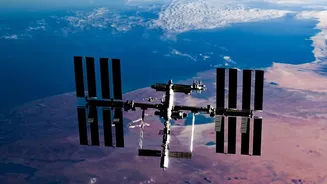
A New Frontier: The Bharatiya Antariksha Station
India is embarking on one of its most ambitious scientific projects yet: the construction of the Bharatiya Antariksha Station (BAS). Following the successes of the Chandrayaan and Gaganyaan programmes, ISRO has been directed to establish a permanent orbital
outpost. ISRO Chairman Dr. V. Narayanan confirmed that the goal is to have the station operational by 2035, with the first module, BAS-01, targeted for launch by 2028. This modular station, weighing around 52 tonnes, will orbit at an altitude of approximately 400-450 kilometres and will be designed to host astronauts for missions lasting three to six months, marking India's transition from short-duration space flights to a sustained human presence in orbit.
The Scientific Imperative: A Laboratory in the Sky
A space station is, first and foremost, a unique laboratory. The microgravity environment allows for research impossible to conduct on Earth. For India, the BAS will be a hub for breakthroughs in fields like medicine, materials science, and biotechnology. Scientists can study the long-term effects of space on the human body, critical for future deep-space missions. They can also grow protein crystals for drug development or create novel metal alloys that can only be forged in zero-G. The station will serve as a platform for testing new technologies, from advanced life support systems to robotics, fostering innovation that can have applications back on Earth.
Strategic Clout and Global Standing
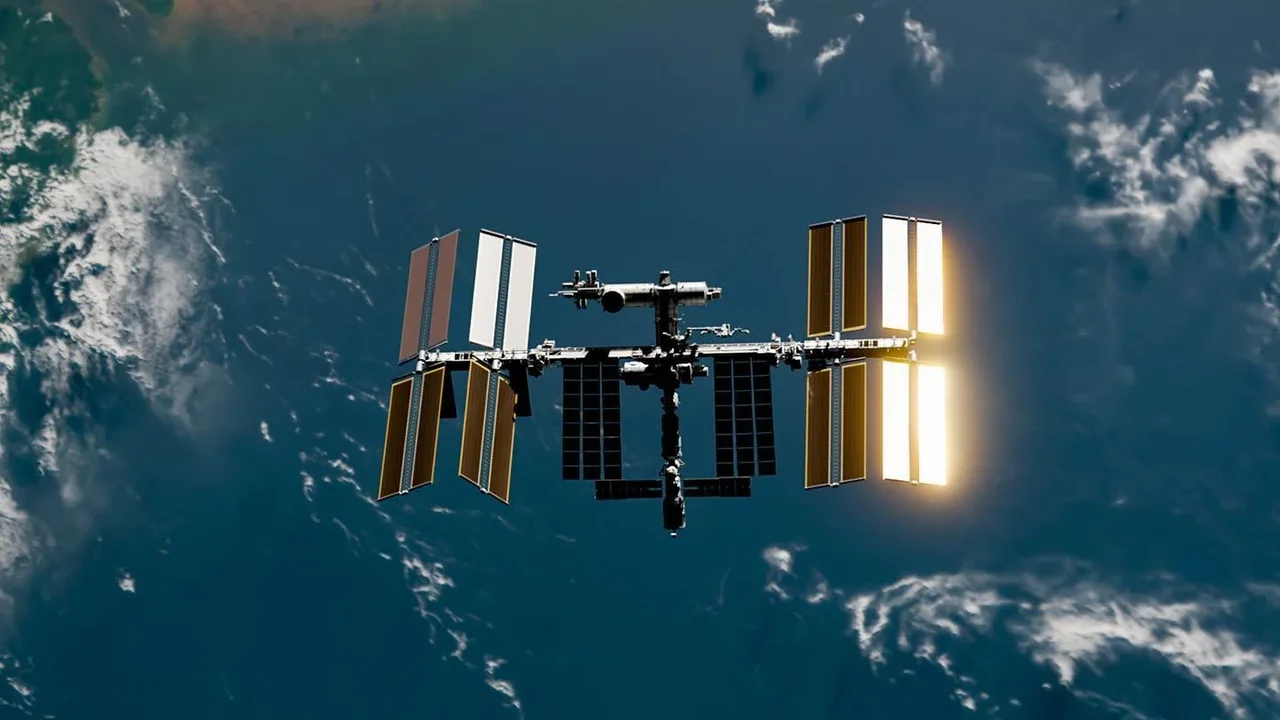
Operating a space station is a capability held by only a handful of nations. By joining this exclusive club, India significantly enhances its geopolitical stature and strategic autonomy. With the International Space Station (ISS) nearing retirement, the orbital landscape is changing. Having its own station means India won't be dependent on other nations for access to space for long-duration missions. It would give India control over its research priorities, launch schedules, and crew access. Furthermore, the BAS would become a powerful tool for space diplomacy, allowing India to offer training, host experiments for other countries, and forge new international partnerships for future missions to the Moon and beyond.
Powering a New Space Economy
The Bharatiya Antariksha Station is also an economic catalyst. The project will drive growth in India's high-tech manufacturing sector and create new opportunities for private industry. Building and sustaining a space station requires a vast ecosystem of suppliers for everything from launch services and electronics to robotics and life support. It will spur the development of indigenous technologies and encourage startups to innovate. In the long term, the station could support emerging commercial activities like in-space manufacturing, satellite servicing, and even space tourism, solidifying India's position in the burgeoning global space economy.
The Bridge to the Moon and Beyond
The BAS isn't just an end goal; it's a critical stepping stone. India has set its sights on sending an astronaut to the Moon by 2040, and the space station is the perfect training ground for that monumental task. Operating the BAS will allow ISRO to master the complex technologies and procedures required for long-duration human spaceflight far from Earth. This includes perfecting rendezvous and docking manoeuvres, managing life support systems over extended periods, and understanding how to keep astronauts healthy and productive. The lessons learned aboard the Bharatiya Antariksha Station will be invaluable for the success of future interplanetary missions.