





The City That Never Cools
In theory, rain should be nature’s air conditioner. The process of evaporation cools surfaces, and a good downpour lowers ambient air temperatures. For generations, the arrival of the monsoon has been synonymous with a break from the intense pre-monsoon
heat. However, our lived experience in cities like Delhi, Mumbai, and Ahmedabad tells a different story. The relief is often fleeting, replaced by a sticky, oppressive humidity that can feel just as uncomfortable. Recent studies confirm this is not just a feeling; it's a measurable phenomenon. The very fabric of our cities is working against the monsoon's cooling potential.
Understanding the Urban Heat Island
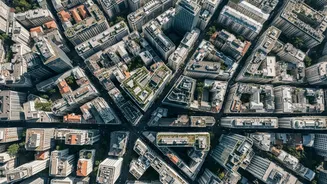
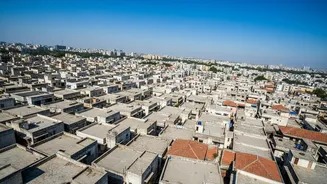
The core of the problem lies in the 'Urban Heat Island' (UHI) effect. Cities are fundamentally different from rural landscapes. Where villages have soil, grass, and trees, cities have asphalt, concrete, and steel. These man-made materials are excellent at absorbing and storing solar radiation during the day. While natural landscapes use processes like transpiration from plants to release moisture and cool the air, urban surfaces just get hotter. At night, rural areas cool down quickly, but the heat baked into a city's buildings and roads radiates slowly back into the atmosphere, keeping temperatures several degrees warmer than in surrounding areas.
Why the Monsoon Fights a Losing Battle
When monsoon rain hits a hot city, it’s up against an enormous thermal reservoir. A brief shower might cool the surface of an asphalt road, but it does little to extract the vast amount of heat stored within the material. The road quickly reheats from below. Furthermore, the lack of permeable surfaces means that rainwater doesn't soak into the ground where it can provide sustained cooling through soil moisture. Instead, it hits impervious concrete and rushes into storm drains, taking its cooling potential with it. This means the cooling effect is superficial and temporary.
Trading Dry Heat for Humid Misery
Perhaps the most significant finding from recent research is the impact of post-rain humidity. While a shower may lower the thermometer reading, the moisture it leaves behind evaporates into the now slightly cooler, but still warm, urban air. This dramatically increases the relative humidity. The combination of high heat and high humidity creates what is known as 'uncompensable heat stress' (UHS). Under these conditions, the human body's primary cooling mechanism—sweating—becomes ineffective because the air is already saturated with moisture. A recent study highlighted that dangerously humid days in cities like Delhi and Ahmedabad have significantly increased over the past few decades, turning the monsoon season into a new period of heat-related health risks.
A Call for Smarter Cities
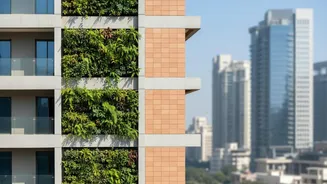
The evidence is clear: we cannot simply wait for the monsoon to solve our urban heat problems. The challenge requires a fundamental rethinking of how we design our cities. Studies point towards clear, actionable solutions. Expanding green cover through parks, roadside trees, and green roofs provides shade and cooling through evapotranspiration. Using 'cool pavements' and reflective roofing materials can reduce how much heat our cities absorb in the first place. Experiments in cities like Bhopal are already showing that a combination of these 'smart surfaces' can lower peak summer temperatures by up to 3°C, offering a more sustainable path to climate resilience than relying solely on energy-guzzling air conditioners.