



A Policy Shift Opens the Skies
For decades, the Indian Space Research Organisation (ISRO) was the sole custodian of India's space aspirations. It built a world-class program known for its cost-effective and reliable missions. However, in a landmark move in June 2020, the Indian government
opened the space sector to private enterprise, marking a monumental shift from a government-led model to a collaborative public-private ecosystem. This reform was designed to unlock the immense potential of the country's innovators and entrepreneurs. To facilitate this, the Indian National Space Promotion and Authorisation Centre (IN-SPACe) was established. Functioning as a single-window agency, IN-SPACe is responsible for promoting, authorising, and supervising the activities of private space companies, often referred to as Non-Governmental Entities (NGEs). This move has democratised space, allowing startups to not just supply components but to design, build, and operate their own end-to-end space missions.
The Trailblazers: Launching a New Era
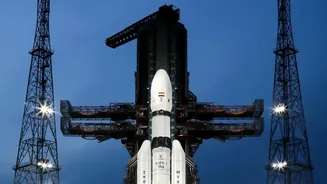
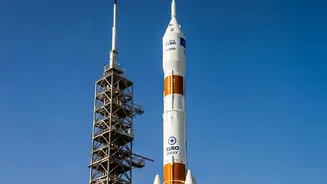
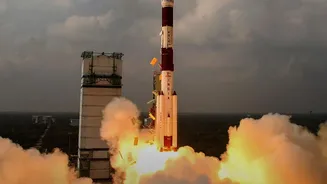
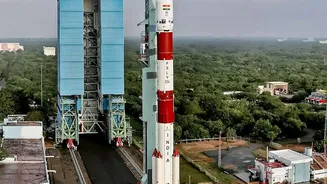
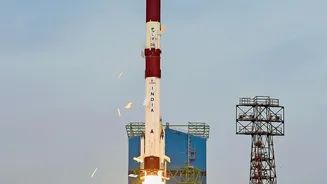
The new policies quickly bore fruit, with several startups making headlines. Hyderabad-based Skyroot Aerospace became a pioneer in November 2022 with the launch of Vikram-S, India's first privately developed rocket. This suborbital flight, named 'Prarambh' (The Beginning), was a crucial technology demonstrator that paved the way for more ambitious projects. More recently, in July 2026, Skyroot achieved another historic milestone with the successful orbital launch of its Vikram-I rocket, making India one of the few countries with a private orbital launch capability. Another key player, Agnikul Cosmos, incubated at IIT Madras, captured attention with its Agnibaan SOrTeD (SubOrbital Technological Demonstrator) mission in May 2024. The mission was remarkable for several firsts: it was a launch from India's first private launchpad, and it featured the world's first single-piece 3D-printed, semi-cryogenic rocket engine, the Agnilet. These achievements demonstrate the incredible pace of innovation happening outside the traditional confines of government agencies.
More Than Just Rockets: The Satellite Revolution
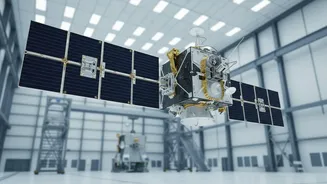
The private space boom isn't limited to launch vehicles. Bengaluru-based Pixxel is focused on building a constellation of the world's highest-resolution hyperspectral imaging satellites. Unlike standard satellites, hyperspectral technology captures data across hundreds of spectral bands, offering incredibly detailed insights into everything from crop health and mineral deposits to environmental pollution and climate change. With its 'Firefly' satellites successfully in orbit and beaming back data, Pixxel is building what it calls a 'health monitor for the planet'. The company has already secured funding and contracts, including one with the U.S. National Reconnaissance Office, highlighting the global competitiveness of India's space startups. This focus on satellite applications and data analytics represents a huge part of the growing space economy, with services expected to account for the largest share of revenue.
The Road to a $40 Billion Industry
The rapid emergence of these startups is not just a matter of national pride; it's a significant economic opportunity. India's space economy, currently valued at around $8-9 billion, is projected to soar to over $40 billion within the next decade. This growth is driven by the burgeoning ecosystem of over 400 space startups and supportive government policies that encourage private investment and innovation. ISRO has embraced a new role as a mentor and facilitator, providing private companies with access to its world-class testing facilities, technical expertise, and infrastructure. This symbiotic relationship allows ISRO to focus on advanced research and deep space exploration while private players drive commercialisation and build a vibrant domestic industry. The goal is to make India a global hub for space activities, from manufacturing satellites to providing launch services and data analytics.