







A Gleam of Mystery on the Red Planet
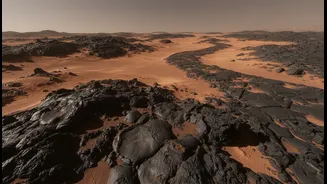
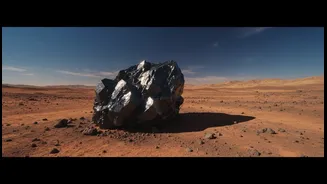
For years, NASA's rovers, from Curiosity to Perseverance, have sent back images that spark public imagination: small, shiny objects that look distinctly metallic against the dusty terrain. These objects have been nicknamed everything from a 'hood ornament'
to 'Little Colonsay'. Each time, speculation runs wild. Are these alien artefacts or chunks of precious metal? Scientists are quick to investigate, not for signs of an ancient Martian civilization, but because these glimmering surfaces hold valuable clues about the planet’s environment and history. While some shiny objects have turned out to be pieces of the rover's own debris from landing, many are naturally occurring rocks that have developed a peculiar, eye-catching sheen.
The Three Ingredients of Martian Shine
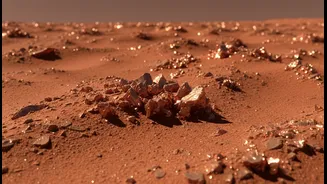
The metallic illusion isn't caused by one single factor, but a combination of three key elements mentioned right in the headline: minerals, texture, and light. The first ingredient is the rock’s composition. Martian rocks are often hard and have a fine grain. This includes materials like iron oxides, which are abundant on the planet and contribute to its reddish hue. The second crucial element is texture. Mars is an incredibly windy planet. Over millions of years, fine sand and dust particles carried by the wind act like a natural sandblaster, polishing the surfaces of hard, fine-grained rocks. This process, known as creating 'ventifacts', smooths the rock surface to a high polish, similar to how rocks are polished in the gusty, dry plains of Antarctica on Earth.
It's All in the Reflection
The final piece of the puzzle is light. When sunlight hits these smooth, polished surfaces at just the right angle, it creates what is known as a specular reflection—a mirror-like reflection of light from one direction. This is the same phenomenon that causes a glint off a calm lake or a piece of polished glass. The rover’s cameras capture this concentrated reflection, which the human eye interprets as a metallic shine. The effect is enhanced because the surrounding surfaces are rough and dusty, scattering light in all directions and appearing dull by comparison. The shiny spot is essentially a natural mirror, made not of metal, but of wind-polished rock.
Beyond the Shine: What This Tells Us
While not treasure, these shiny rocks are a scientific prize. Their existence provides tangible proof of Mars's powerful erosional forces and long-term weather patterns. Furthermore, the specific minerals involved can tell a deeper story. For example, the recent discovery of rocks with a distinct purple coating in Jezero Crater points to the past interaction of water with the minerals. These coatings, rich in hydrogen and iron oxides, likely formed in an ancient lakebed, preserving a chemical snapshot of Mars's watery past. Other discoveries, like opaline silica, extend the timeline for when liquid water was present on Mars, pushing it a billion years later than previously thought and expanding the window for when the planet could have been habitable.