


What Is a Lunar-Venus Close Approach?
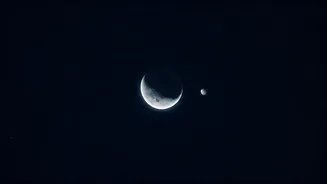
In astronomy, this beautiful event is called a conjunction or an appulse. It happens when two celestial bodies appear to pass very near each other in the sky from our perspective on Earth. Tonight, it’s the turn of our Moon and the dazzling planet Venus.
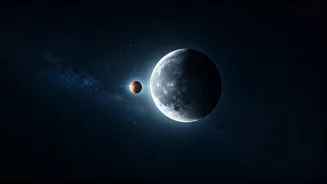
While they look like cosmic neighbours, they are actually millions of kilometres apart. The Moon is our closest celestial companion, about 384,400 kilometres away, while Venus is currently over 100 million kilometres from us. This stunning visual is an illusion of perspective, a perfect alignment along our line of sight that makes for a breathtaking spectacle.
Your Viewing Guide for Tonight
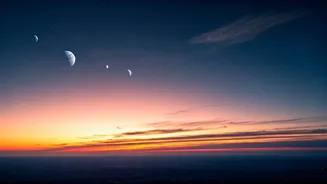
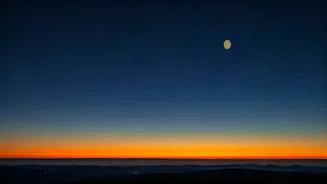
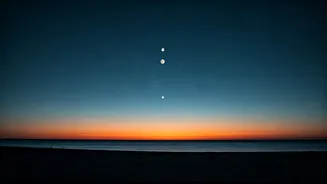
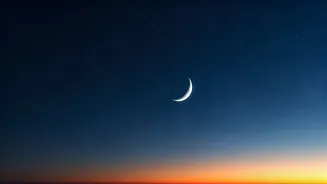
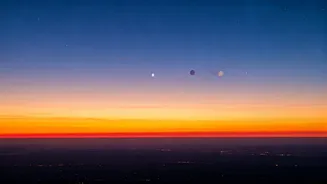
The best part about this event is its accessibility. You don’t need to be an astronomer or stay up all night. The show begins shortly after the sun goes down. Find a spot with a clear view of the western horizon, away from tall buildings or trees if possible. As the twilight sky deepens, you will easily spot a slender crescent Moon. Right next to it, you’ll see an intensely bright, unwavering point of light. That’s not a star—that’s the planet Venus. Often called the 'Evening Star,' Venus will outshine every other star in the sky, making this pair impossible to miss. The peak viewing time will be in the first couple of hours after sunset before the pair dips below the horizon.
No Telescope? No Problem
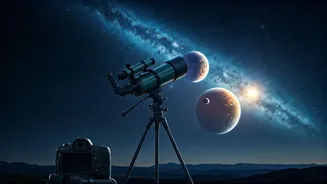
This celestial dance is a naked-eye event, meaning you don't need any special equipment. In fact, the wide view offered by just your eyes is perfect for appreciating the beauty of the pairing against the backdrop of the darkening sky. If you have a pair of binoculars, however, now is a great time to use them. Pointing them at the Moon will reveal stunning details along the terminator—the line between its light and dark sides—where craters and mountains are cast in sharp relief. A look at Venus through binoculars will confirm it’s not a twinkling star but a steady, brilliant orb. But even without them, the sight of these two celestial giants hanging together is a memory in the making.
The Science Behind the Spectacle
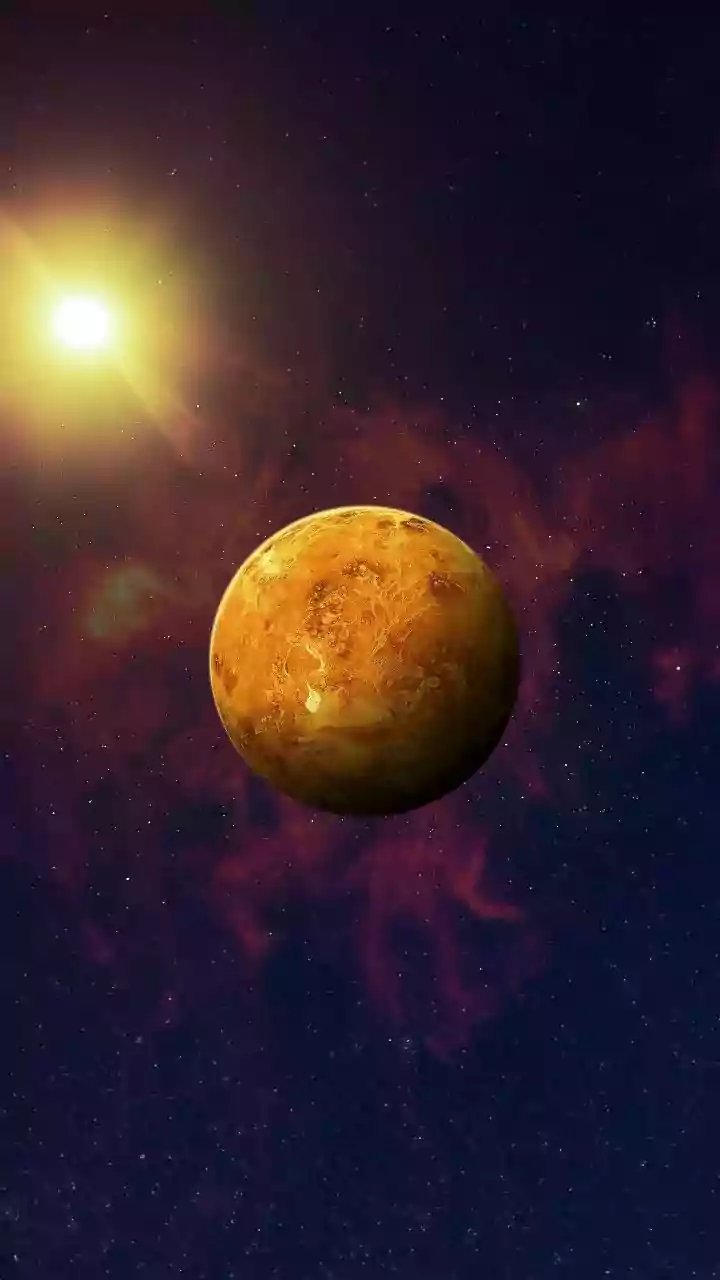
Why is Venus so bright? It's all about its atmosphere. Venus is shrouded in thick clouds of sulphuric acid that are incredibly reflective. These clouds bounce a huge amount of sunlight back into space, making Venus the third brightest object in our sky after the Sun and the Moon. Its brightness is what makes its conjunctions with the Moon so dramatic. As both the Moon and Venus orbit the Sun (and the Moon orbits Earth), their positions in our sky constantly change. Occasionally, their orbital paths cause them to align from our viewpoint, creating these beautiful, temporary pairings. These events aren't astronomically rare, but each one is a unique and captivating moment worth savouring.
How to Capture the Moment
You might be tempted to pull out your smartphone, and you should! While professional astrophotography is a complex skill, you can still get a decent memento of the event. Don't use your flash. Find a way to steady your phone—lean it against something or use a small tripod. Instead of just pointing and shooting, tap your screen on the Moon to set the focus and exposure. This will prevent the bright Moon from blowing out the details and will help capture it more clearly. Venus will appear as a bright dot nearby. Don't worry if the photo doesn't look as good as the real thing; the primary goal is to witness the event with your own eyes.