






The Old Rule: Go Small or Go Home
For decades, the standard advice for decorating a compact apartment or a small house was deceptively simple: buy tiny furniture. The logic seemed sound—smaller pieces should take up less floor space, theoretically making the room feel bigger. This led
to a generation of dollhouse-like living rooms with undersized sofas, miniature coffee tables, and chairs that looked like they belonged in a waiting room. The goal was to cram as much function into the room as possible by shrinking each individual item. Homeowners would hunt for the narrowest armchair or the smallest possible dining set, believing that preserving every square inch of open floor was the ultimate victory in small-space living.
The Problem with Pint-Sized Pieces
The trouble with a room full of tiny furniture is that it often backfires, both aesthetically and functionally. Instead of creating a sense of openness, a collection of small, disconnected items can result in visual clutter. The eye jumps from one small object to the next, making the space feel busy and fragmented rather than calm and cohesive. Furthermore, tiny furniture is often a compromise on comfort. A two-seater sofa that no one can comfortably lounge on or a coffee table that can't hold more than a book and a cup of tea doesn't truly serve its purpose. This approach solves the issue of space on paper but often fails the test of real-world livability, leaving residents with a room that feels both cramped and impractical.
The New Wisdom: Demand More From Your Furniture
Enter the era of multifunctional or double-duty furniture. Current design philosophy champions a new approach: instead of more, smaller things, opt for fewer, smarter things. A recent survey found that a majority of homeowners now prioritize furniture that solves more than one problem. This isn't about size alone, but about intelligence. A double-duty piece earns its footprint by serving multiple needs, thereby reducing the total number of items required in a room. This shift is moving design away from simply tricking the eye with mirrors and all-white palettes and toward making compact rooms feel intentional and highly functional. The focus is on curating a space with pieces that work hard, look good, and enhance your daily life.
Smarter, Not Smaller: Examples in Action
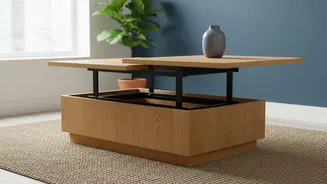
What does this look like in practice? It's the sleek, comfortable sofa that seamlessly folds out into a proper guest bed. It's the stylish ottoman in front of the couch that not only offers a place to put your feet up but also opens to reveal significant storage for blankets and magazines. Think of a coffee table that can be raised and expanded to become a dining table for four, or a console table behind a sofa that doubles as a slim work-from-home desk. Even bed frames are getting smarter, incorporating built-in drawers or hydraulic lifts that expose a massive storage area underneath. These pieces aren't necessarily tiny, but they are incredibly efficient.
Creating Calm and Cohesion
Counterintuitively, using a few larger, well-chosen multifunctional pieces can make a small room feel bigger and more serene. Where ten tiny items create visual chaos, three or four hardworking pieces create a sense of order and calm. A single, larger sofa with a storage ottoman feels more anchored and luxurious than a small loveseat, two tiny chairs, and a separate storage chest. This approach, often part of a 'warm minimalism' trend, allows each piece to breathe. By reducing the overall number of objects in a room, you declutter the space, which in turn helps your home feel more expansive, relaxing, and intentional.
An Investment in Versatility
While some double-duty furniture can have a higher initial price tag, it's often a wiser long-term investment. A single piece that serves two or three functions saves you from buying multiple separate items, which can ultimately be more expensive and take up more space. This furniture is also inherently more adaptable. A console that doubles as a desk can evolve with your needs, from an entryway table to a workspace and back again. This versatility is crucial in small homes where a room might need to be a living room by day, a dining room by evening, and a guest room on weekends. You're not just buying an object; you're investing in flexibility for the future.