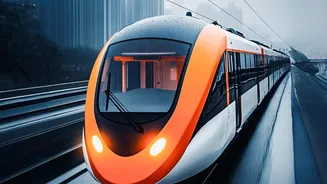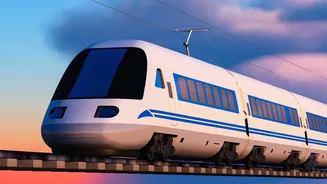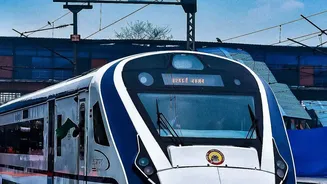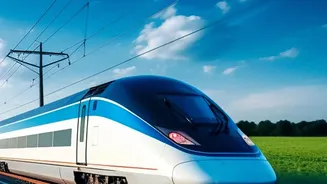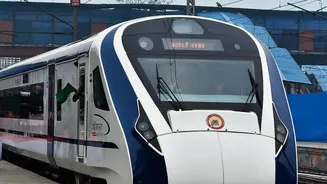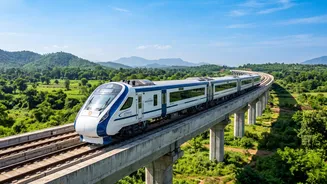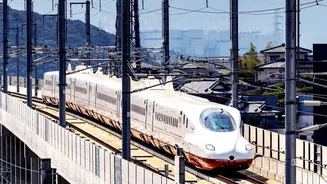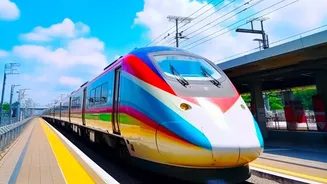



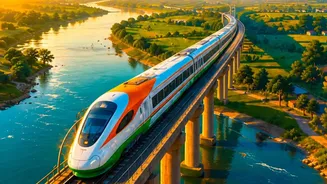

India's long-held ambition of joining the league of nations with high-speed rail is on the cusp of realisation. The first operational segment of the Mumbai-Ahmedabad bullet train corridor is officially on the horizon, promising a new era of travel.
The First Ride Is on the Map
The
first section of India's bullet train service is slated to begin operations in the last quarter of 2027, connecting the vibrant commercial hubs of Surat and Vapi in Gujarat. This priority section, spanning approximately 100 kilometres, is set to be the first piece of the larger 508-kilometre Mumbai-Ahmedabad High-Speed Rail (MAHSR) corridor to welcome passengers. The phased approach of opening ready sections first is a strategic decision to ensure that the benefits of the project are realised as soon as possible, even as construction continues on more complex stretches of the line. Recent progress has been tangible; in November 2026, a crucial 50-kilometre stretch between Surat and Bilimora had its overhead electrical equipment 'energised', a critical step signifying the section is ready for further testing. This milestone brings the 2027 target for passenger services firmly into view.
More Than Just Speed
The bullet train promises a paradigm shift in travel. With an operational speed of 320 km/h, the journey time between Mumbai and Ahmedabad is expected to plummet to just under two hours once the full corridor is active, a dramatic reduction from the current 8-9 hours by road. The technology underpinning this leap is based on Japan's renowned Shinkansen system, known for its exceptional safety and punctuality record. However, a significant 'Make in India' component is at the heart of the rolling stock. The first indigenous trainsets, designated B28, are being manufactured by a consortium including Integral Coach Factory (ICF) and BEML. These trains are engineered for speeds of up to 280 km/h, and their track trials are anticipated by mid-2027, aligning perfectly with the launch timeline for the first section.
An Economic Game Changer
The impact of the high-speed rail corridor extends far beyond reduced travel times. It is envisioned as a powerful economic catalyst for the entire region. By effectively bringing cities closer, the corridor is expected to boost commercial integration between major industrial centres like Mumbai, Surat, and Vapi. This enhanced connectivity can facilitate easier business travel, expand supply chains, and generate new employment opportunities. Experts anticipate significant urban development and real estate growth around the 12 stations planned along the route, with these transport hubs evolving into new commercial nodes with offices, hotels, and residential complexes. The construction phase itself has already created thousands of direct and indirect jobs, fostering skill development in advanced engineering and construction.
Overcoming Hurdles on a Historic Project
The journey to building India's first bullet train has been a monumental undertaking, marked by both remarkable engineering feats and significant challenges. The project's original timeline was impacted by delays, including complex land acquisition processes and the global pandemic. However, with all necessary land now acquired, construction has gained significant momentum. As of late 2026, substantial progress has been made on building viaducts, piers, and stations across Gujarat. The project involves incredible engineering, including the construction of India's first undersea rail tunnel beneath Thane Creek in Maharashtra. This 7-kilometre undersea section is part of a larger 21-kilometre tunnel being excavated by massive boring machines, each the height of a four-storey building.