





Moving Beyond the Clinical Look
Bathrooms, by necessity, are filled with smooth, hard, and water-resistant surfaces like porcelain and ceramic tile. While practical, this can create a space that feels more like a medical facility than a personal sanctuary. The key to counteracting this “clinical”
feel is to introduce elements that are visually and physically softer. This doesn't mean sacrificing hygiene or function. Instead, it’s about layering in materials and lighting that add warmth, depth, and personality, turning a purely utilitarian room into a place of comfort and relaxation.
Embrace Tactile Materials
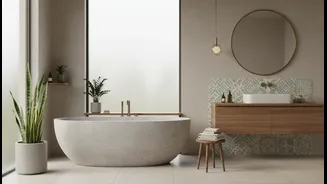
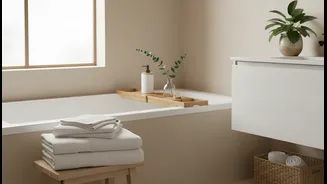
Texture is your most powerful tool for adding warmth. Start with the easiest additions: textiles. Swap out thin, worn towels for plush, deeply piled alternatives in an inviting colour. A high-quality, textured bath mat not only feels better underfoot but also adds a crucial soft element. Consider a fabric shower curtain over a plastic liner to immediately soften the room's look. Beyond textiles, think about introducing natural materials. A small wooden stool, a bamboo bath tray, or woven baskets for storage can break up the monotony of tile and porcelain, introducing an organic, spa-like feel. Even small accessories like a stone soap dish or a ceramic vase with a matte finish contribute to a richer, more layered environment.
Add Interest to Walls and Floors
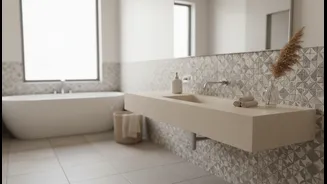
While you may not be ready for a full renovation, considering texture in your primary surfaces can make a huge impact. If you are updating, opt for tiles with a subtle texture or an irregular finish, such as Zellige or those with a matte surface. These catch the light in more interesting ways than high-gloss tiles. For walls, you don’t have to stick to plain paint. Modern, water-resistant wallpapers designed for bathrooms can add both pattern and a tactile quality. Textured paint finishes like limewash can also create a soft, dimensional effect that instantly elevates the space. Wood-look vinyl or porcelain tiles for the floor can offer the visual warmth of wood without the maintenance concerns in a wet environment.
The Magic of Layered Lighting
A single, harsh overhead light is often the main culprit behind a clinical-feeling bathroom. The solution is layered lighting, which involves using three types of light to create a functional and atmospheric space. Ambient light provides the room's general illumination, task lighting is focused on specific areas like the vanity, and accent light highlights decorative features. By combining these, you can create a scheme that is bright when you need it for grooming, but soft and relaxing for an evening soak. Installing dimmer switches is a crucial, relatively simple upgrade that gives you complete control over the mood.
Choose the Right Fixtures
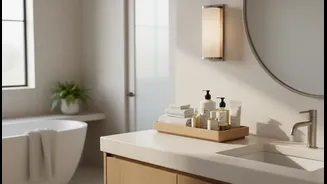
For your vanity, the best task lighting comes from fixtures placed on either side of the mirror at roughly eye level. This provides even, shadow-free light. If side sconces aren't possible, a fixture mounted above the mirror with a frosted shade can work, but side lighting is superior. Consider bulbs with a warm white tone (around 2700-3000K) to foster an inviting glow rather than a harsh, blue-white light. For accent lighting, consider adding LED strips under a floating vanity or behind a mirror. This creates a soft, modern glow that makes the room feel more luxurious. Even a small, stylish pendant light can add character and a warm focal point.
Finishing Touches and Greenery
Finally, bring some life into the space. A small plant that thrives in humidity, like a snake plant or bamboo, can instantly make a room feel more peaceful and inviting. The organic shape and colour provide a natural contrast to the hard lines of the bathroom. Don't underestimate the power of accessories with character. A mirror with a detailed wooden or hammered metal frame adds more personality than a simple, frameless one. Even updating your hardware, like tap fixtures or cabinet pulls, to a warmer metal like brass can add a subtle touch of warmth and texture.