




The Science of Reading Pollen
It might sound like something out of a detective novel, but the science of palynology—the study of pollen grains—is a powerful tool for looking back in time. Every plant produces pollen with a unique shape. When this pollen settles in lakes, it gets buried
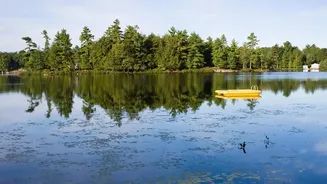
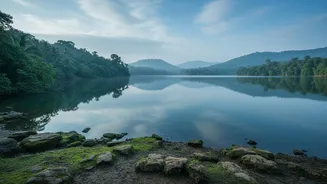
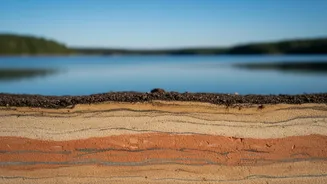
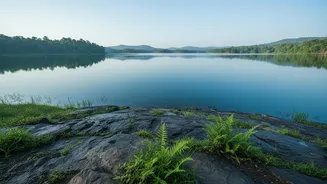
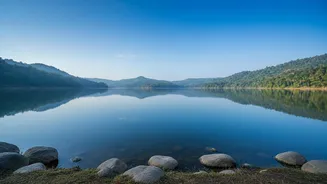
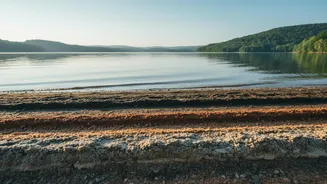
in layers of sediment. These layers act like a natural archive; the deeper you dig, the further back in time you go. Scientists from the Birbal Sahni Institute of Palaeosciences (BSIP) in Lucknow extracted a sediment core from Raja Rani Lake in Chhattisgarh’s Korba district. This 40-centimetre-long tube of mud holds a continuous record of the environmental changes in the region over the last two and a half millennia. By analysing the types of pollen in each layer, researchers can reconstruct what kind of vegetation was growing and, by extension, what the climate was like.
A Window into Chhattisgarh’s Past
The location of the study is crucial. Raja Rani Lake is situated right in the heart of India's Core Monsoon Zone (CMZ), an area where rainfall is overwhelmingly controlled by the Indian Summer Monsoon. This makes it a perfect spot to study the monsoon's historical behaviour. The BSIP scientists meticulously analysed the pollen preserved at different depths of the sediment core. For instance, an abundance of pollen from forest-loving plants indicates warm and humid conditions, suggesting a strong monsoon. In contrast, a higher concentration of pollen from grasses and herbs points to drier phases and a weaker monsoon. This technique allows for a detailed reconstruction of the region's hydro-climate variability, providing a year-by-year, century-by-century account of environmental shifts.
What the Ancient Grains Revealed
The study uncovered a particularly interesting period between roughly 1,060 and 1,725 CE, which corresponds with a global climate event known as the Medieval Climate Anomaly. During this time, the pollen record showed a clear dominance of moist, tropical deciduous forest species. This shift from a drier, savannah-like environment points to a period of unusually strong and intensified Indian Summer Monsoon rainfall. Essentially, the findings suggest that central India experienced a much stronger monsoon about a thousand years ago than previously believed. The researchers attribute this enhanced monsoon to a combination of factors, including La Niña-like conditions in the Pacific and increased solar activity, which together drove significant climate changes.
Why This Ancient History Matters Today
Understanding how the monsoon behaved in the past is not just an academic exercise. It has critical implications for India's present and future. The Indian Summer Monsoon delivers up to 90% of the country's annual rainfall, making it the lifeline for agriculture and water security for over a billion people. As the world grapples with modern climate change, predicting how the monsoon will behave becomes paramount. By generating high-resolution palaeoclimatic records like this one, scientists can develop and refine climate models. These improved models can help simulate future rainfall patterns with greater accuracy. This allows for better-informed policy planning around water resource management, agricultural strategies, and disaster preparedness in a changing climate.