
A Messenger from Another World
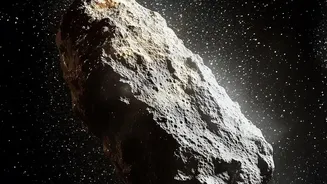
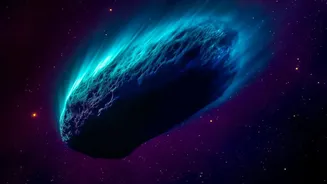
An interstellar object is exactly what it sounds like: a comet or asteroid that originated outside our solar system and is just passing through. For centuries, every celestial body astronomers studied was homegrown, formed from the same cloud of gas and dust
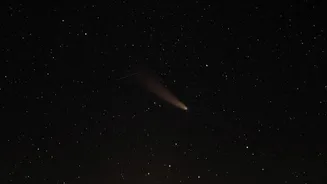
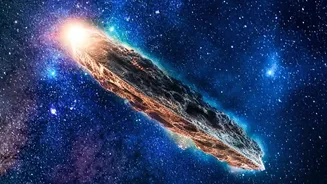
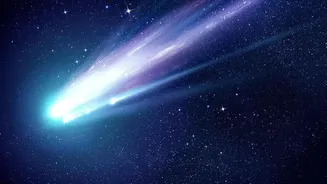
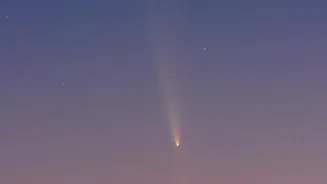
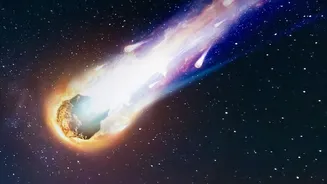
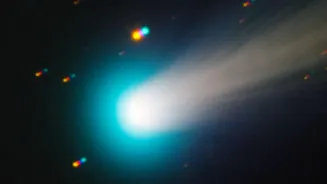
that created our Sun and planets. That changed in 2017 with the discovery of 1I/ʻOumuamua, a bizarre, cigar-shaped object that sped through our system on a trajectory that confirmed it came from far away. It was followed in 2019 by 2I/Borisov, which looked more like a traditional comet. Then, on July 1, 2025, the Asteroid Terrestrial-impact Last Alert System (ATLAS) survey spotted a third visitor: 3I/ATLAS. These objects are not just curiosities; they are physical samples from other planetary systems, delivered right to our cosmic doorstep. By studying them, we get a direct look at the building blocks of worlds orbiting distant stars.
What the First Visitors Revealed
The first two interstellar guests, ʻOumuamua and Borisov, were profoundly different from each other and from what we know in our own system. ʻOumuamua was baffling; it was highly elongated and showed no visible tail, or coma, yet it accelerated away from the Sun as if pushed by something. 2I/Borisov, on the other hand, was clearly a comet but had a chemical composition unlike any seen before. It contained a remarkably high concentration of carbon monoxide, suggesting it formed in a very different, likely much colder, environment than our own comets—perhaps around a cool red dwarf star. It was also one of the most pristine comets ever observed, meaning it likely never passed close to its own star, making it an undisturbed relic of its home system's formation. These differences are precisely what make them so exciting; they show that the chemistry of planet formation isn't the same everywhere.
The Scientific Goldmine of 3I/ATLAS
Discovered by the ATLAS survey in Chile, 3I/ATLAS provided astronomers with an unprecedented opportunity. Unlike its predecessors, it was detected relatively early in its journey through our inner solar system, allowing for a worldwide observation campaign using multiple telescopes, including the Hubble and James Webb Space Telescopes. These powerful instruments analyzed the gas and dust streaming from the comet as it was warmed by the Sun. Early findings have been stunning. Studies suggest 3I/ATLAS could be incredibly ancient, perhaps as old as 10 to 12 billion years, originating from a cold, metal-poor environment very different from our own. By studying its unique chemical fingerprint, astronomers are essentially performing archaeology on another solar system, piecing together the history of a place we can never visit.
The Great Sky Watch
Finding these fleeting visitors is incredibly difficult. They are small, dark, and move at blistering speeds. 3I/ATLAS, for instance, reached speeds of about 246,000 kilometers per hour at its closest approach to the Sun. The discoveries are thanks to sky survey projects like Pan-STARRS and ATLAS, which repeatedly scan the entire sky every night, looking for anything that moves. But the game is changing. The Vera C. Rubin Observatory, scheduled to begin its main survey in 2025, is expected to revolutionize this field. With its massive camera and ability to scan the entire sky every few nights, scientists anticipate it could find dozens of interstellar objects, turning these rare events into a regular stream of data. This will allow for population studies, moving from analyzing one-off oddities to understanding the diversity of small bodies across the galaxy.
Why the Watch Never Ends
Each new interstellar object is a new piece of a grand puzzle: How do planetary systems form and evolve? Are the ingredients for life common throughout the galaxy? 3I/ATLAS and its predecessors are not alien spaceships, but they are messengers carrying answers to these fundamental questions. They are time capsules from distant star systems, offering clues about environments that may be wildly different or surprisingly similar to our own. As our technology improves, we will find more of these travelers. Each one will be scrutinized for its shape, rotation, and chemical makeup, building a library of knowledge about our galactic neighborhood. That is why astronomers keep watching—because with every passing rock from another star, a new chapter of cosmic history is revealed.