








The Science of the Swell
The core of every hair strand is made of keratin proteins, held together by chemical bonds. Some of these are strong, permanent disulfide bonds that give your hair its shape (straight, wavy, or curly). Others are weaker, temporary hydrogen bonds. Herein
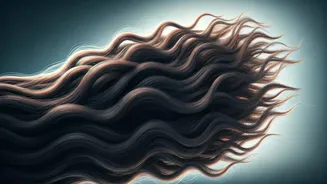
lies the problem. Water vapour in the humid air is rich in hydrogen. When it penetrates your hair, it forms new, temporary hydrogen bonds with the keratin. This causes the hair shaft to swell unevenly, bend into odd shapes, and disrupt its smooth structure. The result? A head full of frizz.
Understanding the Hair Cuticle
Think of your hair's outer layer, the cuticle, as a series of overlapping roof tiles. In healthy, smooth hair, these tiles lie flat, protecting the inner core and reflecting light, which makes hair look shiny. However, when your hair swells from absorbing moisture, these tiles are forced to lift and stand up. This creates a rough, uneven surface that doesn't reflect light well and feels coarse to the touch. This lifted, porous state is what we visually identify as frizz.
Why Some Hair Suffers More
While humidity affects all hair, it doesn't do so equally. The key factor is porosity. Hair that is dry, damaged, chemically treated (coloured or straightened), or naturally curly is more porous than healthy, straight hair. A more porous hair strand has more 'gaps' in its cuticle, making it much easier for moisture from the air to rush in. This is why people with curly hair often find the monsoon particularly challenging; their hair is naturally more porous and 'thirstier' for moisture, which it eagerly soaks up from the humid environment.
Start With Hydration
It might sound counterintuitive, but the first step to fighting frizz is to ensure your hair is well-hydrated. When your hair is already moisturised from the inside, it's less likely to try and absorb moisture from the air. Incorporate a weekly deep conditioning mask or hair masque into your routine. Look for ingredients like glycerine, hyaluronic acid, or natural butters like shea and cocoa. A well-moisturised strand is a stronger, more resilient strand.
Seal the Cuticle Shut
Once your hair is hydrated, the next step is to lock that moisture in and block environmental humidity out. This is where anti-frizz products come in. Serums, oils, and leave-in conditioners containing silicones (like dimethicone) or natural oils (like argan, coconut, or jojoba oil) are excellent for this. They form a protective, hydrophobic (water-repelling) barrier around the hair shaft, effectively sealing the cuticle and preventing humidity from getting in. Apply a small amount to damp hair, concentrating on the mid-lengths and ends.
Rethink Your Wash and Dry Routine
Harsh, sulphate-based shampoos can strip your hair of its natural oils, leaving it dry and more susceptible to frizz. Switch to a milder, sulphate-free cleanser, and never, ever skip conditioner. After washing, avoid rubbing your hair with a rough cotton towel, as this ruffles the cuticle. Instead, gently squeeze out excess water with a soft microfiber towel or an old t-shirt. If you use a hairdryer, always use a nozzle attachment and direct the airflow downwards along the hair shaft. This helps to smooth the cuticles flat.