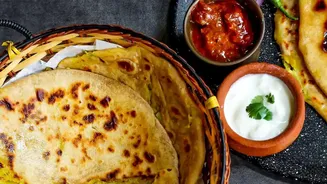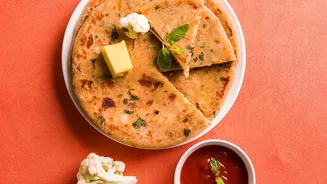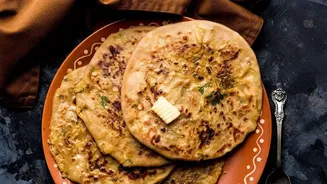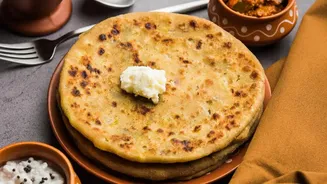

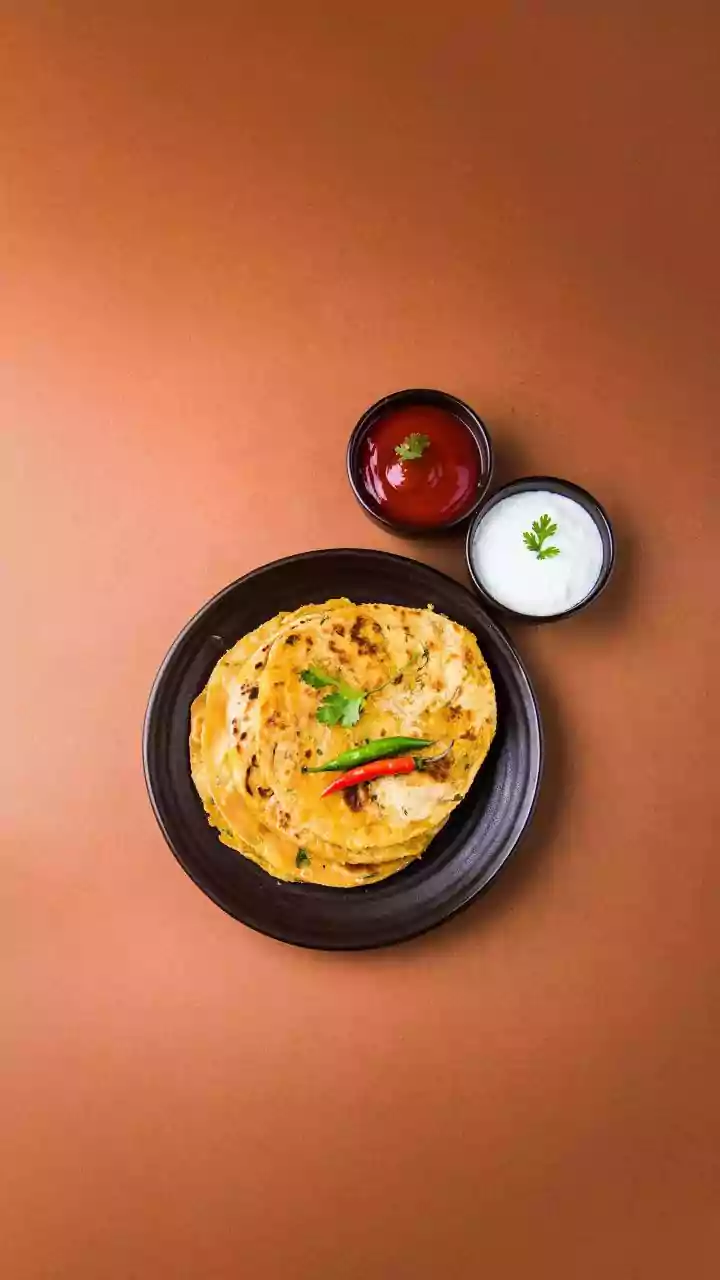

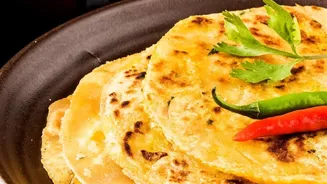

Forget dry, tough parathas. The Reshmi Paratha is in a class of its one, famed for its silky, melt-in-your-mouth texture. Paired with a flavourful paneer filling, it transforms a simple flatbread into a truly memorable meal.
The Secret to Silky Dough
The magic of a 'reshmi' or
silky paratha lies entirely in its dough. Unlike standard paratha dough that often uses just water, this version incorporates dairy to create an exceptionally soft and pliable base. The fats and proteins in milk and yogurt tenderise the gluten in the flour, resulting in a bread that is supple and easy to roll. For this recipe, we will use whole wheat flour (atta), which provides a wholesome flavour and structure. The key is to knead it until it’s incredibly smooth and elastic, then let it rest. This resting period is not optional; it allows the gluten to relax, making the dough less prone to tearing when you roll it with the filling. To begin, combine two cups of whole wheat flour with a pinch of salt. Instead of water, use about half a cup of milk and half a cup of plain yogurt to form a soft dough. Add two tablespoons of ghee or neutral oil and knead for a good 8-10 minutes. The final dough should be soft to the touch, but not sticky. Cover it with a damp cloth and let it rest for at least 30 minutes.
Crafting the Savoury Paneer Filling
While the dough rests, you can prepare the star of the show: the savoury paneer filling. The perfect filling is flavourful but not overly moist, as excess water can cause the paratha to tear during rolling. Start with about 200 grams of fresh paneer. If it feels watery, gently press it between paper towels or under a light weight for 15-20 minutes to remove excess moisture. Crumble the paneer into a bowl. To this, add one small onion and one green chilli, both chopped as finely as possible. Finely chopping the ingredients is crucial for a smooth rolling process. Next, add a generous handful of chopped fresh coriander for freshness. For the spices, a teaspoon each of cumin powder, garam masala, and chaat masala will provide a wonderful depth of flavour. Add red chilli powder to your taste and salt to season. Mix everything together gently but thoroughly. Taste the filling and adjust the seasoning if needed. The chaat masala should add a pleasant tanginess that complements the creamy paneer perfectly.
Assembly and Rolling Technique
Now it's time to bring the two components together. After the dough has rested, divide it into equal-sized balls, slightly larger than a golf ball. Take one ball and flatten it with your fingers to create a small disc about 3-4 inches in diameter. You can shape it into a small bowl or cup with your hands. Place a generous spoonful of the paneer filling—about two tablespoons—into the center of the dough cup. Be careful not to overfill. Now, bring the edges of the dough together, pleating as you go, and pinch them at the top to seal the filling inside completely, forming a small pouch. Gently press the sealed top down and flatten the stuffed ball with your palm. Lightly dust your work surface and the dough ball with dry flour. Using a rolling pin, begin to roll the paratha with very gentle, even pressure. Start from the center and work your way outwards. If you press too hard, the filling might burst through. The goal is to roll it into an even circle, about 6-7 inches in diameter.
Cooking to Golden Perfection
The final step is cooking the paratha on a hot tawa or griddle. Heat your tawa over medium_high heat. Once it's hot, place the rolled paratha on it. Let it cook for about 30_45 seconds on the first side, or until you see small bubbles and light brown spots appearing. Flip it over and cook the other side for another 30 seconds. Now, apply about a teaspoon of ghee or oil to the top surface and flip it again. Press down gently with a spatula, especially around the edges, encouraging the paratha to puff up. This helps it cook evenly from the inside. Apply ghee to the other side as well, flip, and continue to cook, pressing gently, until both sides are a beautiful golden brown with some darker crisp spots. The rich dough combined with the ghee will create a paratha that is delightfully crisp on the outside but remains incredibly soft and flaky within.