



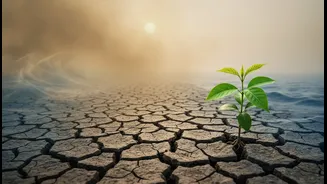



A Planet on the Brink
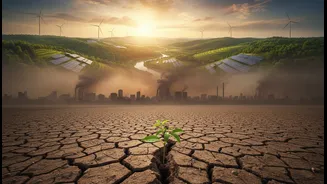
The central message of the 2026 report is both global and local: our planet's vital life support systems are buckling under pressure. Scientists have identified nine 'planetary boundaries'—safe operating limits for humanity—and the report confirms that
we have breached seven of them. These aren't abstract concepts; they include climate change, freshwater availability, biodiversity loss, and ocean acidification. For India, this global crisis has tangible, local consequences. The report, compiled by the Centre for Science and Environment (CSE) and Down to Earth magazine, serves as an annual audit of the nation's environmental health, connecting these planetary shifts to the daily lives of its citizens.
Extreme Weather is the New Normal
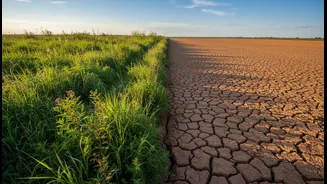
One of the most alarming takeaways is the sharp rise in extreme weather events. In 2025, India experienced extreme weather—including heatwaves, cold waves, and torrential rains—on a staggering 99% of days between January and November. This is not an anomaly but an escalating trend. These events resulted in over 4,400 reported deaths and damaged at least 17.4 million hectares of cropland in 2025, a significant increase from previous years. States like Himachal Pradesh were particularly hard-hit. The data signals an urgent need for robust climate mitigation and risk-reduction strategies, as these disasters threaten to become a regular feature of life in India.
Invisible Threats: Pollution and Health
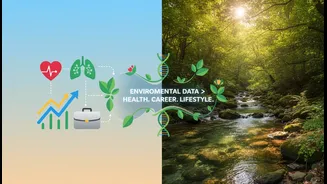
The report also sheds light on less visible, but equally dangerous, threats. Air quality monitoring, for example, remains dangerously inadequate. An estimated 85% of the Indian population lives outside a 10-kilometer radius of a continuous air quality monitoring station, meaning over a billion people are breathing air whose quality is not being officially measured. This data gap is most pronounced in rural and industrial areas, hindering effective policy. The health consequences are severe, with India's share of global air pollution-related deaths rising. Meanwhile, challenges like plastic pollution, toxic chemicals, and dwindling freshwater reserves add to the growing public health burden.
A Widening Human-Wildlife Conflict
As human activity encroaches on natural habitats, the friction between people and wildlife is intensifying. The report highlights a worrying increase in human-tiger conflict, driven by habitat loss and the saturation of tiger populations within reserves, which pushes the animals into human-dominated landscapes. In the first half of 2025 alone, tigers were responsible for 40 human deaths. Similar trends are seen with elephant attacks. This is not a simple case of animals becoming more aggressive, but rather a direct consequence of shrinking forests and ecological imbalances, underscoring the interconnectedness of environmental health and human safety.
From Data to Action: The Case for Planning
The overwhelming data presented in the report leads to one inescapable conclusion: the path forward lies in meticulous, data-driven planning. As CSE's director general Sunita Narain often states, what gets measured is what gets done. The report is not meant to be a document of despair but a call to action. The detailed statistics on everything from forest land diversion—around 97,000 hectares were approved for non-forest use in just five years—to the poor environmental performance of populous states, are tools for governance. They provide a roadmap for fixing what is broken, guiding policy on water management, sustainable urbanisation, clean energy, and public health infrastructure to build a more resilient and equitable future.