



What Exactly Is Zone-2 Training?
Zone-2 training refers to exercising at a low to moderate intensity, specifically at 60% to 70% of your maximum heart rate. It's often called the 'conversational pace' because you should be able to hold a conversation comfortably while doing it. Unlike
high-intensity interval training (HIIT) which pushes you to your limits in short bursts, Zone-2 is all about sustained, steady effort. Think of it as the foundational layer of your fitness. It builds your aerobic base, which enhances your body's ability to use oxygen efficiently, improves mitochondrial function, and trains your body to burn fat for fuel. This steady effort is less demanding on your joints and less likely to cause injury, making it a highly sustainable strategy for long-term fitness.
How to Find Your Zone-2 Heart Rate
The simplest way to estimate your maximum heart rate (MHR) is the '220 minus your age' formula. For example, if you are 40 years old, your estimated MHR is 180 beats per minute (bpm). Your Zone-2 range would then be 60% to 70% of that number, which is 108 to 126 bpm. However, a more practical and less technical method is the 'talk test'. During your activity, you should be able to speak in full sentences without gasping for breath. If you can sing, you're likely in Zone 1 and can pick up the pace slightly. If you can only manage a few words at a time, you've probably crossed into Zone 3 or higher and should slow down. This method allows you to tune into your body's signals without constantly checking a heart rate monitor.
The Best Low-Impact Zone-2 Workouts
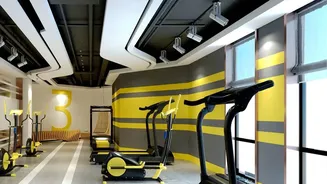
The beauty of Zone-2 training is that many accessible activities qualify. You don't need a fancy gym membership or complicated equipment. Brisk walking is one of the most effective and accessible options, whether outdoors or on a treadmill. Other excellent choices include steady cycling on a stationary bike, using an elliptical machine, swimming, or rowing. Even household chores like mowing the lawn or vacuuming at a steady, brisk pace can elevate your heart rate into the desired zone. The key is consistency and duration. Aim for sessions of 30 to 60 minutes, a few times per week, to reap the cardiovascular and metabolic benefits.
Fitting Fitness Into the Workday
For desk workers, the biggest challenge is time. The solution is to integrate movement into your existing routine. Use your lunch break for a brisk 30-minute walk. If you have a standing desk, you could incorporate an under-desk treadmill for light walking while you handle emails. Take your phone calls on the move, pacing around your office or home. Instead of sending an email to a colleague in the same building, walk over to their desk. Break up long periods of sitting with short, five-minute activity breaks. These small bouts of movement accumulate throughout the day and contribute significantly to your overall health, combating the negative effects of a sedentary job.
Building a Sustainable Habit
The goal isn't perfection; it's consistency. Zone-2 training is incredibly effective for building endurance and improving health, but only if you stick with it. Start small. If 30 minutes feels daunting, begin with 15- or 20-minute sessions three times a week and gradually increase the duration as your fitness improves. By making exercise feel manageable and even enjoyable, you build a positive feedback loop that encourages you to continue. This low-and-slow approach builds a robust aerobic foundation that not only improves your health but also makes higher-intensity activities feel easier when you choose to do them.