






The Benefits of a Chair Workout
Seated exercises are more than just a backup plan; they are an inclusive and effective way to work out for people of all ages and fitness levels. This type of exercise is gentle on the joints, making it ideal for individuals with mobility issues, those
recovering from injury, or anyone looking for a low-impact routine. By performing movements while sitting or using a chair for support, you can reduce the risk of falls while still building strength, improving flexibility, and boosting cardiovascular health. These workouts are convenient and accessible, requiring minimal space and no special equipment beyond a sturdy chair. They can help improve posture, alleviate pain from conditions like arthritis, and even provide a mental health boost by reducing stress and anxiety.
Creating Your Safe Workout Space
Before you begin, it’s important to set up your environment for safety and success. Choose a solid, stable chair that doesn't have wheels and won't slide. Ideally, you should be able to sit with your feet flat on the floor and your knees bent at a 90-degree angle. If the chair has arms, be mindful that they might restrict some movements. Make sure you have enough space around you to extend your arms and legs without hitting furniture or other obstacles. Wear comfortable, loose-fitting clothing that allows for a full range of motion, and keep a water bottle nearby to stay hydrated throughout your routine.
Gentle Warm-Up From Your Chair
Starting with a warm-up is crucial for preparing your muscles and preventing injury. Begin with some simple shoulder rolls: shrug your shoulders up toward your ears, then slowly rotate them backward and down. Repeat this motion ten times, then reverse the direction. Next, a chest stretch can help open up your posture. Sit upright, pull your shoulders back, and extend your arms out to the sides, gently pushing your chest forward until you feel a stretch. Hold for about 10 seconds. Finally, wake up your lower body with some gentle hip marches. While seated, lift one knee toward your chest as far as is comfortable, then lower it and repeat with the other leg.
Seated Upper Body and Core
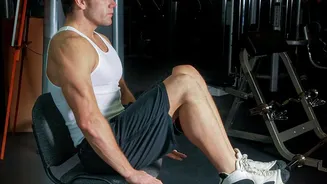
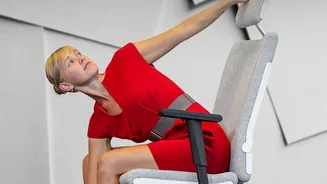
You can effectively target your arms, back, and core without ever leaving your seat. For upper-body strength, try seated bicep curls, either with or without light weights. For your core, an upper-body twist is a great option. Sit upright with your arms crossed over your chest, and without moving your hips, turn your upper body to one side. Hold for a few seconds before returning to the center and repeating on the other side. You can also perform a seated crunch by tightening your abdominal muscles and bringing your belly button toward your spine while maintaining a straight posture.
Lower Body and Supported Balance
Strengthening your lower body is just as important. From a seated position, you can perform leg extensions by straightening one leg out in front of you, holding for a moment, and then lowering it back down. For a greater challenge, you can use the chair for support while standing. Hold onto the back of the chair and perform calf raises by slowly lifting your heels off the floor. Another great supported exercise is a simple step-up. If you have a sturdy step nearby, use the chair for balance as you slowly step up with one foot, then the other, and then step back down. These movements improve not just strength but also stability and coordination, which are key to preventing falls.