

Finding the King of Planets
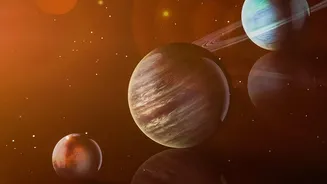
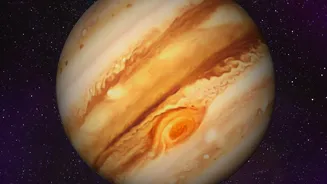
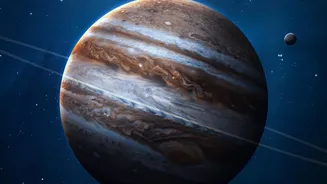
First, you need to find Jupiter. The good news is that it’s one of the easiest celestial objects to spot. Jupiter is incredibly bright and, unlike stars, it doesn’t twinkle; it shines with a steady, brilliant light. During the autumn months of 2026, look
towards the eastern sky in the hours after sunset. Jupiter will be the most prominent 'star' in that area, climbing higher as the night goes on. For a precise, real-time location from your specific city, consider using a simple stargazing app on your phone. Apps like Star Walk 2, SkyView, or Stellarium Mobile can point you directly to the planet. Just hold your phone up to the sky, and the app will identify everything you're looking at.
Choosing Your 'Telescope'
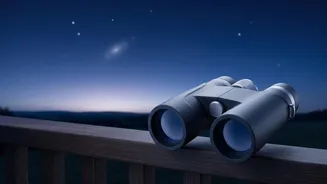
You don’t need a powerful, expensive instrument. A standard pair of binoculars will do the trick. Something in the range of 7x50 or 10x50 is perfect for this task. The first number (7x or 10x) refers to the magnification, while the second number (50) refers to the diameter of the large lenses in millimeters, which determines how much light they can gather. A higher second number means a brighter image, which is crucial for stargazing. If you already have a pair of binoculars for birdwatching or sports, they are likely powerful enough to reveal Jupiter’s moons. The key isn't immense power, but stability and clarity.
Getting a Steady View
This is the most critical step and often the one beginners overlook. The natural shaking of your hands can make it impossible to see the tiny moons. A tripod with a binocular mount is the ideal solution, but you don't need one to get started. Instead, find a way to brace yourself. Sit in a chair and rest your elbows on your knees. Alternatively, you can lean against a wall, a car, or a sturdy fence to steady your arms. Once you have Jupiter in your sights, take a moment to focus the binoculars carefully until the planet appears as a sharp, tiny disc, not just a fuzzy blob of light.
Spotting the Moons
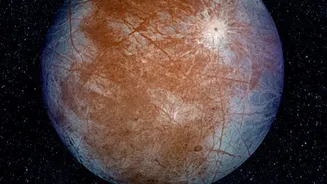
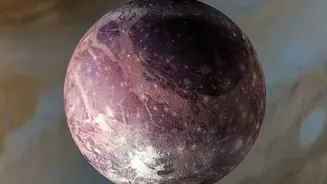
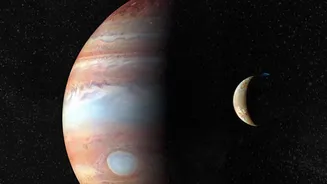
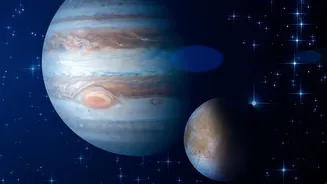
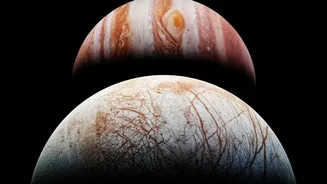
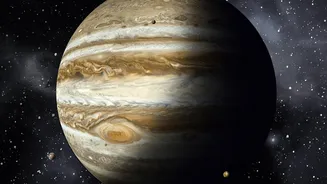
Now for the main event. Look closely at the small, bright disc of Jupiter. You should see up to four tiny pinpricks of light flanking the planet, appearing in a nearly straight line. These are the Galilean moons: Io, Europa, Ganymede, and Callisto, first spotted by Galileo Galilei in 1610. Don’t be discouraged if you don’t see all four. Sometimes a moon might be hidden behind Jupiter, or passing directly in front of it, making it invisible from our vantage point. What you are seeing are not just dots; these are massive worlds in their own right. Ganymede is the largest moon in our entire solar system, even bigger than the planet Mercury. Io is the most volcanically active body known, while Europa is an icy world believed to hide a vast subsurface ocean.
Watch Them Dance
What makes observing these moons truly special is that their positions change noticeably from night to night, and sometimes even over a few hours. One night, you might see two on one side of Jupiter and two on the other. The next night, all four could be on one side, or one might have disappeared behind the planet. This celestial dance is a real-time demonstration of orbital mechanics. You are witnessing the same sight that helped Galileo understand that Earth was not the center of everything. Keep a small journal and sketch their positions each night you observe. Over a week, you'll have a personal record of this miniature solar system in motion, a truly rewarding experience for any budding astronomer.