



The World's Top Diplomat
On paper, the role of the Secretary-General is to be the chief administrative officer of the United Nations. In reality, the job is far more. The person in this office is a global symbol, a key mediator in international conflicts, and an advocate for
peace and human rights. They are expected to be the 'spokesperson for the peoples of the world'. Yet, for all its moral authority, the position has surprisingly little formal power. Success depends almost entirely on soft power, persuasion, and the willingness of major world governments to cooperate. As the term of the current Secretary-General, António Guterres, ends on December 31, 2026, the race to find his successor is in a tense deadlock, highlighting the deep divisions that the next leader will inherit.
The Official Process vs. The Reality
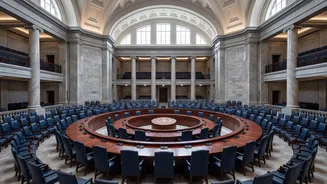
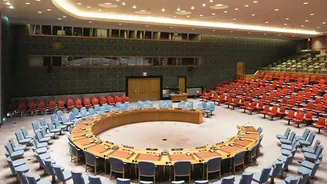
The UN Charter is elegantly simple on the matter. Article 97 states that the Secretary-General “shall be appointed by the General Assembly upon the recommendation of the Security Council.” This makes the 193-member General Assembly sound like the ultimate authority, but history and practice tell a different story. The Security Council first selects a single candidate to recommend, and the General Assembly has never rejected the council's choice. The real power, therefore, lies with the 15-member Security Council, and especially its five permanent members: China, France, Russia, the United Kingdom, and the United States. Known as the 'P5', these nations all hold veto power over the selection.
The Veto: The Ultimate Gatekeeper
A candidate can have widespread support across the globe, but if even one of the P5 members casts a 'discourage' vote in the final rounds of polling, their candidacy is effectively over. This veto power transforms the selection from a search for the most qualified or popular candidate into a search for the least objectionable one to the world's major powers. This reality means any aspiring Secretary-General must be able to navigate intense geopolitical sensitivities, ensuring they are not seen as a threat to the interests of any of the permanent five. The process rewards compromise candidates, often leading to criticism that it filters out bolder, more independent voices.
Straw Polls and Secret Ballots
To gauge support, the Security Council holds a series of informal, secret ballots known as straw polls. Members vote to 'encourage', 'discourage', or offer 'no opinion' on each candidate. While reforms in recent years have introduced more transparency, like public dialogues with candidates, the core of the decision-making remains behind closed doors. In later straw polls, the ballots are colour-coded: red for the P5 and white for the 10 elected members. This reveals whether a 'discourage' vote is a potential veto, adding immense drama to the process. To be recommended, a candidate needs at least nine 'encourage' votes in total and zero vetoes from the P5.
The Deadlocked 2026 Race
The current selection process has been one of the longest and most contentious in UN history, exposing deep rifts among the P5. As of late November 2026, with weeks to go, no candidate has been able to secure the necessary support without a P5 veto. Frontrunner Rebeca Grynspan of Costa Rica has consistently led in polls but faces 'discourage' votes from two permanent members, thought to be the US and Russia. Meanwhile, a late entry by Lana Nusseibeh of the UAE, reportedly backed by the US and Russia, was met with three P5 'discourage' votes, believed to be from the UK, France, and China. This stalemate raises the unsettling prospect of the UN being left leaderless on January 1, a reflection of the very gridlock the next Secretary-General will be tasked with solving.