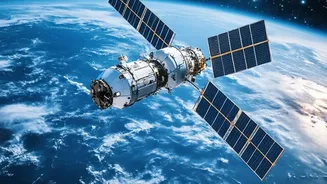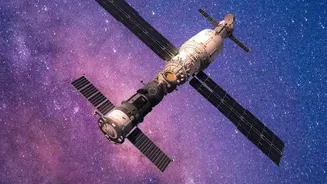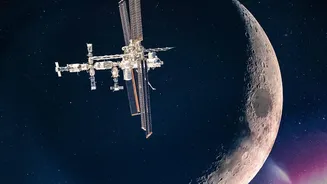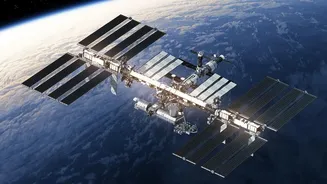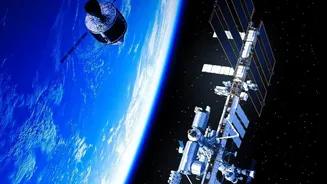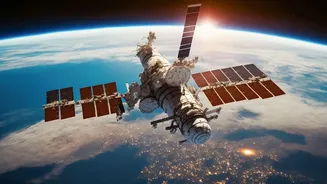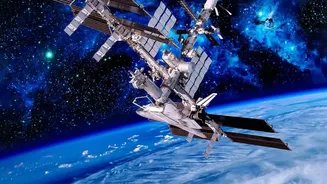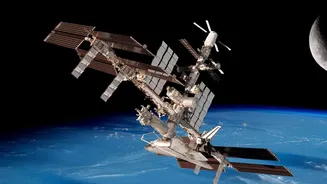

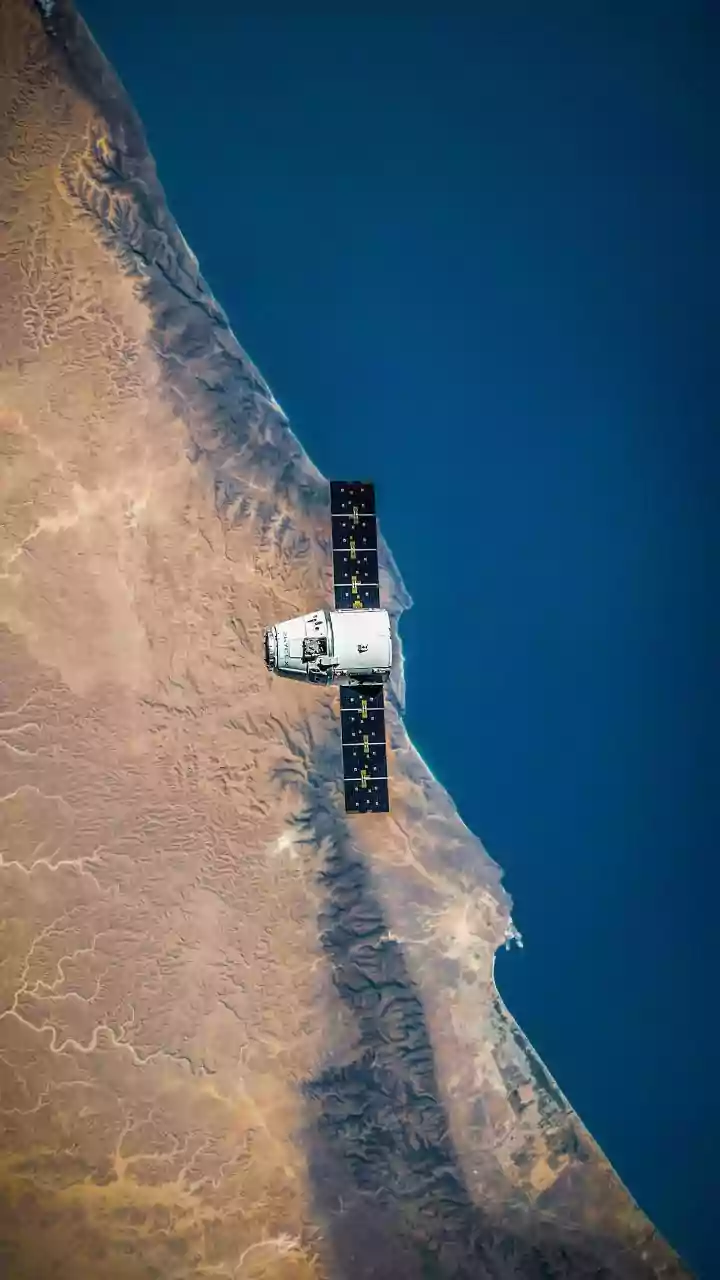
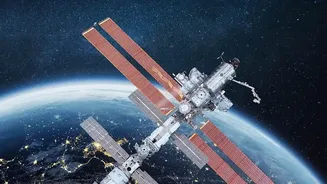
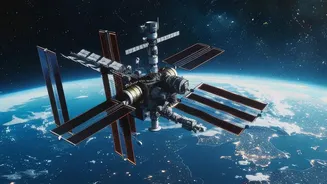
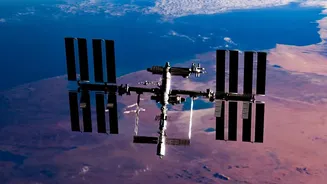
What Does the ISS Look Like?
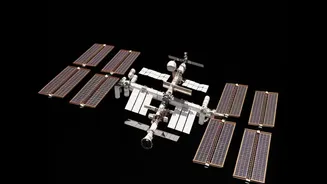
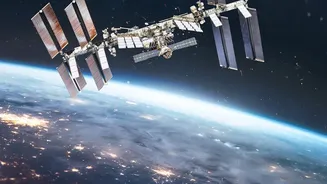
When you spot the ISS, you're not seeing lights from the station itself, but rather sunlight reflecting off its massive solar panels and modules. It appears as a very bright, steady point of light, similar to a brilliant star or the planet Venus. However,
unlike a star, it moves. It travels across the sky at a surprisingly brisk pace, typically taking just two to six minutes to cross from one horizon to the other. It moves much faster than a typical airplane and is completely silent.
The Key Difference: ISS vs. Airplane
This is the most common point of confusion for new sky-watchers. The easiest way to tell the difference is by looking for blinking lights. Airplanes are required to have flashing navigation and anti-collision lights, often red, green, and white. The International Space Station, on the other hand, shines with a constant, unwavering light. If the light you are seeing is steady and not blinking, you are likely looking at a satellite, and if it's exceptionally bright, it is probably the ISS.
Is It a Star, a Planet, or a Satellite?
While stars and planets may twinkle or shine brightly, they remain in fixed positions relative to each other throughout the night. The ISS is unmistakable because it moves. It travels at a speed of about 28,000 kilometres per hour, completing an orbit of Earth every 90-93 minutes. This incredible speed makes it visibly glide across the starfield. While there are many other satellites in orbit, the ISS is often the third-brightest object in the night sky after the Sun and Moon, making it stand out from its fainter, faster-moving cousins.
Finding the Perfect Time to Look
You can't see the ISS just any time. The best viewing opportunities occur in the hour or two after sunset or before sunrise. This is the sweet spot when the sky is dark enough for the station to be visible, but the sun is still at the right angle to illuminate it as it passes overhead. During the middle of the night, the station is in Earth's shadow and is invisible. To find out exactly when the ISS will pass over your location, NASA offers a free service called 'Spot The Station'. You can sign up for email or text alerts or use their official app. There are also many other popular third-party apps like ISS Detector and SkyView that provide detailed pass predictions and real-time tracking.
Your Step-by-Step Viewing Guide
Ready to see it for yourself? First, use an app or NASA's Spot The Station website to get a list of upcoming viewing opportunities for your city. The prediction will tell you the exact time the pass will start, how long it will last, its maximum height in the sky (90 degrees is directly overhead), and the direction it will appear and disappear. Head outside a few minutes early to let your eyes adjust to the dark. Find a spot with a clear view of the horizon. At the designated time, look in the correct direction, and wait for a bright, steady light to appear and begin its silent journey across your sky.