


The Toll of Deep Space Travel
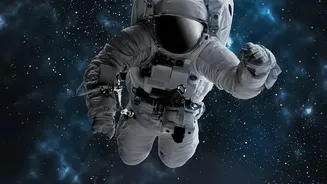
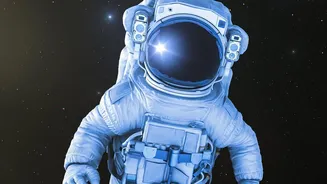
A trip to Mars and back could take up to three years. Extended time in microgravity takes a significant toll on the human body. Without the constant resistance of Earth's gravity, astronauts experience bone density loss, muscle atrophy, and shifts in their
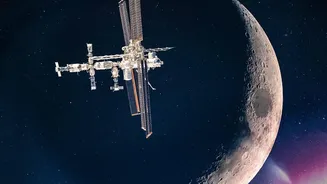
cardiovascular systems. Studies have shown that protein synthesis can decrease on long flights, and exposure to space radiation adds another layer of health risks. While rigorous exercise routines on the International Space Station (ISS) help mitigate some of these effects, they aren’t enough on their own. Scientists believe that nutrition could be a powerful countermeasure, helping to protect and even repair the body from the stresses of spaceflight.
Beyond Pre-Packaged Meals
The current diet for astronauts on the ISS consists mainly of pre-packaged, thermostabilized, or freeze-dried meals. While NASA offers a surprisingly diverse menu of over 200 items, from shrimp cocktail to mac and cheese, these foods have limitations. Nutrients, particularly vitamins like B1 and C, can degrade over the long storage periods required for a Mars mission. Furthermore, astronauts often report a reduced appetite and 'menu fatigue', which can lead to them not consuming enough calories to maintain body mass and peak performance. For a mission where resupply is impossible, simply packing more of the same food isn't a viable strategy. The food system itself must evolve.
A Prescription on a Plate
This is where the new wave of research comes in. Scientists are investigating how specific, targeted diets can act as a form of medicine. In ground-based simulations like NASA's Human Exploration Research Analog (HERA), studies have compared a standard space diet to an 'enhanced' one, rich in fruits, vegetables, fish, and other foods high in omega-3 fatty acids and flavonoids. The results from these 45-day missions were significant: participants on the enhanced diet showed lower stress levels, improved cognitive speed and accuracy, and a more stable gut microbiome. This suggests that a carefully designed menu isn't just about basic sustenance; it's about optimizing mental and physical performance.
Custom Drinks and Growing Greens
The innovation extends beyond solid foods. Recent research has focused on developing customizable, nutrient-fortified beverages. Scientists have formulated stable drink emulsions that can deliver specific doses of omega-3s, which may help protect against radiation and support bone health. These systems would allow astronauts to mix drinks to their personal taste, combating menu monotony while ensuring they get vital micronutrients. In parallel, experiments aboard the ISS and in analog missions like CHAPEA (Crew Health and Performance Exploration Analog) are testing the viability of growing fresh produce in space. Being able to cultivate leafy greens, tomatoes, or peppers provides not only a crucial source of fresh nutrients but also a psychological boost for the crew.
Fueling the Next Giant Leap
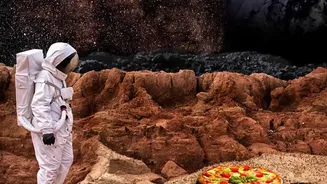
Ultimately, solving the food equation is non-negotiable for long-duration exploration. For a mission to Mars, the food system must be safe, nutritious, efficient, and psychologically satisfying for years on end. Every gram of mass is meticulously planned, so the solution must be lightweight and resource-efficient. Researchers are exploring everything from advanced preservation techniques and on-demand nutrient production using microbes, to integrating waste recycling into food production. These studies are laying the groundwork to ensure that when the first astronauts set foot on Martian soil, they are not just surviving, but thriving. The journey to the Red Planet will be powered by rocket fuel, but the success of the mission will depend on what the crew has for dinner.