







The Romanticism Of The First Wave
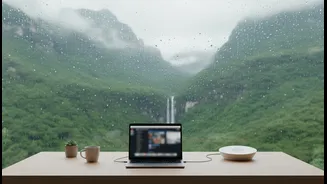
The initial 'Work From Hills' trend, which gained massive traction post-2020, was driven by a simple, romantic idea. Professionals, untethered from physical offices, flocked to destinations like Himachal Pradesh, Uttarakhand, and Kerala, seeking better
work-life balance amidst nature. Homestays and local businesses quickly adapted, advertising Wi-Fi as a key amenity. This first wave, or '1.0', was about possibility—the simple discovery that one could, in theory, answer emails from a balcony in Manali or join a video call from a cafe in Munnar. The focus was on the view, the peace, and the novelty of a mountain workation. Infrastructure was a secondary thought, often taken for granted.
A Monsoon Reality Check
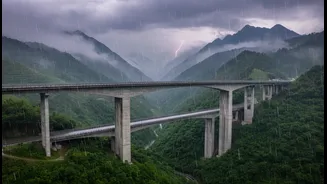
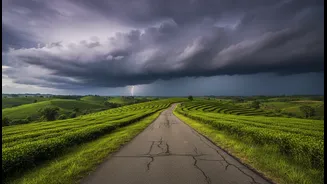
This idyllic vision, however, often shattered with the arrival of the monsoon. Heavy rains in the Himalayas and Western Ghats consistently trigger landslides, flash floods, and widespread disruption. For the remote worker, this translates into tangible, career-damaging problems: snapped fiber optic cables, prolonged power outages, and blocked roads that can isolate communities for days. A single-provider Wi-Fi connection is useless when a landslide takes down the local tower. A laptop with a dying battery is a paperweight when the power grid is down for 48 hours. This annual weather-induced chaos revealed the fundamental flaw in the 1.0 model: a complete lack of resilience.
Redundancy Is The New Luxury
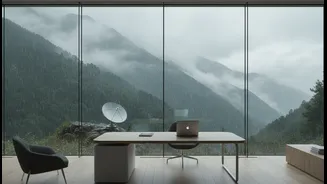
Enter 'Work From Hills 2.0'. This isn't a formal movement, but an evolution in mindset for both remote workers and the businesses that host them. The new focus is on 'infrastructure redundancy'—a technical-sounding term for a simple idea: having a backup for everything. If '1.0' was about having an internet connection, '2.0' is about having three. If the first wave relied on the main power grid, the second wave demands robust power backup solutions. This shift acknowledges that in the unpredictable environment of the Indian hills, a single point of failure can derail everything. Resilience, not just connectivity, has become the most sought-after commodity.
Building a Resilient Work Setup
So, what does this redundancy look like in practice? For internet, it means not relying on a single source. A savvy remote worker might now have a primary fibre connection, supplemented by two different mobile data providers (e.g., one Jio and one Airtel SIM) and potentially a satellite internet service as a final fallback. For electricity, the game has moved beyond basic inverters. Professionals are now investing in high-capacity lithium-ion power stations or UPS systems that can run a full work setup—laptop, monitor, and router—for an entire day or more. This ensures that even if the town's power is out and the primary internet is down, work can continue seamlessly on a charged laptop using a mobile hotspot.
A Community-Led Adaptation
This evolution is also being driven by local entrepreneurs. Homestays and co-working spaces in towns like Dharamshala are now explicitly advertising their redundant systems. Listings are moving beyond simply stating 'Free Wi-Fi'. They now specify 'Fibre connection with 4G dongle backup' and '24/7 power backup with high-capacity generator'. They understand that for a long-stay remote worker, the guarantee of uninterrupted connectivity during a downpour is a far more powerful selling point than a scenic view alone. This creates a more sustainable ecosystem, where guests can work reliably and hosts can secure bookings even during the challenging monsoon shoulder season.