





The Power of Two in the Cockpit
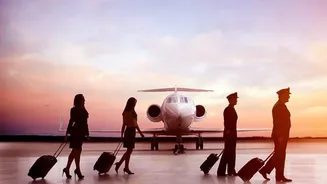
The most fundamental safety feature in a commercial cockpit isn't a piece of technology—it's the second pilot. Every major commercial flight has at least two fully qualified pilots: a Captain and a First Officer (often called the co-pilot). It's a common
misconception that the First Officer is a pilot-in-training. In fact, they are a completely certified pilot, and on most airlines, the Captain and First Officer alternate who is actively flying the plane from one leg of the journey to the next. One is designated the 'Pilot Flying' (PF) and the other is the 'Pilot Monitoring' (PM). This structure ensures that two sets of eyes are always monitoring the aircraft's systems and that one pilot is always ready to take full command if the other is unable to.
Training for the Unthinkable
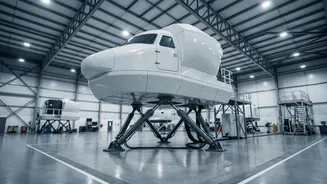
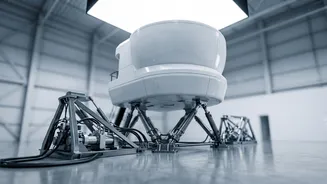
Pilot incapacitation is not just a theoretical risk; it is a specific emergency for which pilots are rigorously and repeatedly trained. The procedure is clear and decisive. The remaining pilot's first job is to take unambiguous control of the aircraft, often with the verbal declaration, "I have control." Their next steps involve engaging the autopilot to manage the workload, stabilising the aircraft's flight path, and then addressing the emergency. This includes informing Air Traffic Control (ATC) by declaring an emergency, which gives the flight priority handling and ensures emergency services are ready at the destination. Pilots practice these drills in simulators to build muscle memory, ensuring a calm, procedural response rather than panic.
The Autopilot as a Force Multiplier
In an incapacitation event, the autopilot becomes the remaining pilot's most crucial assistant. Modern autopilots are incredibly sophisticated systems that can manage the aircraft's speed, altitude, and heading, freeing up the pilot to focus on other critical tasks like communication, navigating to a suitable diversion airport, and running through emergency checklists. While most take-offs are manual, many modern aircraft are equipped with 'autoland' capabilities. This system can automatically guide the aircraft through the final approach and landing, which is particularly valuable in a high-workload, single-pilot situation. Though pilots perform the vast majority of landings manually, the autoland system provides a powerful layer of technological redundancy when it's needed most.
A Team Effort at 35,000 Feet
The response to a pilot emergency extends beyond the cockpit. The remaining pilot will call the senior cabin crew member, often the purser, to the flight deck for assistance. Cabin crew are trained to help in these specific scenarios. Their duties include securing the incapacitated pilot in their seat with the harness locked to ensure they don't interfere with the flight controls. They would then provide first aid, potentially with the help of any medically qualified passengers on board. A flight attendant may even be asked to sit in the empty pilot seat, not to fly the plane, but to assist the pilot with non-flying duties like reading checklists, helping to ensure procedures are followed correctly during a stressful time.
Redundancy is the Bedrock of Safety
The principle that prevents a single failure from becoming a catastrophe is redundancy, and it's built into every aspect of an aircraft's design. Just as there are two pilots, critical flight systems have multiple backups. Commercial jets have multiple hydraulic systems, electrical generators, and flight control computers. This design philosophy ensures that the failure of any one component does not compromise the aircraft's ability to fly safely. The two-pilot crew is simply the most visible and important of these redundancies. Even preventative measures are taken, such as the common but unwritten rule that the two pilots should eat different crew meals to avoid the risk of both falling ill from food poisoning.