





The Promise of a Dark Sky
For centuries, the night sky was humanity's universal storybook, a canvas of myths, navigation, and wonder. Today, for over 80% of the world's population, that canvas is washed out by artificial light pollution. A 'dark-sky reserve' is an area where this
light pollution is actively managed and reduced to preserve the natural darkness. These aren't just empty, dark places; they are designated zones recognized for their exceptional starry nights and are protected for scientific, educational, and cultural purposes. The goal is simple but profound: to protect our view of the cosmos and the nocturnal environment that depends on darkness for its survival. This makes stargazing not just a visual treat, but an act of connecting with a fragile, disappearing natural resource.
Himachal’s Celestial Advantage
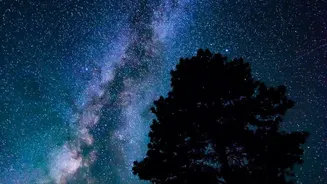
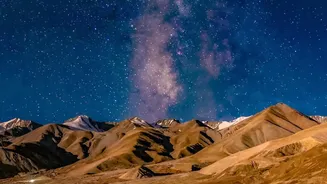
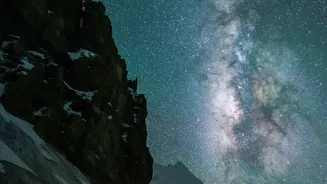
Himachal Pradesh, particularly the remote Spiti Valley, is uniquely positioned to be a world-class dark-sky destination. Situated at altitudes often exceeding 12,000 feet, this cold desert region benefits from a combination of factors that create near-perfect conditions for stargazing. The high altitude means there is less atmosphere for starlight to travel through, resulting in incredibly sharp and clear views. The dry climate and sparse population contribute to over 250 clear nights a year with minimal light pollution, allowing the Milky Way to be seen in its full glory with the naked eye. Villages like Langza, Komic, Kibber, and Kaza are so remote that the skies achieve a Bortle Scale rating of 1, signifying the darkest skies possible.
More Than Just Telescopes
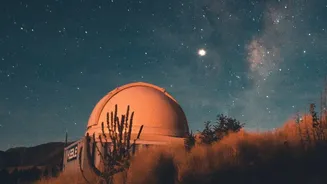
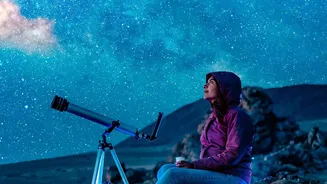
What truly reframes astrotourism in Himachal is its focus on community-led conservation and economic empowerment. This isn't about building large, intrusive resorts. Instead, the model is rooted in sustainability. In July 2025, the state government launched a stargazing facility in Kaza, providing high-end telescopes to local youths and homestay owners. The initiative, supported by institutions like the Indian Institute of Astrophysics, trains locals to become astro-guides, capable of leading night-sky sessions that blend scientific knowledge with local folklore. This approach ensures that tourism revenue flows directly into the community, creating a powerful incentive for locals to protect their pristine night skies as a valuable cultural and economic asset. Astro-tourism here is being developed as a form of eco-tourism, a sustainable practice that benefits travelers and local communities alike.
An Experience Rooted in Place
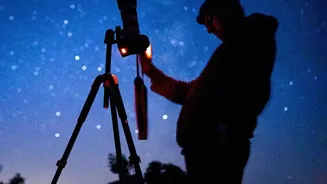
A visit to one of Himachal’s burgeoning astro-hubs is about more than just looking through a telescope. It’s an immersive experience. Travelers often stay in traditional homestays, eating local food and learning about Spitian culture. A typical night might begin with a guided tour of the constellations visible that season, identifying planets, nebulae, and distant galaxies. Local guides share stories connected to the stars, bridging the ancient and the modern. The experience is profoundly grounding; as you stand beneath a canopy of thousands of stars, with the silhouette of a centuries-old monastery or a giant Buddha statue nearby, you feel a deep connection to the landscape, the culture, and the cosmos. It's an opportunity to not only see the universe but to understand our place within it, surrounded by the raw, quiet beauty of the Himalayas.