







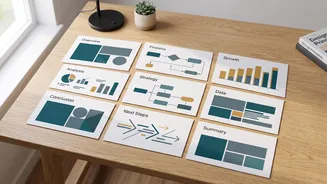
The End of the Blank-Slide Panic
Every student knows the feeling: a big presentation is due, the research is done, but a blank slide deck stares back, promising hours of tedious formatting. Traditional software offers templates, but they often feel rigid and time-consuming. AI presentation makers
like Gamma and Tome work differently. A student can simply enter a topic, paste in their notes, or even upload a document. The AI then generates a complete, structured presentation, complete with an outline, text, and suggested visuals. This process removes the initial hurdle of figuring out structure and layout, which is often the most daunting part of the task. It turns a multi-hour ordeal into a task that takes just a few minutes, freeing students to focus on the quality of their content rather than the mechanics of slide design.
A Professional Polish for Non-Designers
Let's be honest: not everyone has a knack for graphic design. In academia, however, the clarity and professionalism of a presentation can influence how the content is received. AI tools level the playing field by acting as an automated design partner. They apply consistent branding, harmonise fonts and color schemes, and ensure all elements are perfectly aligned, creating a polished and professional look with minimal effort. Tools like Beautiful.ai are built around smart templates that automatically adjust as content is added, preventing the messy, misaligned look that plagues many student projects. For students who need to present complex data, these AIs can also suggest the best charts or graphs to make the information clear and digestible. This allows them to produce work that looks like it was made by a professional designer, which can be a significant advantage.
More Than Just Design: AI as a Storytelling Partner
The most advanced AI presentation tools go beyond simple aesthetics. Some, like Tome, are marketed as 'storytelling' platforms. They don't just arrange text on a slide; they help structure the narrative itself, ensuring the presentation flows logically from one point to the next. This can be incredibly helpful for students who struggle to organize their thoughts into a coherent argument. Furthermore, these platforms make it easy to embed interactive elements like videos, live polls, or 3D models, making presentations more dynamic and engaging for the audience. This shift turns the AI from a simple formatting tool into a collaborative assistant that helps students communicate their ideas more effectively.
The Hidden Costs and Lingering Concerns
Despite the obvious benefits, the rise of AI in academic work is not without its concerns. One common criticism is that the AI-generated content can be generic or bland, requiring significant editing to inject a student's unique voice and insights. There's also the significant risk of factual errors or 'hallucinations,' where the AI invents data or studies that don't exist. This means students must diligently fact-check every piece of information the AI provides. From an educational standpoint, some professors worry about over-reliance on these tools, questioning whether students are losing the valuable skill of learning how to structure an argument and present information clearly themselves. As with any powerful tool, the key is using it as an assistant, not a replacement for critical thinking.