





The Green Premium: A Cost Too High
The most significant hurdle for any delivery rider considering an electric vehicle (EV) is the high upfront cost. While the long-term savings on fuel are substantial—an EV's running cost can be 85-90% lower than a petrol scooter's—the initial purchase
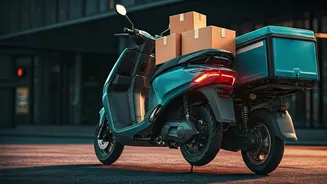
price remains a major barrier. A mid-spec electric scooter can cost between ₹90,000 and ₹1,10,000, often 10-15% more than its petrol counterpart, even with subsidies. For gig workers, who often come from economically vulnerable backgrounds and earn between ₹15,000-₹25,000 a month, this difference is prohibitive. Traditional banks are often reluctant to lend to individuals without a fixed salary slip, making it difficult to secure financing. While some NBFCs and fintech platforms are stepping in to offer loans based on platform payouts, these can come with higher interest rates. This leaves riders in a difficult position: invest in a new, expensive asset for a job with no fixed income, or stick with a petrol vehicle that eats into their daily earnings.
Infrastructure Gaps and Range Anxiety
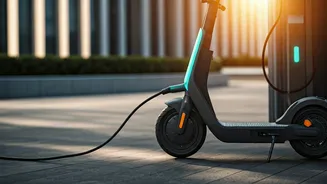
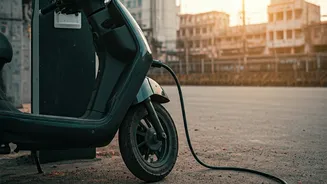
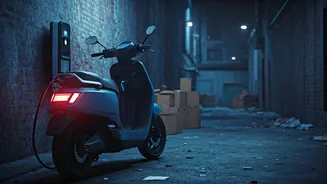
Beyond the cost, the day-to-day reality of using an EV for delivery work is hampered by inadequate infrastructure. Range anxiety—the fear of a battery running out mid-shift—is a constant stressor. A delivery rider's income is directly tied to their uptime; time spent charging is time not earning. While plug-in charging at home works for personal commuters, it's inefficient for a rider covering 100-150 km daily. This has made battery swapping an attractive alternative, allowing a rider to exchange a depleted battery for a fully charged one in minutes. However, the network of swapping stations is still in its infancy and concentrated in major urban centres. Furthermore, a lack of standardisation between different EV manufacturers means batteries are often not interoperable, complicating the ecosystem and limiting a rider's options. Until a robust, widespread, and standardised charging and swapping network is in place, the operational efficiency of EVs for high-mileage commercial use remains compromised.
Policy That Misses the Mark
Government initiatives like the FAME-II and state-level subsidies are well-intentioned but often fail to fully address the riders' specific needs. For example, Tamil Nadu's recent initiative to offer a ₹20,000 subsidy to 2,000 registered gig workers is a welcome step, but its limited scope highlights the scale of the challenge. Millions of riders across the country need similar support. Moreover, policies mandating a shift to EVs for commercial fleets, such as those in Delhi, can put immense pressure on individual riders if not paired with comprehensive support. Forcing a rider to abandon their existing petrol scooter—a stranded investment—and purchase a more expensive EV without adequate financial aid is unjust. Policy must move beyond simple vehicle subsidies to create an enabling ecosystem that includes low-interest financing, credit guarantees, and support for building out public charging and swapping infrastructure.
A Blueprint for a Just Transition
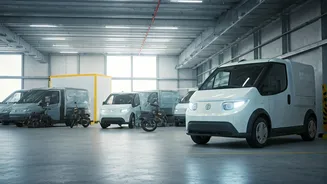
Supporting riders is not just a matter of fairness; it is essential for the success of the EV transition itself. A multi-pronged approach is needed. First, financing must be made accessible. Government-backed, low-interest loan schemes, perhaps with risk coverage and inclusion under Priority Sector Lending, would significantly lower the entry barrier. Second, platform companies (like Zomato, Swiggy, and Zepto) have a crucial role to play. They can facilitate bulk procurement, offer financing, or embrace the EV-as-a-Service (EVaaS) model, where riders pay a subscription fee for access to a vehicle, maintenance, and battery swaps, shifting the burden of ownership away from the individual. Third, a massive, collaborative push is needed from public and private sectors to build a dense, interoperable network of battery-swapping stations. This would directly address range anxiety and improve rider productivity, making EVs a more viable tool for their livelihood. Finally, worker welfare, including insurance and social security, must be integrated into these new green policies, as pioneered by states like Tamil Nadu.