






The Problem with Sitting Still
Our bodies are not designed for the long, sedentary hours that define modern desk work. Spending hours hunched over a keyboard forces the body into unnatural positions. This often leads to 'tech neck', where the head drifts forward, increasing the strain
on the cervical spine. For every inch your head moves forward, its effective weight on your neck can increase by several kilograms, leading to muscle imbalances and chronic pain. This constant physical stress isn't just uncomfortable; it's a major drain on mental resources. Pain is a distraction. It pulls focus away from tasks, contributes to fatigue, and can significantly reduce overall productivity. A recent study found a strong link between prolonged sitting and neck pain, with the risk increasing substantially after just four hours.
What Is Chair Yoga?
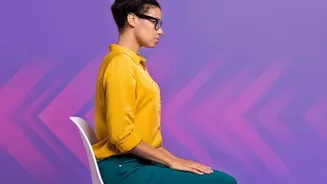
Chair yoga is exactly what it sounds like: a gentle form of yoga that adapts traditional poses so they can be performed while seated or using a chair for support. Its greatest advantage is accessibility. You don't need a yoga mat, special clothing, or even much space. It is a discreet and effective way to integrate beneficial movement directly into your workday. By using your office chair as a tool, you can gently stretch tight muscles, improve circulation, and calm your nervous system without ever leaving your cubicle. These short 'movement snacks' are a simple way to counteract the negative effects of a sedentary job.
Stretch 1: Seated Cat-Cow
This movement is excellent for waking up a stiff spine and relieving tension in the back and neck. Sit on the edge of your chair with your feet flat on the floor and your hands on your knees. As you inhale, gently arch your back, pull your chest forward, and look slightly up toward the ceiling (Cow pose). As you exhale, round your spine, tuck your chin to your chest, and let your shoulders curve forward (Cat pose). Repeat this fluid movement five to ten times, coordinating it with your breath. This simple sequence promotes spinal flexibility and can help correct the hunched posture many desk workers develop.
Stretch 2: Gentle Neck Rolls
To specifically target neck stiffness, start by sitting tall and relaxing your shoulders away from your ears. Gently lower your right ear toward your right shoulder, holding for a few deep breaths to feel a stretch along the left side of your neck. Return to the center and repeat on the left side. Never force the movement; let the weight of your head do the work. Afterwards, slowly lower your chin to your chest and hold for a few seconds to release tension in the back of the neck. This helps alleviate the strain caused by looking down at screens or keyboards.
Stretch 3: Seated Eagle Arms
Shoulder and upper back tension often go hand-in-hand with neck pain. To address this, try the Eagle Arms stretch. Extend your arms straight in front of you. Cross your right arm over your left, bend your elbows, and try to bring your palms to touch. Lift your elbows while keeping your shoulders relaxed. You should feel a deep stretch across your upper back and between your shoulder blades. Hold for 15-30 seconds, breathing deeply, then unwind and repeat with the left arm on top. This pose is fantastic for releasing the knots that build up from typing and using a mouse.
The Productivity Connection
The benefits of these simple stretches extend beyond physical relief. Taking short, mindful breaks for movement helps to clear mental fog. Increasing blood flow to the brain can enhance focus, creativity, and decision-making skills. Studies have shown that even brief moments of physical activity can significantly improve cognitive function. By reducing pain and stress, you free up mental energy that can be redirected toward your work. Think of it as a reset button for your brain. A few minutes of stretching can be the difference between a sluggish, distracted afternoon and a period of focused, productive work.