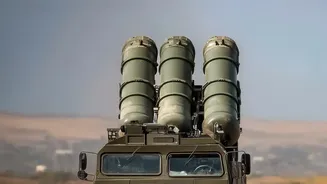








A High-Intensity Drain on Stockpiles
Modern warfare is incredibly hungry for munitions, and the conflict with Iran is proving to be a stark example. The steady supply of weapons like 155mm artillery shells, Patriot interceptor missiles, and Tomahawk cruise missiles has been a cornerstone
of operations. However, the sheer volume required has dramatically accelerated the depletion of U.S. inventories, which were already under strain from supporting allies in other conflicts, such as Ukraine. A recent Government Accountability Office (GAO) report highlighted that the war has heightened the importance of addressing what it calls 'persistent' shortfalls in key munitions. According to analyses from the Center for Strategic and International Studies, the first month of the conflict alone may have expended between a third and two-thirds of America's key munition inventories.
The Industrial Base Bottleneck
Simply 'making more' ammunition isn't a quick fix. Decades of post-Cold War 'efficiency' led to a consolidation of the defense industry, slashing excess capacity and creating an industrial base optimized for peacetime, not a major conflict. Many production facilities are government-owned but contractor-operated, with some tracing their origins back to World War II. While the Army has committed billions to modernize these plants, scaling up is a monumental task. Manufacturing advanced weapons is a highly complex process involving specialized materials, long lead times for components like solid rocket motors and microelectronics, and a skilled workforce that cannot be generated overnight. As a result, even with new investments, production of key interceptors like the Patriot and THAAD systems may not be fully ramped up for several years.
More Than Just Numbers: The 'Aging' Problem
The issue extends beyond just the quantity of munitions available. A significant portion of the stockpile is 'aging,' which presents its own set of challenges. This can mean the weapons are less effective against modern enemy defenses, require more complex and expensive maintenance, or rely on components that are now obsolete and no longer in production. For example, the push to increase production of Patriot PAC-3 missiles has been hampered by a complex international supply chain for a single specialized fabric needed in its construction. This forces the Department of Defense (DOD) to make difficult choices between funding the production of newer, more capable systems and sustaining older ones that are still needed to maintain inventory levels. The GAO has noted the DOD lacks a clear, overarching plan to manage these trade-offs, often reacting to events rather than following a long-term strategy.
Difficult Choices and Global Risks
The strain on munition stocks has direct strategic consequences. Pentagon planners face the unenviable task of balancing the immediate needs of the war in Iran against the imperative to maintain readiness for other potential crises, particularly a high-intensity conflict in the Indo-Pacific. War games have repeatedly shown that a conflict over Taiwan would consume precision-guided munitions at a pace that dwarfs even current production capacity. This reality forces a strategic gamble: drawing down stocks intended for deterrence in one region to supply an active war in another. Allies who rely on U.S. military aid and weapon sales are also watching nervously, as their own security is intertwined with America's ability to produce and supply these critical assets.