






The New Digital Study Buddy
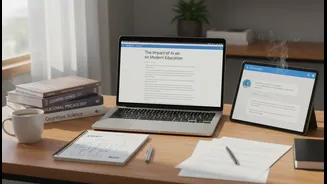
Not long ago, a final paper check meant begging a friend to spot typos or spending hours with a style guide. Today, a new category of artificial intelligence tools is becoming a standard part of the student toolkit. These range from sophisticated grammar
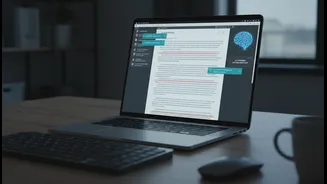
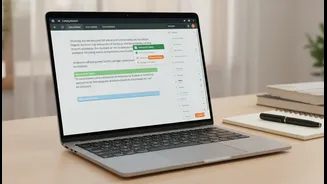
checkers like Grammarly to more advanced platforms like Paperpal and even general-purpose AI like ChatGPT. Students are using them to check for everything from comma splices and sentence structure to clarity and tone. These tools can scan a 6,000-word dissertation for grammatical errors in seconds, suggest more academic phrasing, and ensure the formatting is correct, acting as a tireless, on-demand proofreader.
The Promise of Perfection
The appeal is obvious: these tools help students improve their writing and can lead to better grades. For students who don't speak English as their first language, these AIs can be invaluable, helping to level the playing field by cleaning up syntax and improving readability. The benefits go beyond just proofreading. Some AI can help organize ideas, build an outline, and even check for potential plagiarism. Research suggests that when used correctly, AI can assist in enhancing learning outcomes by automating routine tasks and freeing students to focus on higher-order challenges like strengthening their arguments and deepening their analysis.
A Word of Caution
However, this convenience comes with significant risks. The biggest concern is the potential to undermine the development of critical thinking skills. If a student relies on AI to structure an argument or rephrase a complex idea, they may be bypassing the very cognitive struggle that leads to true learning. There's also the problem of accuracy. AI models are known to "hallucinate," or invent facts and sources that seem plausible but are entirely fake. A student who blindly trusts an AI-generated summary of a research paper they haven't read risks including false information in their work.
Navigating University Policies
Perhaps the most immediate danger for students is violating academic integrity policies. Universities across India and the world are scrambling to create rules for AI use. While using an AI for grammar correction is often permitted, using it to write entire paragraphs or chapters is almost always considered plagiarism or academic dishonesty. The lines can be blurry. For instance, using AI to summarise literature is an ambiguous area, while using it to generate data is strictly prohibited. Policies from institutions like National Law University Delhi and Chitkara University now require authors to disclose their use of AI tools, promoting transparency. Students must check their own university's specific guidelines, as what is acceptable in one class may be grounds for disciplinary action in another.
A Tool, Not a Crutch
The consensus among educators is that AI should be used as a thinking partner, not a replacement for thinking itself. Experts advise students to write their own drafts first and then use AI tools for a final check, much like they would a calculator for a complex math problem. When an AI suggests a change, the student should critically evaluate it: Is this suggestion correct? Does it improve the sentence? Why? This approach turns the tool into a learning opportunity. The goal is to maintain control and use AI to refine one's own unique voice and analysis, not to have the AI create it.