



A Celestial Meet-Up in the Stars
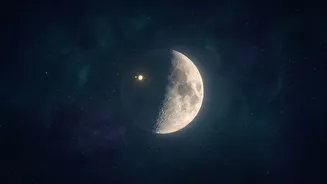
Throughout October, stargazers are in for a treat as the Moon glides across the sky, passing near the planet Saturn. While the headline event is their close approach, or 'conjunction', on the nights of October 24 and 25, Saturn itself is a brilliant target
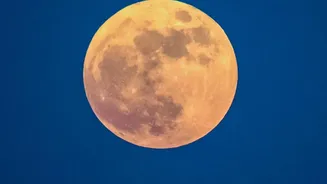
all month long. This is because the planet reached 'opposition' on October 4, the point in its orbit where Earth passes directly between it and the Sun. This alignment makes Saturn appear at its biggest and brightest for the year, rising in the east around sunset and staying visible all night. So, when the nearly full Hunter's Moon joins it later in the month, it creates a truly picturesque sight. Don't be fooled by their apparent closeness; this is just a line-of-sight effect. In reality, the two celestial bodies remain hundreds of millions of kilometres apart.
When and Where to Look From India
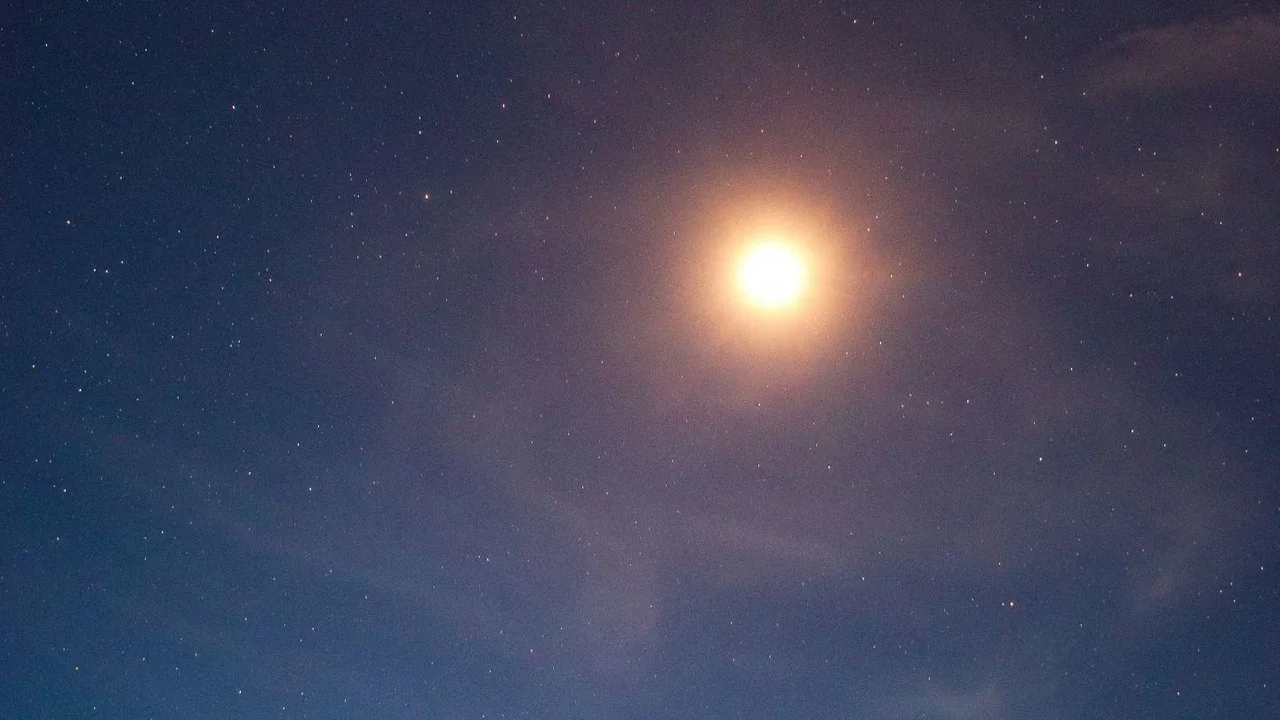
The prime nights to watch the Moon and Saturn pair up are October 24 and 25. After sunset, find a clear view of the eastern or southeastern sky. Saturn will be visible all night, appearing as a bright, steady, yellowish point of light. Unlike stars, which tend to twinkle due to atmospheric turbulence, planets shine with a more constant glow. The Moon will serve as a brilliant guidepost. On October 23, the waxing gibbous Moon will be to the upper right of Saturn, and by October 24, it will have moved to the planet's upper left. For the best experience, try to find a spot away from the direct glare of city streetlights. While Saturn is bright enough to be seen from urban areas, darker skies will always make for a sharper and more rewarding observation.
Naked Eye, Binoculars, or Telescope?
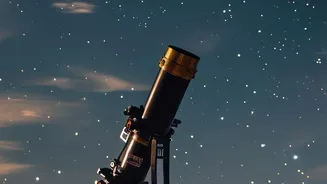
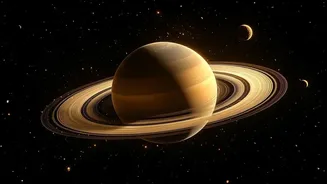
The great thing about this event is that you don't need any special equipment to enjoy the basic sight of the Moon and Saturn close together. Your unaided eyes are enough to spot Saturn as a bright 'star' next to the Moon. However, if you have a pair of binoculars, you can elevate your viewing experience. Binoculars will make Saturn appear as a tiny, distinct disc rather than just a point of light. They will also give you a breathtaking view of the craters and seas on the Moon's surface. For the true showstopper, you'll need a telescope. Even a small backyard telescope with a magnification of 25x to 35x can reveal Saturn's most famous feature: its magnificent rings. After being edge-on and nearly invisible in 2025, the rings are once again tilted toward us in 2026, making for a spectacular sight.
What Makes Saturn So Special?
Saturn is more than just a pretty light in the sky; it's a world of incredible scale and mystery. The sixth planet from the Sun, it's a gas giant so large that nine Earths could line up across its diameter. Its famous rings, while appearing solid, are actually composed of billions of chunks of ice and rock, ranging from tiny dust grains to pieces as large as a house. These rings are astonishingly thin; though they span up to 270,000 kilometres, their vertical thickness is generally no more than about 100 metres. Astronomers believe the rings are relatively young, possibly formed from shattered moons, comets, or asteroids torn apart by Saturn's immense gravity. The planet also hosts a fascinating collection of over a hundred moons, from the giant, smog-shrouded Titan to the icy Enceladus, which sprays jets of water into space.