





1. Prepare Your Vehicle Before the Rain Falls
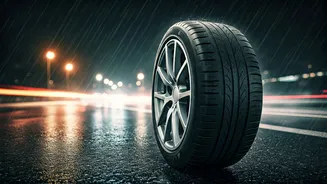
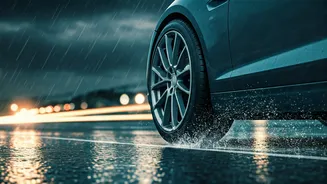
The safest rainy-day drive begins before you even turn the key. Your car's condition is your first line of defence. First, check your tyres. Adequate tread depth (at least 3mm is recommended for wet conditions) is crucial for grip and to channel water
away. Under-inflated tyres can increase the risk of hydroplaning. Second, inspect your wiper blades. If they leave streaks or make scraping noises, replace them immediately. A clear windscreen is non-negotiable. Finally, test all your lights—headlights, taillights, and indicators. In a downpour, visibility drops for everyone, and ensuring others can see you is just as important as you seeing them. A quick pre-monsoon check-up can prevent a majority of weather-related issues.
2. The Golden Rule: Slow Down
It’s the simplest advice, yet the most frequently ignored. Speed limits are designed for ideal, dry conditions. On a wet surface, your car’s braking distance can increase significantly. Water acts as a lubricant between your tyres and the road, reducing friction. As a rule of thumb, reduce your speed by at least one-third. Equally important is increasing your following distance. The standard three-second rule should be doubled to six seconds in the rain. This gives you more time and space to react to sudden stops or hazards, preventing a potential rear-end collision on a slippery road.
3. Understand and Avoid Hydroplaning
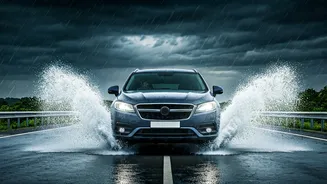
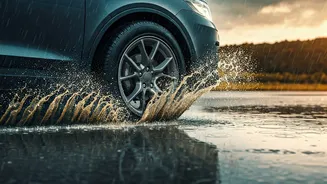
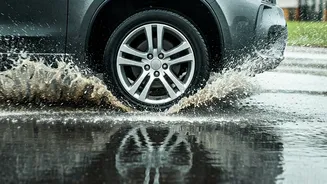
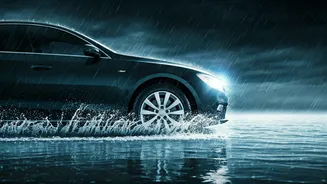
Hydroplaning is one of the most frightening experiences a driver can have. It occurs when a layer of water builds up between your tyres and the road surface, causing a complete loss of steering and braking control. It feels as if you're skidding on ice. It can happen at speeds as low as 50-60 km/h if the water is deep enough. To avoid it, stay away from puddles and standing water where possible, and drive in the tracks of the vehicle ahead of you. If you do start to hydroplane, do not panic. Ease your foot off the accelerator and steer straight ahead until your tyres regain traction. Do not brake hard or turn the wheel suddenly, as this can cause a spin.
4. Master Low Visibility Conditions
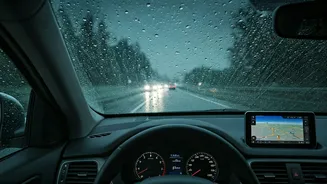
Heavy rain is like driving through a thick fog. Your first instinct should be to turn on your headlights (on low beam, as high beams can reflect off the raindrops and worsen visibility). This helps you see the road, but more importantly, it helps other drivers see you. Avoid using your hazard lights while moving, as this can be confusing. In India, other drivers may think you are stopped or about to stop. Only use them if you are pulled over and stationary in a hazardous position. If visibility becomes so poor that you can't see the edges of the road or the vehicle ahead, it’s safest to pull over and wait for the worst of the downpour to pass.
5. Navigate Waterlogged Roads with Caution
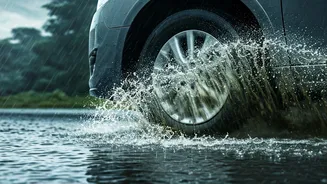
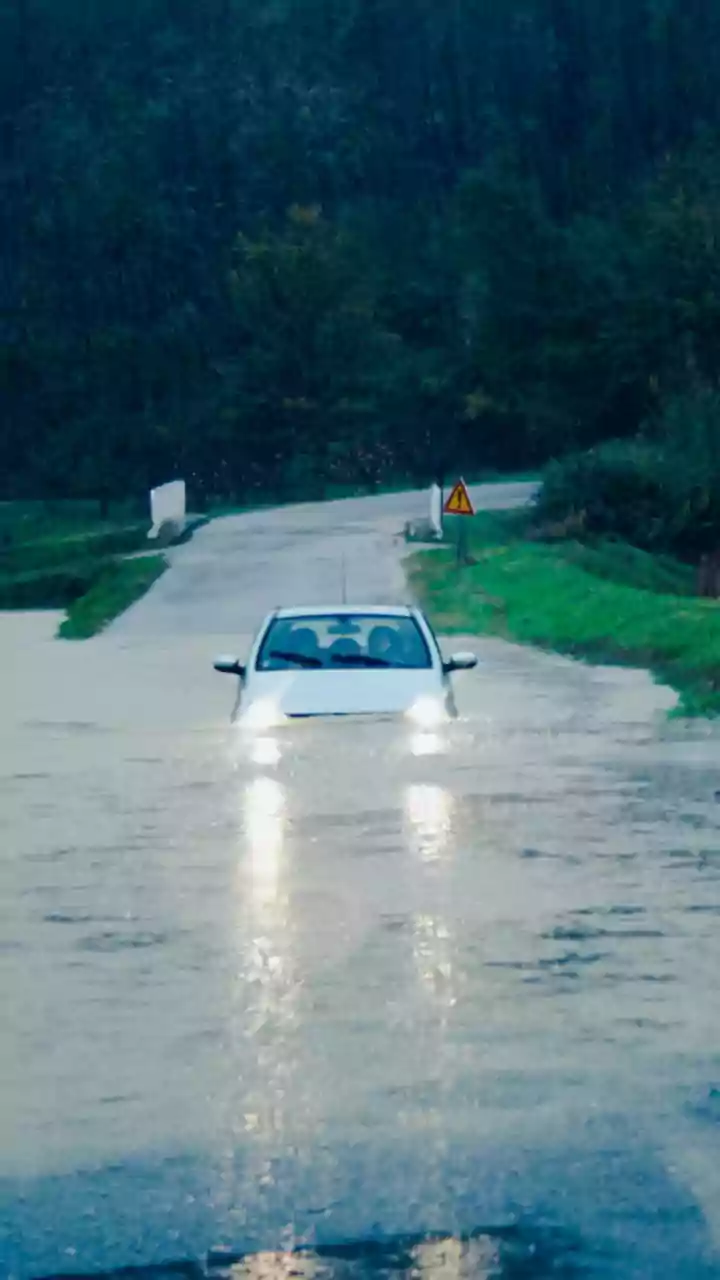
Indian cities are notorious for waterlogged streets during the monsoon. Never treat these as simple puddles. You have no way of knowing their depth or what lies beneath—it could be a deep pothole or an open manhole. If you must drive through standing water, do so slowly and steadily in a low gear to keep your engine's RPMs up, which helps prevent water from entering the exhaust pipe. After clearing the water, gently tap your brakes a few times to dry them out. If the water seems deeper than the bottom of your car doors, do not attempt to cross. Find an alternative route; a detour is always better than a stalled engine and expensive water-damage repairs.
6. Be Gentle with Brakes and Steering
Sudden, jerky movements are your enemy on wet roads. Every input—accelerating, braking, and steering—should be smooth and deliberate. Slamming on the brakes can cause your wheels to lock up and send you into a skid. If your car has an Anti-lock Braking System (ABS), you can brake firmly and steadily, and the system will prevent a lock-up. If not, you may need to pump the brakes gently. When taking turns, reduce your speed well before the corner and steer through it gently. Abrupt steering can easily break the limited traction your tyres have on the wet surface.