


The Policy Shift That Opened the Stars
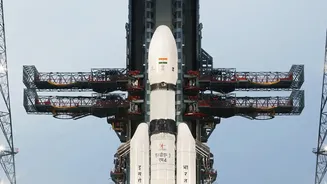
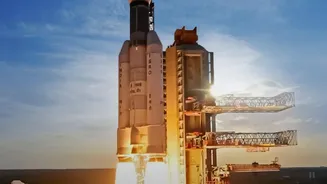
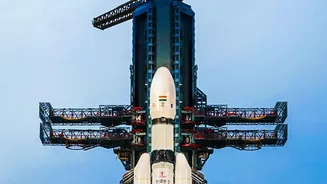
The catalyst for this cosmic boom was a fundamental shift in government policy. The Indian Space Policy of 2023 was a game-changer, formally opening the entire space value chain to private companies. It redefined the roles, making the Indian Space Research
Organisation (ISRO) a mentor focused on advanced research and development, while non-government entities (NGEs) are empowered to handle end-to-end activities. This includes building and launching rockets, manufacturing satellites, and providing space-based services. To oversee this new era, the government established the Indian National Space Promotion and Authorisation Centre (IN-SPACe) as a single-window agency to promote, authorise, and supervise private space activities, ensuring they get access to ISRO's extensive facilities and expertise. This reform, combined with liberalised Foreign Direct Investment (FDI) norms, has created a predictable regulatory framework that is attracting significant investment and fuelling a startup explosion.
Trailblazers of the Launchpad
Leading the charge in the launch vehicle segment are ambitious startups founded by former ISRO scientists. Hyderabad-based Skyroot Aerospace made history in November 2022 with the launch of Vikram-S, India’s first privately developed rocket. The company followed this up with an even greater milestone in July 2026, successfully launching its Vikram-1 rocket into orbit. This achievement made India only the third country, after the U.S. and China, with a private orbital launch capability. Another key player is Chennai-based Agnikul Cosmos, incubated at IIT Madras. Agnikul has distinguished itself with its innovative approach, successfully test-launching the Agnibaan SOrTeD (Suborbital Technology Demonstrator) in May 2024 from India's first private launchpad. A standout feature was its Agnilet engine, the world's first single-piece 3D-printed rocket engine, which drastically reduces manufacturing time and cost.
India's New Eyes in the Sky
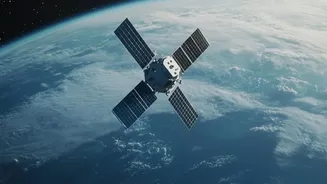
The satellite sector is experiencing equally explosive growth. Pixxel, a Bengaluru-based startup, is making global waves with its plans to build a constellation of hyperspectral imaging satellites. These powerful satellites can see things standard ones cannot, like detecting invisible crop diseases, identifying mineral deposits, and monitoring pollution sources in great detail. The company has already launched several satellites and is working to build out a constellation of 18 by the end of 2027. Another prominent name is Dhruva Space, a full-stack space engineering company from Hyderabad. Dhruva is building a large-scale satellite production facility and has secured significant contracts, including a recent partnership with French firm Safran to supply critical systems for a strategic 52-satellite surveillance constellation for India. This highlights the growing trust placed in private firms for critical national infrastructure.
A Symbiotic Ecosystem with ISRO
The expansion isn't a case of private industry replacing the state-run behemoth. Instead, a collaborative ecosystem is emerging. ISRO's new mandate allows it to focus on pioneering science and strategic missions like human spaceflight, while transferring mature technologies to the private sector. Companies like Skyroot and Agnikul use ISRO’s launch facilities at Sriharikota, and IN-SPACe facilitates this access. This synergy prevents the duplication of expensive infrastructure and allows startups to move faster. The growth is not just in rockets and satellites but across the entire supply chain, from ground station services to component manufacturing. This public-private partnership is considered crucial for India's ambition to significantly grow its share of the global space economy, which is projected to increase from its current value of around $8.4 billion to over $40 billion by 2030.
Challenges on the Final Frontier
Despite the incredible momentum, the path ahead is not without obstacles. Limited funding remains a significant challenge, with Indian space startups attracting far less capital than their US counterparts. While the Indian Space Policy 2023 provides a roadmap, a comprehensive Space Activities Act covering complex issues like liability and insurance is still awaited, creating some regulatory uncertainty. Furthermore, infrastructure constraints, such as a reliance on a single primary launch complex, and continued dependence on imports for some high-grade components, pose hurdles to rapid scaling. Finally, Indian companies face intense global competition from established players like SpaceX and a growing number of international startups, demanding continuous innovation and cost-effectiveness to succeed.