




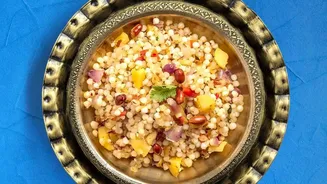
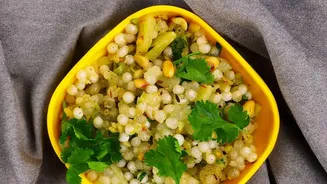
The All-Time Favourite: Sabudana Khichdi
Arguably the most iconic Navratri dish, Sabudana Khichdi is a staple in households across India during the nine-day festival. Made from soaked tapioca pearls (sago), it’s a light yet filling dish that provides a much-needed energy boost. The magic of
a perfect Sabudana Khichdi lies in its texture—each pearl should be separate, soft, and translucent, never sticky or mushy. The pearls are typically sautéed with boiled and diced potatoes, roasted peanuts, green chillies, and cumin seeds. A final squeeze of lemon juice and a garnish of fresh coriander leaves brighten the flavours, creating a harmonious blend of savoury, tangy, and nutty notes. It's a comforting meal that truly embodies the spirit of festive fasting.
The Crispy Delight: Kuttu ki Puri
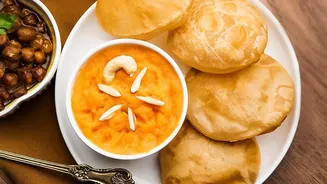
When the craving for something deep-fried and satisfying hits, Kuttu ki Puri is the answer. Made from buckwheat flour, known as 'kuttu ka atta', these puris are a Navratri specialty. Buckwheat is not a grain but a fruit seed, making it a popular choice for fasting diets. The flour has a distinct nutty and earthy flavour and gives the puris a characteristic dark colour. Often, boiled and mashed potatoes are mixed into the dough to help with binding, as buckwheat flour is gluten-free. These puris are best enjoyed hot and fresh, as they tend to become dense once they cool down. They are wonderfully crisp and taste heavenly when paired with a simple potato curry, or 'vrat wale aloo'.
The Simple Classic: Vrat Wale Aloo
Simple, flavourful, and incredibly versatile, Vrat Wale Aloo is the perfect accompaniment to puris and rotis made from fasting flours. This potato curry is prepared without onions or garlic and uses 'sendha namak' (rock salt) instead of regular table salt. The preparation is usually a 'satvik' one, focusing on pure and light ingredients. The curry is typically tomato-based, spiced with cumin seeds, green chillies, and ginger. The result is a light yet flavourful gravy that perfectly complements the earthy taste of kuttu or singhara atta preparations. Some variations are tangy and sweet, offering a different flavour profile to enjoy during the fast.
The Creamy Dessert: Makhana Kheer
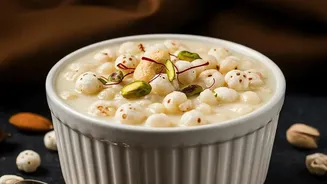
No festival is complete without a sweet dish, and Makhana Kheer is a Navratri favourite. Made with fox nuts (makhana), milk, sugar, and flavoured with cardamom and saffron, this kheer is both luxurious and light. Makhana, or puffed lotus seeds, are roasted in ghee until they become crisp before being added to simmering milk. Some of the makhana is often coarsely ground to help thicken the kheer, while the rest is left whole, softening in the milk to create a unique texture. Garnished with slivered almonds and pistachios, this dessert is a wholesome and delicious way to conclude a fasting meal.
The Grain Alternative: Samak Chawal
For those who miss rice during the fast, 'samak chawal' or barnyard millet is the perfect substitute. Despite its name, it is not a type of rice but a gluten-free millet that is permitted during Navratri fasting. It can be prepared in various ways, from a simple steamed version to a flavourful pulao or khichdi, cooked with vegetables like potatoes and bottle gourd, and seasoned with mild spices. Samak rice is easy to digest and provides sustained energy, making it an excellent choice for a fulfilling meal during the nine days of observance.
The Nutty Sweet: Singhare ka Halwa
Another popular flour used during Navratri is 'singhare ka atta', or water chestnut flour. It's used to make a rich and delicious halwa. The flour is roasted in ghee until it turns aromatic and golden brown, then cooked with sugar and water or milk until it reaches a thick, pudding-like consistency. The resulting halwa has a unique, slightly dense texture and a delightful flavour. Often garnished with nuts, it's a comforting and energy-dense sweet that offers a wonderful way to treat yourself during the fasting period.