




The Anatomy of a Roadside Stop
On India's chaotic roads, a police or transport authority check is a common occurrence. You see the barricade or the officer waving you over, and your focus shifts. You pull to the shoulder, often a narrow, uneven strip of land bordering a highway where
traffic hurtles past at high speed. The interaction itself is straightforward: a check of your license, registration, and pollution certificate. Officers are performing their duty to ensure vehicles on the road are compliant and drivers are fit to operate them. This process, while sometimes inconvenient, is a necessary component of public road safety. We are told to stay calm, be polite, and have our documents ready. The entire system is designed around the interaction itself. But what happens in the moments immediately after your documents are handed back and you are told you can leave? The official procedure, and our collective focus on safety, seems to end right there. This is a critical oversight.
The Most Dangerous Moment: Rejoining Traffic
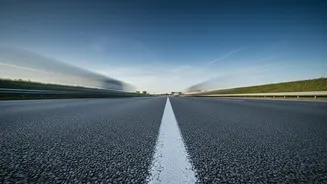
The single most hazardous part of a roadside stop is often rejoining the flow of traffic. Merging from a stationary position on the shoulder into a lane where vehicles are moving at 80-100 km/h or more is an exercise in high-risk physics. The speed differential is enormous. A driver needs to find a suitable gap, accelerate rapidly, and merge seamlessly without forcing other drivers to brake suddenly. This is challenging under the best of circumstances. On many Indian highways, with inconsistent lane discipline, inadequate acceleration lanes, and drivers who may not anticipate a slow-moving vehicle entering their path, it is exceptionally perilous. The risk of a sideswipe, a rear-end collision, or causing a chain-reaction accident is immense. For two-wheelers, which account for a huge percentage of road fatalities, this manoeuvre is even more fraught with danger. The safety of the driver and their passengers is arguably at its lowest point not during the check, but in the 30 seconds it takes to get back on the road.
An Unwritten Final Step in Safety
Currently, the responsibility for a safe re-entry into traffic lies entirely with the driver. But should it? When the state, through its officials, removes a vehicle from the flow of traffic for an inspection, there should be an implicit duty of care that extends to ensuring that vehicle can safely resume its journey. The objective of a traffic stop is to enhance safety, not to inadvertently create a new, acute point of danger. By considering the stop 'complete' the moment a challan is issued or documents are returned, we are ignoring the final, crucial chapter. We train officers on how to conduct a stop, what to look for, and how to interact with the public. It is time we train them to consider the disengagement phase as part of their safety protocol. Adding 'Ensure Safe Route Rejoining' to the end of the standard operating procedure would be a small change in paperwork but a massive shift in mindset, acknowledging that an officer's duty to public safety concludes only when the citizen is safely back in the traffic stream, not when they are stranded on a dangerous shoulder.
A Shared Responsibility for a Safer Merge
This isn't about placing blame, but about creating a holistic safety culture. What would this look like in practice? For authorities, it means selecting stop locations with better visibility and safer merging opportunities where possible. In some cases, it might involve an officer briefly using their vehicle's lights to signal to oncoming traffic, creating a safe gap for the driver to merge. It's a practice seen in other countries and one that acknowledges a shared responsibility for safety. For drivers, it means being patient and disciplined. Use your indicator well in advance. Wait for a large gap in traffic; do not force your way in. Accelerate as much as you can on the shoulder before merging to reduce the speed differential. Check your mirrors and blind spots multiple times. And for those already on the highway, it requires a degree of empathy. If you see a vehicle attempting to merge from the shoulder after a stop, and if it is safe to do so, consider changing lanes or adjusting speed to create space. Road safety is not just about following rules; it's about a collective, defensive mindset.