





India’s rich tapestry of history and nature has received a significant nod. Three remarkable sites—a historical marvel in Chhattisgarh and two geological wonders in the Andamans—have been added to UNESCO's Tentative List for World Heritage status.
Sirpur: A Lost Metropolis Re-emerges
On the
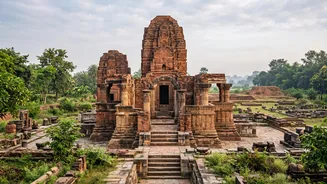
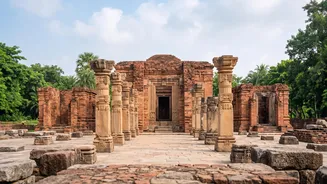
banks of the Mahanadi river in Chhattisgarh lies the Sirpur Group of Monuments, a sprawling archaeological landscape that was once a thriving capital. Known anciently as Shripur, this city was a major political and cultural hub for the Sharabhapuriya and Panduvamshi dynasties between the 5th and 12th centuries. What makes Sirpur extraordinary is the peaceful coexistence of Hindu, Buddhist, and Jain faiths, a story told through its extensive ruins. Excavations since the 1950s have unearthed a treasure trove: 22 Shiva temples, 10 Buddhist viharas (monasteries), 3 Jain viharas, and even a 6th-century marketplace. The site's most famous structure is the 7th-century Lakshmana Temple, a marvel of brick architecture that has withstood the test of time. The sheer scale of the findings, from monolithic statues of Buddha to intricate Hindu carvings, highlights Sirpur as a crucial centre of religion, trade, and culture in ancient South Kosala. Its inclusion on the tentative list recognizes its potential as a site of outstanding universal value, celebrating its rich, syncretic past.
Andaman's Fiery Giant: Barren Island
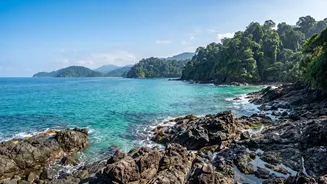
The first of the two Andaman entries is part of a cluster named the Andaman Subduction Volcanoes. This entry prominently features Barren Island, which holds the unique distinction of being India’s only confirmed active volcano. Located about 138 km northeast of Port Blair, this formidable island is a living geological laboratory. Its volcanic activity is a direct result of the Indian tectonic plate subducting beneath the Burmese microplate, creating a chain of volcanoes stretching from Myanmar to Sumatra. The island itself is a stark, almost lunar landscape dominated by a 2-km-wide caldera, the result of a massive eruption in the distant past. Despite its desolate appearance, the surrounding waters teem with life. The volcanic minerals enrich the sea, supporting vibrant coral reefs and a diverse marine ecosystem, making it a challenging but rewarding destination for advanced scuba divers. This recognition highlights its importance not just as a geological spectacle, but as a dynamic natural system.
Baratang's Caves and Mud Volcanoes
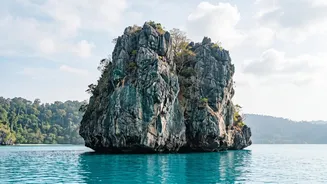
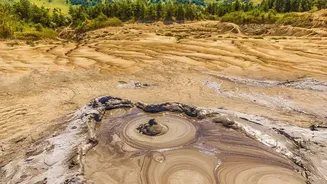
The second Andaman entry, the Karst-mud-volcano Complex of Baratang, showcases a different kind of geological drama. Baratang Island is famous for two unique features: extensive limestone caves and active mud volcanoes. The limestone karst formations, created over millennia by the dissolution of soluble rock, have resulted in a rugged terrain of caves, fissures, and jagged outcrops. Complementing this are the mud volcanoes, locally known as 'jalki'. Unlike fiery volcanoes, these vents release a cool slurry of mud, water, and natural gases like methane, pushed to the surface by immense subterranean pressure. After two decades of dormancy, these mud volcanoes became active again in 2025, renewing interest in the site. The complex represents a rare combination of geological processes, offering scientists invaluable insights into tectonics and land formation. This nomination celebrates a landscape that is constantly being shaped by the powerful forces beneath the earth's surface.