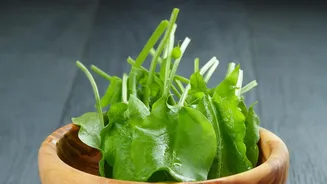






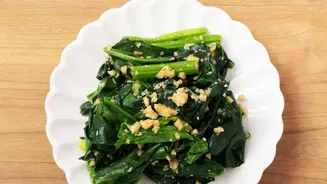

It’s a familiar kitchen scene: a huge bunch of fresh palak wilts into a small mound in the pan. But as it shrinks, what happens to its goodness? This raw-versus-cooked debate for leafy greens is complex, with trade-offs in nutrition and texture.
Why Greens Wilt: The Science of Texture
The dramatic
change from a crisp, bulky leaf to a soft, tender one is all about cell structure. Raw leafy greens are full of water, which creates turgor pressure inside their cells, making them firm and crisp. When you apply heat, these rigid cell walls, which are made of compounds like cellulose and pectin, begin to break down. As the walls soften and become more permeable, water escapes and the cells collapse. This process is why a pan-full of raw spinach can cook down to just a few spoonfuls. The longer the cooking time and the higher the heat, the more the structure softens, leading to that tender, sometimes mushy, texture. This softening makes the greens easier to chew and digest.
The Nutrient Trade-Off: Gains and Losses
Cooking is not simply a story of nutrient destruction; it's more of a negotiation. Some nutrients become more available to your body, while others are reduced. The main nutrients affected are vitamins and minerals. Water-soluble vitamins, like vitamin C and the B vitamins (including folate), are sensitive to heat and can leach into cooking water. Boiling can cause significant losses of these vitamins. On the other hand, cooking makes fat-soluble vitamins like A, E, and K, as well as many minerals, more bioavailable. This means your body can absorb and use them more effectively. The heat helps break down the plant's cell walls, releasing these nutrients that would otherwise be trapped.
The Hidden Benefit: Reducing Antinutrients
Leafy greens like spinach (palak) and fenugreek (methi) contain compounds called 'antinutrients', such as oxalates and phytic acid. These substances can bind to minerals like iron and calcium in the gut, preventing your body from absorbing them fully. This is a key reason why simply eating raw spinach isn't the best way to get its iron and calcium. The good news is that cooking significantly reduces these antinutrients. Boiling or steaming spinach, for instance, breaks down oxalic acid, unlocking more of the calcium and iron for your body to use. This makes cooked spinach a better source for these specific minerals compared to its raw form.
Smart Cooking for Maximum Goodness
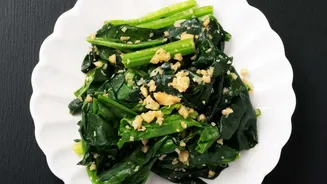
The cooking method you choose has the biggest impact on nutrient retention. Boiling is often the worst offender for nutrient loss, especially for vitamin C and B vitamins, as they dissolve into the water that often gets discarded. If you do boil your greens, try to use the leftover water in dals, soups, or gravies to reclaim some of those lost nutrients. Steaming is a far better option. It cooks the greens without submerging them in water, preserving more of the water-soluble vitamins. Studies have shown steaming is one of the best methods for retaining nutrients like folate in spinach. Quick stir-frying or sautéing in a little oil is also excellent. This method uses minimal water and short cooking times, and the presence of fat can help your body absorb fat_soluble vitamins like A and K. Microwave cooking, due to its speed and low water requirement, has also been found to be surprisingly effective at preserving nutrients like vitamin C.
Getting the Best of Both Worlds
So, should you eat your greens raw or cooked? The answer is both. There is no single superior method for all nutrients. Enjoying raw greens in salads provides a great dose of heatsensitive vitamin C and B vitamins. For popular Indian greens like palak , methi , and sarson , light cooking methods are ideal to enhance mineral absorption and make them easier to digest . The key is variety in both the greens you eat and how you prepare them . For palak paneer or saag , a quick blanch or sauté is better than prolonged boiling . A light stir fry for methi leaves preserves their texture and nutrients . By adopting smarter , quicker cooking techniques , you can enjoy the delicious flavours of cooked greens while maximising their nutritional payoff .