



A Legacy Forged by Empires
The story of Mysuru Dasara is entwined with the history of Southern India. Its origins trace back to the great Vijayanagara Empire in the 15th century. After the empire's decline, the Wodeyar dynasty of Mysuru adopted and elevated the tradition. In 1610,
Raja Wodeyar I began the festivities in Srirangapatna, establishing a legacy that has now flourished for over 400 years. The festival, known as 'Nada Habba' or the state festival, commemorates the victory of the goddess Chamundeshwari over the demon Mahishasura—a triumph of good over evil that is said to have given Mysuru its name. This mythological core, combined with centuries of royal patronage, has shaped Dasara into a unique blend of sacred devotion and regal pageantry.
The Spectacle of the Jumboo Savari
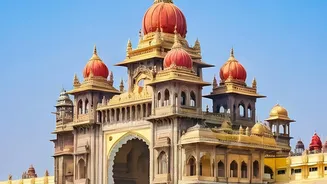
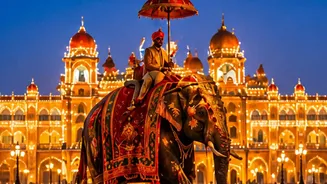
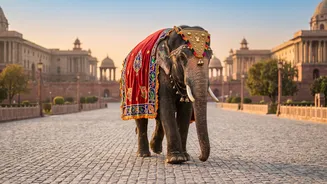
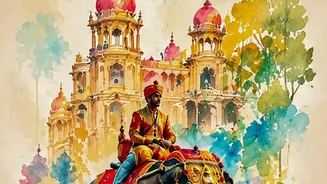
The festival culminates on the tenth day, Vijayadashami, with its most iconic event: the Jumboo Savari. This grand procession is a breathtaking sight. The main attraction is the idol of Goddess Chamundeshwari, seated in a magnificent golden howdah weighing around 750 kilograms, which is carried by a decorated elephant through the city streets. The procession starts at the resplendent Mysuru Palace and makes its way to Bannimantap. It is a vibrant parade featuring colourful tableaus, folk dancers, music bands, and contingents of elephants, horses, and camels, all creating a sensory feast that draws millions of spectators. Historically, the king of Mysuru would preside over the procession, and today the tradition continues with the royal family's involvement, connecting the present-day celebration directly with its storied past.
A City Illuminated with Culture
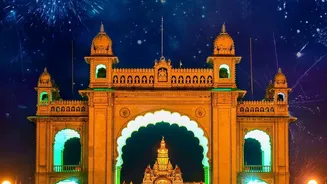
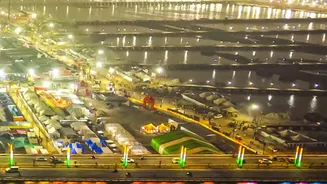
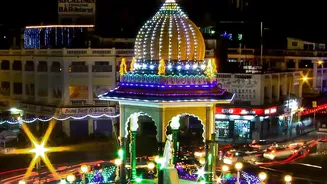
While the Jumboo Savari is the finale, the preceding nine days of Navaratri are filled with a diverse array of cultural events. The magnificent Mysuru Palace, illuminated by nearly 100,000 light bulbs every evening, serves as the epicentre of the festivities. Its grounds host classical music and dance performances by artists from across India. Beyond the palace walls, the city buzzes with activity. There's 'Yuva Dasara' for the youth, featuring popular musicians, and even traditional wrestling competitions (Kusti Spardhe) that attract wrestlers from far and wide. The Dasara Exhibition, a tradition started in 1880, transforms a large ground opposite the palace into a sprawling fair with stalls, food courts, and amusement rides, lasting well beyond the festival itself.
The Grand Finale: A Torchlight Parade
As night falls on Vijayadashami, the celebrations conclude with the Panjina Kavayatthu, or the Torchlight Parade, at the Bannimantap grounds. This event, which requires a ticket for entry, is a spectacular display of discipline and skill. Originally intended to showcase the kingdom's military prowess, it now features police and military units performing synchronised drills, daring equestrian stunts by the mounted police, and vibrant formations with lit torches. The parade is a powerful and fittingly dramatic end to the ten-day festival, leaving spectators with a lasting impression of the grandeur and organised might that once defined the princely state of Mysuru.