





The Great Monsoon Exception
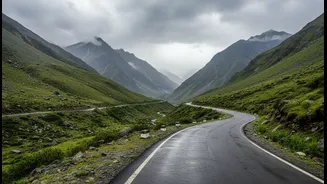
From June to September, the Indian subcontinent is dominated by the monsoon, a season of heavy rainfall that brings life-giving water but also travel headaches like landslides and floods, especially in mountainous areas. Hill stations in states like Himachal
Pradesh and Uttarakhand often become difficult to access. Yet, nestled deep in the Himalayas, Ladakh remains a glaring exception. While the rest of the country reaches for an umbrella, travellers in Ladakh are often reaching for sunscreen. This makes the region a uniquely perfect destination for those seeking adventure during the monsoon months, with pleasant daytime temperatures often hovering between 20 and 25 degrees Celsius.
Understanding the Rain Shadow Effect
The secret to Ladakh's dry weather lies in a powerful meteorological phenomenon called the 'rain shadow effect'. Imagine the towering Himalayas as a gigantic wall. Moisture-laden monsoon clouds, originating from the Indian Ocean, travel north across the plains. When these clouds hit the southern, or windward, side of the Himalayas, they are forced to rise. As the air ascends, it cools and condenses, dumping most of its moisture as heavy rain or snow on that side. By the time this air mass crosses the massive peaks to the other side—the leeward side, where Ladakh is located—it has lost almost all of its moisture. The descending air then warms up, further reducing humidity and creating a dry, arid climate.
Ladakh: Shielded by the Himalayas
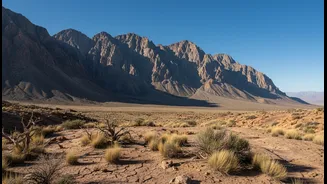
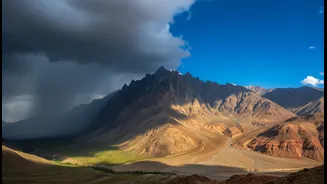
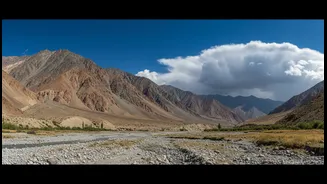
Ladakh is perfectly positioned to benefit from this effect. Situated on the leeward side of the Great Himalayan range and flanked by the Karakoram Range to the north, it is effectively shielded from the monsoon. These mountain barriers are so formidable that they prevent the rain-bearing clouds from ever reaching the high-altitude plateau. As a result, Ladakh is classified as a cold desert, receiving less than 100 mm of precipitation annually. This extreme dryness, a direct consequence of its geographic location, is the primary reason it offers such pristine conditions when other regions are waterlogged.
What 'Pristine Conditions' Mean for Travellers
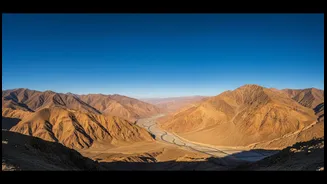
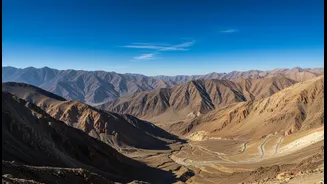
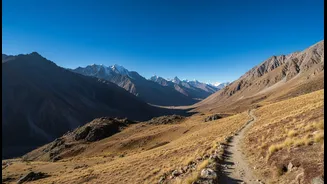
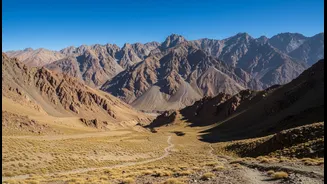
For anyone visiting Ladakh between July and September, this scientific reality translates into tangible travel bliss. 'Pristine conditions' mean roads are generally open and safe for travel, a stark contrast to the landslide-prone highways leading into other mountain regions. It means clear, sunny skies perfect for photography, allowing the dramatic, barren landscapes and deep blue lakes like Pangong Tso to be seen in all their glory. Trekkers, bikers, and sightseers can explore the region's famous monasteries and high passes, such as Khardung La, without the disruption of persistent rain. While the approach roads via Manali or Srinagar can still face monsoon-related challenges, once you enter the rain shadow zone, the weather transforms dramatically for the better.
A Landscape Forged by Dryness
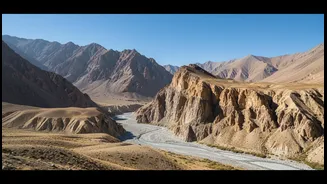
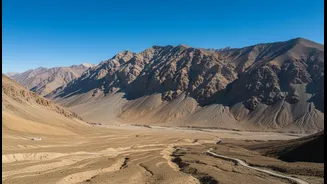
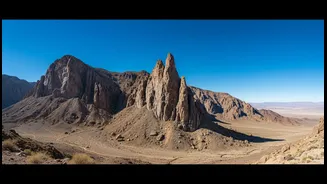
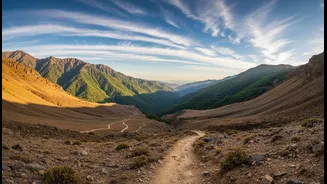
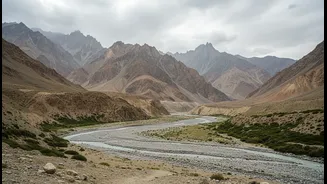
The rain shadow effect doesn't just make for a great holiday; it has shaped every aspect of Ladakh's existence. The arid climate is responsible for its stunning, moon-like landscapes, characterized by barren mountains and deep, dramatic valleys. With so little rainfall, life has always depended on the glacial meltwater flowing down from the high peaks, a resource that has dictated settlement patterns and agricultural practices for centuries. Visiting during the monsoon allows you to see this unique ecosystem in a special light—occasional light drizzles can even lead to a rare greening of the valleys and blooming wildflowers, adding a soft, beautiful contrast to the rugged terrain.