






How This Smart System Works
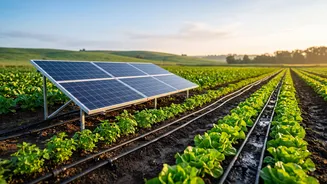
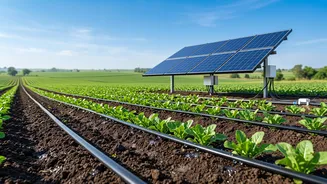
A solar drip irrigation system is a clever pairing of two efficient technologies. It starts with photovoltaic (PV) solar panels, which capture sunlight and convert it into electricity. This power runs a water pump, which draws water from a well, pond,
or canal. Instead of flooding the entire field, which is wasteful, the pump pushes the water through a network of pipes and tubes directly to the base of each plant, releasing it drop by drop. This targeted approach ensures that water goes straight to the roots where it's needed most, with minimal loss to evaporation or runoff. The system provides a reliable, automated water supply without needing a grid connection or expensive fuel.
Breaking Free from Diesel and High Bills
One of the most immediate benefits for farmers is the end of their reliance on diesel. With diesel prices constantly fluctuating, fuel costs can consume a massive portion of a farmer's budget, with some saving between ₹50,000 to ₹1,00,000 annually by making the switch. Solar pumps operate with near-zero running costs after the initial installation. This eliminates a major source of financial stress and makes farm operations more economically resilient. Farmers no longer have to worry about erratic grid electricity either, which often forces them to irrigate at odd hours. Solar power provides consistent, predictable energy during the day, when crops need it most.
More Crop Per Drop in a Water-Stressed State
Maharashtra frequently grapples with drought and water shortages, making efficient water use critical. Traditional flood irrigation is notoriously inefficient, with studies showing that up to 70% of the water can be lost to evaporation and runoff. In contrast, drip irrigation systems have a water use efficiency of up to 95%. By delivering water directly to the roots, these systems can save 50-60% of water compared to conventional methods. This allows farmers to cultivate more land with the same amount of water, and even grow water-intensive crops that were previously not viable. This 'more crop per drop' approach is vital for ensuring food security in a changing climate.
A Boost to Farmer Incomes and Livelihoods
The combination of cost savings and improved yields directly translates to higher incomes for farmers. In villages like Tulyachapada in Palghar district, the introduction of shared solar irrigation systems has been transformative. Farmers who once grew only a single rain-fed crop like paddy can now cultivate second and even third crops, including vegetables and groundnuts, throughout the year. This has dramatically increased cultivated land area and farm revenues, with some reports showing a 20-30% increase in farm income. For many, this reliable income has reduced the need to migrate to cities for daily wage work, keeping families together and strengthening the rural economy.
Government Schemes Paving the Way
Recognizing the immense potential, both central and state governments are actively promoting this technology. Under schemes like the Pradhan Mantri Kisan Urja Suraksha evam Utthaan Mahabhiyan (PM-KUSUM) and Maharashtra's 'Magel Tyala Saur Krushi Pump Yojana', farmers can receive substantial subsidies—up to 90% of the pump's cost. This support makes the high initial investment much more manageable. Under these schemes, farmers in the general category may only need to pay 10% of the cost upfront. As of October 2025, over 1.52 lakh solar pumps had been installed across Maharashtra under one such program. These initiatives are accelerating the adoption of sustainable farming practices statewide.
Overcoming the Hurdles
Despite the clear advantages, challenges remain. The primary barrier for many small-scale farmers is the high upfront cost of the system, even with subsidies. Accessing formal bank credit can also be difficult for farmers without strong collateral. Furthermore, issues like the unavailability of skilled technicians for maintenance and repairs in remote areas can be a concern for some. Ensuring that the benefits of these schemes reach the smallest and most marginal farmers continues to be a key focus for policymakers.