






The Digital Foundation
India's digital landscape has exploded. As of early 2026, the country has over a billion internet users, making it the second-largest online market in the world. This growth is not just an urban phenomenon. While cities are nearing connectivity saturation,
rural India is driving the next wave of digital adoption, with some reports indicating that rural users now account for over half of all active internet users. This expansion, fueled by affordable mobile data and government initiatives like Digital India, has laid the groundwork for a massive new digital economy. It has connected millions of households to a world of information and commerce, creating a vast, addressable market that was previously out of reach.
The Great Indian Kitchen Goes Online
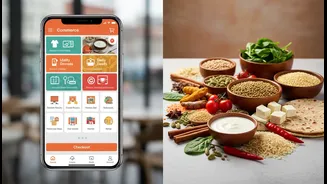
This new digital market is meeting one of the most complex consumer landscapes in the world: the Indian diet. Characterised by immense regional diversity, a preference for fresh ingredients, and a rich tapestry of spices and culinary traditions, India's food culture initially posed a significant challenge for standardised e-commerce models. However, platforms are now adapting. The Indian online grocery market is projected to grow significantly, with some forecasts predicting a market size of over USD 100 billion by 2034. This growth is driven by companies that are learning to cater to these diverse needs, offering everything from regional specialties to daily staples like fresh fruits, vegetables, and milk.
The Rise of Quick Commerce
The most significant disruption in this space is the emergence of quick commerce, or q-commerce. Platforms like Blinkit, Zepto, and Swiggy Instamart are promising deliveries in minutes, not days, fundamentally changing consumer behaviour. This model has transformed grocery shopping from a planned chore into an on-demand, impulse-driven activity. The convenience has been a game-changer, especially for busy urban households. As a result, the quick commerce segment has seen explosive growth and is expanding into Tier-2 and Tier-3 cities, indicating a broad-based shift in how Indians shop for their daily needs. These platforms are not just delivering groceries; they are delivering convenience, and consumers are enthusiastically embracing it.
Impact on Household Budgets
For households, this new digital food ecosystem is a double-edged sword. On one hand, it offers unprecedented choice, price transparency, and access to discounts. Consumers can compare prices across platforms and take advantage of deals, potentially saving money. On the other hand, the sheer convenience can lead to increased spending. The rise of quick commerce is driving incremental demand, encouraging more spontaneous and frequent purchases. Furthermore, the ease of ordering calorie-dense, ultra-processed foods is a growing concern, with studies linking the fad of online food delivery to poor dietary habits and health issues like obesity. This convenience comes with a hidden cost that families must navigate.
Information, Health, and Changing Tastes
Internet access is not just changing how people buy food; it's changing how they think about it. A wealth of information on nutrition, healthy eating, and international cuisines is now just a click away. This is fostering a new wave of health consciousness, with many consumers actively seeking healthier options. E-commerce platforms are responding by introducing 'healthy' modes and partnering with brands that cater to this demand. Specialised apps are even using AI to provide culturally sensitive nutritional advice for complex Indian diets. However, this access to information is paired with sophisticated digital marketing that can also push less healthy choices, creating a complex new environment for making dietary decisions.