






The Library of Earth's Climate
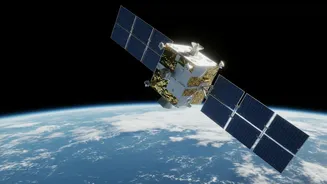
When we talk about “decades of climate records,” it’s not just about temperature readings. It’s a vast and complex library of our planet’s history. This includes satellite imagery tracking ice melt and deforestation, deep ocean buoys measuring temperature and salinity,
and ancient ice cores that hold atmospheric data from millennia ago. This historical data is crucial for understanding how our climate system works, but its sheer volume and complexity have always presented a challenge. Traditional computer models, while powerful, are based on known physics equations and can struggle to process the full richness of this information, sometimes missing subtle but critical patterns. This is where the limitations of human analysis and conventional computing become apparent; the data is simply too vast to connect all the dots manually.
AI as the Ultimate Pattern Finder
Artificial intelligence, specifically machine learning, is changing the game. Unlike traditional models that are explicitly programmed with physics equations, AI systems learn directly from the data itself. By feeding them decades of historical weather and climate information, these models can identify complex, non-linear relationships that human analysts and older models might miss. Think of it as the ultimate pattern recognition tool. It can spot how a slight temperature change in the Pacific Ocean might influence monsoon patterns in India months later, or how soil moisture levels in one region correlate with heatwaves in another. It's not just about speed; AI can uncover entirely new connections hidden within the noise of global climate data, offering a new lens through which to view our planet's health.
From Hindsight to Faster Foresight
The combination of historical data and AI is leading to a revolution in forecasting. For years, weather and climate prediction relied on supercomputers running complex physical simulations, which were time-consuming and computationally expensive. AI models, once trained on historical data, can generate forecasts thousands of times faster and with significantly less energy, sometimes on a standard desktop computer. This allows for more frequent and higher-resolution predictions. For example, AI is being used to improve the accuracy of tropical cyclone tracks, give more advanced warning for droughts and floods, and even 'nowcast' the output of solar power grids by predicting cloud cover minutes in advance. In some cases, AI is even used to fill in the gaps in historical records where data was sparse, giving us a more complete picture of past climate extremes.
What This Means for India
For a country as vast and climatically diverse as India, these advancements are critical. With over 85% of its population exposed to extreme weather risks, the ability to generate more accurate and localised forecasts can be life-saving. India is already leveraging AI to improve monsoon predictions, manage water resources, and provide farmers with crucial information to adapt to changing weather patterns. AI-powered systems analyse satellite imagery to monitor deforestation and the health of India’s 7,500 km coastline, assessing risks from sea-level rise and shoreline erosion. Initiatives like the Bharat Forecasting System aim to deliver high-resolution weather predictions to the village level, empowering local communities to prepare for everything from heatwaves to cyclones with greater precision than ever before. This technology offers India a chance to leapfrog traditional methods and build a more resilient future.