

The dream of autonomous ships navigating the world's oceans is closer than ever, but it comes with a huge challenge: how do you safely test a self-driving ship? Researchers at IIT Madras have unveiled a groundbreaking answer.
The High-Stakes World of Maritime Testing
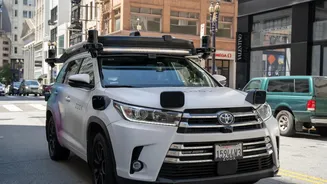
Autonomous cars are tested
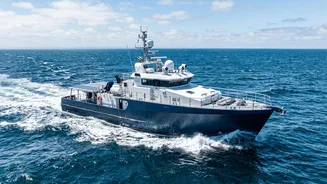
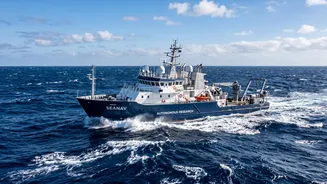
on closed tracks and public roads, but testing an autonomous ship presents a far greater set of challenges. The ocean is a complex, unpredictable environment. Real-world trials are not only incredibly expensive and logistically complex, but they also carry significant risks. A single error in a navigation algorithm could endanger the vessel, its crew, other ships, and the marine ecosystem. With over 80% of global trade transported by sea, the push for more efficient and safer shipping is immense, but the barrier to entry for testing new autonomous systems has remained prohibitively high. This is the problem that researchers from IIT Madras's Department of Ocean Engineering, a centre of excellence since 1977, set out to solve.
Introducing SeaNav: A Digital Twin for the High Seas
The solution from IIT Madras is an innovative platform called SeaNav. At its core, SeaNav is a 'digital twin' — a highly realistic, real-time virtual replica of the maritime world. Developed using the powerful Unity3D engine, it creates a simulated environment where everything from ocean waves and vessel movements to complex traffic scenarios can be accurately replicated. This allows developers to test, validate, and train their autonomous navigation systems in a completely safe and controlled setting. Instead of risking a multi-million dollar vessel on the open ocean, they can run thousands of simulations to see how their software reacts to any imaginable situation, from sudden storms to crowded shipping lanes.
How the Virtual Proving Ground Works
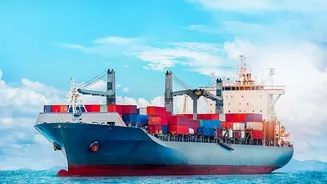
The power of SeaNav lies in its fidelity. The platform has been calibrated using a benchmark model of a 320-meter-long tanker, ensuring that the results from the virtual world closely mirror real-world physics and ship behaviour. Unlike simpler simulators, SeaNav also models the imperfections of a real vessel's sensors. It can introduce realistic noise and delays to simulate how systems would perform in challenging conditions like dense fog, heavy rain, or at night. The platform even includes an immersive Virtual Reality interface, allowing operators to experience the simulation from the ship's bridge, providing an unparalleled training tool for both AI systems and human crews. This capability is crucial for developing robust systems that can handle the unpredictable nature of the sea.
Boosting India's Maritime Ambitions
The development of SeaNav is more than just an academic achievement; it's a significant step forward for India's strategic goals. The platform directly aligns with national initiatives like the Sagarmala Programme and the Maritime India Vision 2030, both of which emphasize the need for smart ports, digital technologies, and autonomous systems. By providing a platform to develop and refine AI-assisted navigation, SeaNav can enhance safety and efficiency at major Indian ports, including Chennai, Mumbai, and Kochi, helping to reduce the risk of collisions and groundings. According to Dr. Suresh Rajendran, an Associate Professor in the department, the platform provides a scalable way to develop and validate these crucial technologies.
A Safer, Smarter Future for Shipping
The implications of SeaNav extend far beyond Indian waters. Its multi-vessel simulation capabilities have potential applications in coastal surveillance, search-and rescue operations, and even maritime defence. Furthermore, by enabling the creation of smarter navigation strategies, the technology can help reduce fuel consumption and lower carbon emissions across the global shipping industry. This innovation from IIT Madras demonstrates how virtual testing environments can de-risk and accelerate the adoption of new technologies. It provides the critical link between the concept of a self driving ship and its safe reliable implementation on the world's oceans positioning Indian engineering at the forefront of a global maritime revolution.