






Chiang Mai: Navigating the Rose of the North
Chiang Mai's charm lies in its blend of ancient temples within a compact Old City and a growing modern cafe and arts scene in areas like Nimman. The city is relatively flat and spread out, making it ideal for a mix of walking and various cheap transport
options. For trips inside the 1.5-km square of the Old City, walking is often the best and cheapest way to explore the dense collection of temples and markets. But to venture further, you'll need to get acquainted with the local modes of transit.
Mastering the Songthaew (Red Truck)
The iconic red trucks, known as songthaews, are the backbone of Chiang Mai's public transport. They operate as a hybrid between a bus and a shared taxi, cruising the main streets without a fixed route. To use one, simply flag it down, tell the driver your destination (a major landmark is best), and if they are heading in that general direction, they'll nod you aboard. Fares for shared rides within the core tourist areas—like from the Old City to the Nimman neighborhood or the Night Bazaar—are typically a flat rate of around 30 THB per person. Longer trips might cost 40-60 THB. You pay in cash when you get off; just press the buzzer on the ceiling to signal your stop. It’s a quintessential Chiang Mai experience that’s both affordable and authentic.
Tuk-Tuks, Rentals, and Ride-Sharing
For a more direct, private ride, tuk-tuks are everywhere. However, they are significantly more expensive than songthaews, with short trips costing between 80-150 THB. Always negotiate the price before you get in. Ride-sharing apps like Grab are also prevalent and offer the convenience of upfront pricing, which is particularly useful for late-night travel or trips to the airport. A GrabCar ride from the airport to the Old City typically costs between 80-180 THB. For ultimate freedom, especially for exploring outside the city like Doi Suthep, renting a scooter is a popular choice. Daily rates for a standard 125cc scooter are around 150-300 THB. Just ensure you have the correct license and always wear a helmet.
Krabi: Coastal and Island Adventures
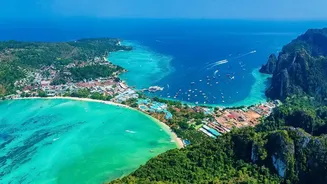
Krabi's geography is defined by its dramatic limestone karsts and stunning coastline, with key destinations like Ao Nang, Railay Beach, and numerous islands. Here, your transportation shifts from land to sea. While songthaews and scooter rentals are common for getting around mainland areas like Ao Nang and Krabi Town, the real adventure involves the water. Songthaews connect Krabi Town and Ao Nang along a fixed route, offering a cheap way to travel between the two hubs.
The Essential Long-Tail Boat
Long-tail boats are to Krabi what songthaews are to Chiang Mai—an essential and iconic mode of transport. These colourful wooden boats are the only way to reach beaches cut off by cliffs, such as the famous Railay Beach. You can buy tickets for shared boats at kiosks in Ao Nang. A one-way trip to Railay costs about 100 THB per person. For island hopping, you have two main choices: join a group tour or charter a private long-tail boat. A private charter for a half-day (4 hours) can cost around 2,500-3,500 THB, which can be economical for a small group wanting flexibility. This allows you to set your own pace, avoiding the crowds that flock to popular spots like Poda Island and Chicken Island. Be aware that national park fees (often 200-400 THB per person) are usually an additional cash expense.