



In the vast expanse of our solar system, a tiny, fast-spinning object named 1998 KY26 is posing a big puzzle for scientists. It moves in a way that suggests it might be a 'dark comet' in disguise, but new research indicates it's too warm inside.
Meet Asteroid 1998 KY26
First
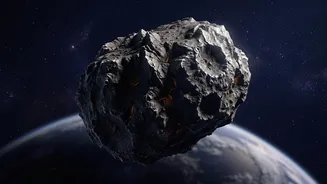
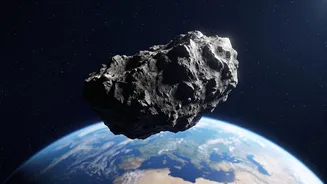
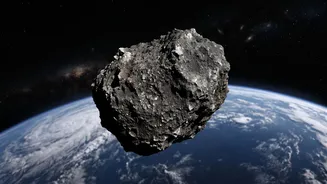
discovered in 1998, 1998 KY26 is a near-Earth asteroid that is remarkable for its tiny size and incredible speed. Measuring only about 11 metres in diameter—roughly the size of a small bus—it is one of the smallest celestial bodies ever studied in detail. What truly sets it apart is its rotation: it completes a full spin every 5.35 minutes. This rapid rotation places it in a special category of fast-spinning objects that challenge our understanding of asteroid structure and cohesion. Its orbit brings it relatively close to Earth, making it an object of great interest and the target for an ambitious future space mission. However, it’s not just its speed that has astronomers intrigued; the asteroid is exhibiting a slight, unusual acceleration that cannot be explained by gravity alone.
An Asteroid Behaving Badly
Most asteroids follow predictable paths shaped by the gravitational pull of the Sun and planets. Some are also gently pushed by the pressure of sunlight itself. But 1998 KY26 shows an extra, non-gravitational acceleration that has left scientists searching for a cause. One leading hypothesis was that it could be an 'active asteroid' or a 'dark comet'. These are objects that have asteroid-like orbits but exhibit comet-like behaviour, such as releasing gas. This process, known as sublimation, happens when buried ice turns directly into gas when heated by the Sun. This escaping gas acts like a tiny rocket engine, giving the object a gentle push and altering its trajectory. Since 1998 KY26 showed no visible tail, the 'dark comet' theory seemed like a perfect fit for its mysterious movements.
The Heat of the Matter
A recent study from aerospace engineers at the Georgia Institute of Technology has cast serious doubt on the dark comet theory. Researchers Korbin Hansen and Masatoshi Hirabayashi created detailed thermal models to calculate the temperatures both on the surface and inside 1998 KY26. Their findings, published in the journal Icarus, suggest the asteroid is simply too hot to hold onto water ice for long. For subsurface ice to persist over astronomical timescales, the temperature needs to stay below approximately 145 Kelvin (-128 degrees Celsius). However, the models show that even the coldest parts of 1998 KY26 have an average temperature of at least 212 Kelvin (-61 degrees Celsius). At this temperature, any significant amount of water ice would have sublimated and vanished long ago.
A Fleeting Supply of Ice
The researchers' calculations paint a stark picture for the asteroid's potential as an icy body. They estimated that if just 1% of the asteroid's mass was water ice, it would completely disappear in a little over 2,000 years. More critically, if this sublimating ice were the sole cause of the asteroid's strange acceleration, the supply would be exhausted in a mere 62 years. Given that the asteroid is presumed to be billions of years old, this makes the presence of ancient ice highly unlikely, unless it only recently moved into its current orbit near the Sun. While that possibility can't be entirely ruled out, the new temperature data strongly suggests scientists may need to look for another explanation for the asteroid's extra push, such as a more complex effect of solar radiation pressure.
A Date with Hayabusa2
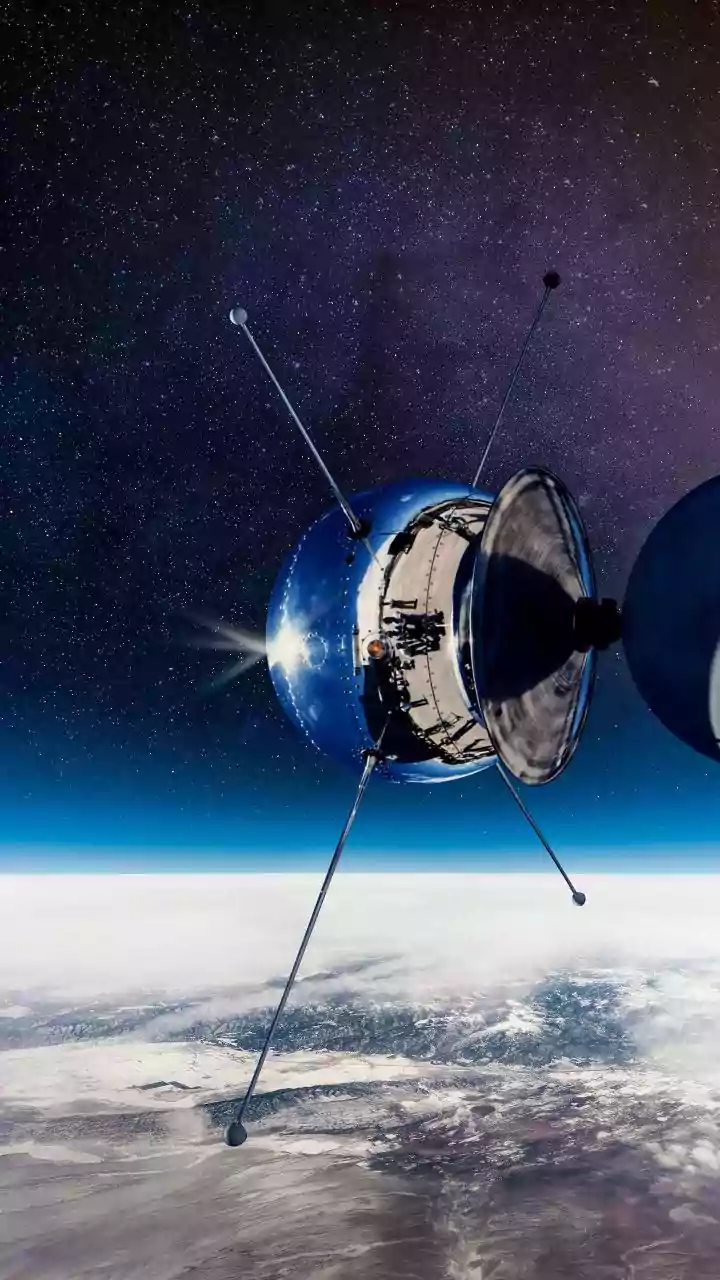
The good news is that this cosmic puzzle may not remain unsolved for too long. The Japanese Aerospace Exploration Agency's (JAXA) Hayabusa2 spacecraft, famous for its successful sample return from the asteroid Ryugu, is currently on an extended mission. Its final destination is 1998 KY26, with a planned rendezvous in July 2031. This will mark the first time a space mission has visited such a small, rapidly rotating asteroid. The Hayabusa2 probe will study the object up close, analysing its composition, structure, and environment. These direct observations will provide definitive answers about whether any ice remains and will finally solve the mystery of its unusual acceleration, offering invaluable insights into the nature of the solar system's smallest inhabitants.