



Thinking Beyond an Earth-like Model
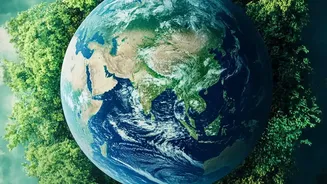
When we look for planets that could host life, the default has always been to search for a mirror of Earth. We look for rocky worlds orbiting stars like our Sun at a distance that allows liquid water to exist on the surface. This region is famously called
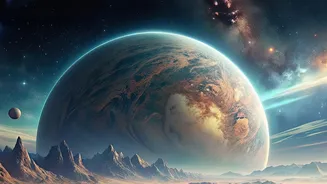
the 'habitable zone'. While this is a logical starting point, some scientists argue it's too Earth-centric. In 2014, astrobiologists René Heller and John Armstrong proposed a new concept: 'superhabitable' worlds. They argued that we shouldn't assume Earth is the best-case scenario for life. Instead, they suggested there could be planets or moons with conditions that are significantly more favourable for life to emerge and thrive, leading to greater biodiversity and biomass. This shifts the focus from finding an Earth 2.0 to identifying worlds that could be even better.
The Recipe for a Better Planet
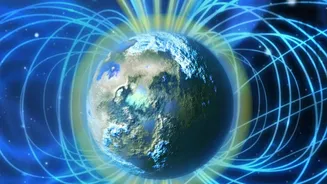
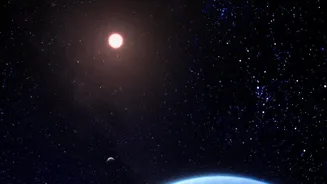
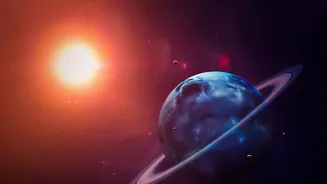
So, what makes a planet 'superhabitable'? Heller and Armstrong outlined several key characteristics. It starts with the star. Our Sun is a G-type star (a yellow dwarf). While it has served us well, its lifespan is about 10 billion years, and it will become more unstable over time. K-type stars, or 'orange dwarfs', are slightly smaller, cooler, and dimmer, but they are more stable and can live for 15 to 45 billion years. This extended, stable period gives complex life much more time to evolve. A superhabitable planet would also likely be slightly larger and more massive than Earth—perhaps up to twice Earth's mass. This would mean stronger gravity, which can help retain a thicker atmosphere, and more surface area for life to flourish. More mass also means a warmer core for longer, powering plate tectonics and magnetic fields that protect the surface from cosmic radiation.
Why Warmer and Wetter Is Better
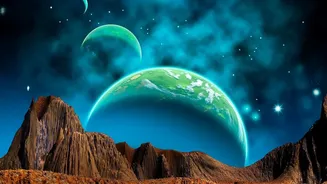
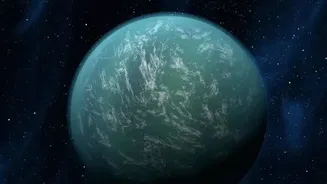
Temperature is another critical factor. While we thrive on Earth, our planet has experienced ice ages and extreme heat. A superhabitable world would likely have an average surface temperature slightly warmer than Earth's, perhaps around 25°C (77°F). Research suggests that biodiversity on Earth tends to peak in warmer, humid regions like tropical rainforests. A consistently warmer global climate, with higher humidity and cloud cover, could create a more stable and life-friendly environment across the entire planet, avoiding large ice caps and deserts. The distribution of water is also key. Instead of massive continents and deep oceans, a superhabitable world might have a landscape of smaller continents and archipelagos in shallow seas. This would create extensive coastlines and shallow aquatic environments, which are hotspots for biodiversity on Earth.
Challenging the 'Mediocrity Principle'
The idea of superhabitable worlds challenges a long-held idea in astronomy known as the principle of mediocrity. This principle suggests that there is nothing special about Earth or our place in the universe. Heller and Armstrong turn this on its head, arguing that if we are not special, then it is statistically likely that planets with better conditions for life exist. In other words, Earth might be habitable, but it might just be average, or even sub-optimal, when compared to the full spectrum of possibilities across the galaxy. This doesn't mean Earth isn't precious; it is our only home. But it opens up the thrilling possibility that the cosmos might be filled with worlds that are not just habitable, but teeming with a diversity of life far beyond our own.
The Ongoing Search
Identifying these potential worlds is the next great challenge. In 2020, a team of scientists built on Heller and Armstrong's work to identify 24 potential superhabitable exoplanet candidates from the thousands of planets discovered so far. None have been confirmed, and they are all more than 100 light-years away, making them difficult to study with current technology. However, powerful instruments like the James Webb Space Telescope are beginning to analyse the atmospheres of distant exoplanets, searching for biosignatures—gases that could indicate the presence of biological processes. While the search for an Earth-twin continues, the hunt for a 'better-than-Earth' planet has added an exciting new dimension to our quest to find out if we are alone in the universe.