



The Problem with 'Crude' Protein
For over a century, the standard way to measure protein in food has been by determining its nitrogen content. This method gives us what is known as 'crude protein'. The logic is simple: proteins are made of amino acids, and amino acids contain nitrogen.
By measuring nitrogen and multiplying it by a standard factor (6.25), scientists estimate the total protein. However, this method is called 'crude' for a reason. It measures the total nitrogen present but doesn't distinguish between protein that your body can actually break down and absorb, and what it can't. It provides a rough estimate at best and doesn't reveal the true nutritional benefit you receive.
The Plant Protein Puzzle
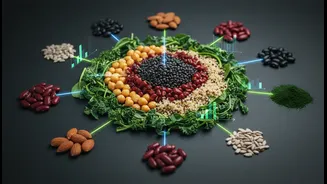
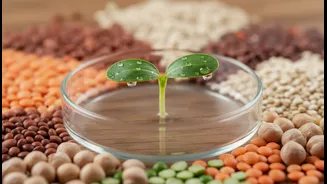
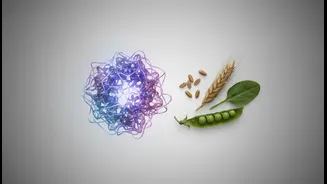
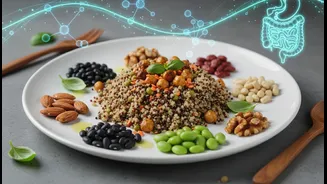
This discrepancy becomes especially important when evaluating plant-based proteins. Unlike many animal proteins, plant sources like legumes, grains, and seeds often contain 'anti-nutritional factors'. Compounds like phytates and tannins can bind to proteins and minerals, hindering their absorption in your gut. Furthermore, not all proteins have the same combination of essential amino acids—the nine building blocks our bodies cannot produce on their own. Many plant proteins are low in one or more of these essential amino acids. So, 20 grams of protein from lentils may not deliver the same usable benefit as 20 grams from an egg, simply because your body can't access all of it in the same way.
A Better Metric: PDCAAS
Recognizing the flaws in crude protein measurement, nutrition scientists developed the Protein Digestibility Corrected Amino Acid Score (PDCAAS). Adopted by the World Health Organization in 1991, this method evaluates protein quality by considering two key factors: the food's essential amino acid profile and its digestibility in humans. A score of 1.0 signifies a high-quality, highly digestible protein that provides all the essential amino acids we need. Animal proteins like milk and eggs typically score a 1.0, while many plant proteins score lower, reflecting their lower digestibility or less complete amino acid profiles. PDCAAS was a major leap forward, giving a much more accurate picture of a protein's real-world value.
The New Gold Standard: DIAAS
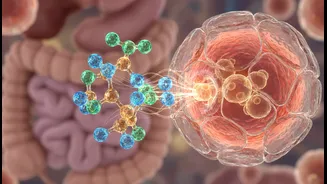
Science, however, rarely stands still. In 2013, the FAO proposed an even more advanced method: the Digestible Indispensable Amino Acid Score (DIAAS). DIAAS improves upon PDCAAS in several key ways. It measures the digestibility of each individual amino acid, rather than the protein as a whole, and it measures this at the end of the small intestine—the actual site of nutrient absorption. This provides a more precise reflection of how many amino acids are truly available for your body to use. Unlike PDCAAS, which is capped at a score of 1.0, DIAAS scores can exceed 100, allowing for a clearer ranking of excellent protein sources. For these reasons, DIAAS is now considered the most accurate method for determining protein quality.
What This Means For Your Plate
For the everyday consumer in India, this doesn't mean you need to abandon your dals and legumes. What it does mean is that protein quality is just as important, if not more so, than sheer quantity. To maximize the protein quality from plant-based foods, variety is key. Combining different sources, like eating rice with beans or lentils, can create a complete amino acid profile. Simple preparation methods like soaking, sprouting, and fermenting can also reduce anti-nutritional factors and improve nutrient availability. As the market for plant-based alternatives grows, look for brands that go beyond just listing the crude protein number. Those that discuss their amino acid profiles or even reference digestibility scores are demonstrating a commitment to true nutritional quality.