





Cosmic Lighthouses in Deep Space
To understand the challenge, we first need to understand the tools. At the heart of this story are neutron stars, the incredibly dense, city-sized remnants of massive stars that exploded. Some of these neutron stars, known as pulsars, spin at dizzying
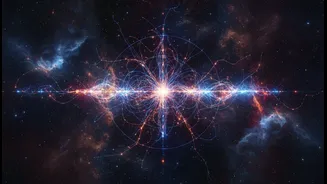
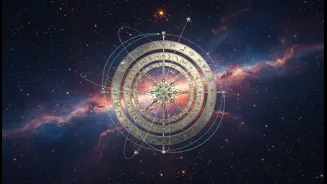
speeds, some hundreds of times per second. This rapid rotation, combined with intense magnetic fields, creates powerful beams of radiation that shoot out from their magnetic poles. As the star spins, these beams sweep across the cosmos like a lighthouse. From Earth, we see a regular 'pulse' each time the beam points our way. It's this astonishing regularity that makes them potential navigation beacons.
Building a Galactic GPS
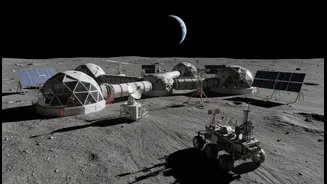
NASA's goal is to harness these cosmic clocks to create a deep space navigation system, a sort of galactic GPS. The project, known as SEXTANT (Station Explorer for X-ray Timing and Navigation Technology), uses the NICER telescope on the International Space Station to detect X-ray signals from various pulsars. By timing the arrival of these pulses from at least four different pulsars, a spacecraft can triangulate its own position in space, autonomously, without needing to phone home to Earth's Deep Space Network. This capability is seen as essential for future missions to the Moon, Mars, and beyond, offering a resilient and independent navigation method. Early tests have been promising, demonstrating that the concept works by locating the ISS in its orbit to within a few kilometers.
A Newly Understood Hurdle
The headline of this story refers to the 'Lighthouse Pulsar Map,' a conceptual name for this system. The complication arises from a deeper look into the environment around these pulsars. A recent result, likely from NASA's IXPE (Imaging X-ray Polarimetry Explorer) telescope which studies magnetic fields, has highlighted the complexity of these systems. The research confirmed a key theory about how high-energy particles escape from one particular pulsar along magnetic field lines. However, it also revealed that the environment, a mix of plasma and magnetic fields, is not the same for all pulsars. The successful model for one type of pulsar environment may not apply to all others.
Why One Size Doesn't Fit All
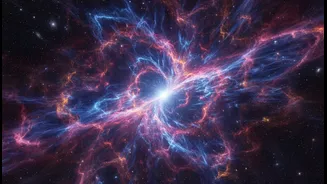
The universe is rarely simple. Pulsars exist in a variety of states. Some are in binary systems, orbiting another star, which creates a complex, magnetized environment as the pulsar's wind interacts with its companion. Others are isolated. The key issue is the interplay between the plasma (superheated, charged particles) and the magnetic field in the immediate vicinity of the pulsar, known as the pulsar wind nebula. Some environments are magnetically dominated, while others may have more turbulence or different particle dynamics. The recent findings for the 'Lighthouse Nebula' pulsar showed a striking difference between the magnetic fields observed in radio wavelengths versus X-ray wavelengths, providing evidence for a highly structured and complex system. This means a single, simple model for interpreting pulsar signals for navigation might lead to inaccuracies if it doesn't account for the specific 'flavor' of the pulsar being observed.
Recalibrating the Cosmic Map
This discovery isn't a failure for pulsar navigation; it's a vital refinement. Science progresses by uncovering and solving these very kinds of complexities. It means that building a robust, galaxy-wide navigation system requires more than just knowing where pulsars are. It requires a detailed understanding of the physics of each individual pulsar's environment. Instead of a single, universal 'Lighthouse' model, NASA will need to develop more sophisticated models that can account for the differences between pulsars. This finding highlights the need for more detailed surveys and characterization of potential navigation pulsars, understanding their magnetic fields and plasma environments to create more accurate timing solutions for each one.