




The Dark Store: A Hidden Engine
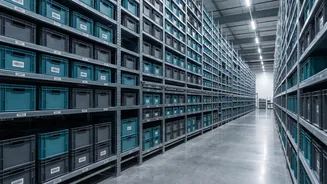
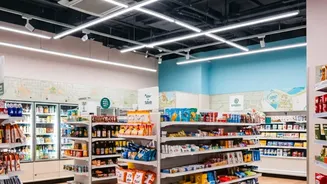
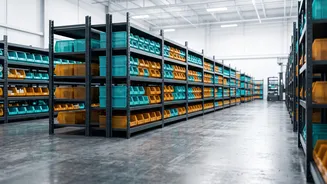
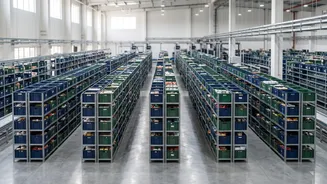
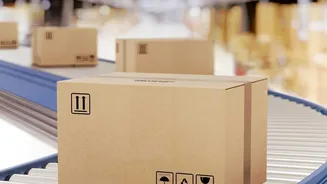
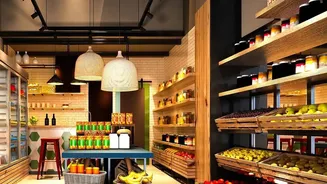
First, let's clarify what a dark store is. Unlike a traditional supermarket or kirana store, you can't walk into a dark store. These are small, strategically located warehouses exclusively for fulfilling online orders. They are packed with the most frequently
ordered items in a specific neighbourhood, from groceries and snacks to personal care products and basic electronics. This model is the backbone of quick commerce, allowing platforms like Zepto, Blinkit, and Swiggy Instamart to deliver goods in as little as 10 to 20 minutes by bringing inventory closer to the customer. The entire operation, from inventory management to delivery routing, is driven by technology and data analytics to ensure speed and efficiency.
Bengaluru: The Dark Store Capital
Bengaluru has emerged as the undeniable epicentre of India's quick-commerce war, boasting more dark stores than any other city. According to data compiled in mid-2026, the city is home to at least 629 dark stores, representing over 11% of the national total. This high concentration isn't just because it's a tech hub with high disposable income; the city's notorious traffic makes the convenience of instant delivery incredibly appealing. For many residents, the choice between a 45-minute drive to the supermarket and a 10-minute delivery is an easy one. This has led to a dense network where multiple platforms often compete to serve the same few square kilometres, creating a highly competitive environment.
The Fallacy of Store Count
For a time, the primary strategy for q-commerce players was aggressive expansion — a land grab for territory measured in the number of dark stores opened. More stores meant wider coverage and, theoretically, more customers. However, the industry is now maturing beyond this simple metric. The core issue is that every dark store is a fixed-cost operation. Rent, electricity, staffing, and inventory holding costs run 24/7, regardless of whether the store is processing 100 or 1,000 orders. A sprawling network of underutilised stores can quickly drain capital. The focus is shifting from simply having the most locations to achieving high 'throughput' or 'order density' at each one. It's not about how many stores you have, but how much business each one is doing.
Order Volume and Density: The Real Metrics
Profitability in quick commerce is a game of operational efficiency. Recent analyses reveal a significant difference in how effectively platforms use their assets. For example, in the fourth quarter of fiscal year 2026, Zepto was reportedly extracting 2,140 orders per store per day from its network. In contrast, Blinkit saw 1,357 orders and Instamart 1,093. This shows that a company with a smaller store footprint can have superior throughput. The key to success lies in optimising delivery routes, clustering multiple orders in a single trip to reduce costs, and using predictive analytics to stock exactly what a neighbourhood wants, minimising waste. As platforms mature, the battle is being won not by the largest footprint, but by the smartest one.
Average Order Value Completes the Picture
Even high order volume isn't enough if the basket sizes are too small. Another critical metric is the Average Order Value (AOV). A higher AOV helps absorb delivery costs, making each transaction more profitable. Here, the story flips. In the same Q4 FY26 period, Blinkit led with an AOV of ‘525, followed by Instamart at ‘504, while Zepto's was ‘387. This is why platforms are expanding beyond groceries into higher-margin categories like beauty products, electronics, and premium goods. They are also encouraging customers to buy more per transaction through bundles and offers. Ultimately, the winning formula is a combination of high order density and a healthy average order value.