




Beyond the Picture Postcard
When we think of data from space, we usually picture the breathtaking images from telescopes like the James Webb or Hubble. While these visuals are stunning, they are themselves translations. Telescopes collect information in the form of digital data—ones
and zeros—often from light beyond the visible spectrum, like X-rays or infrared. Astronomers process this data into the colourful images we know and love. But visualization is just one option. A growing field called data sonification takes that same digital information and turns it into sound. This process allows us to experience celestial phenomena in a completely new way, using our ears to explore the cosmos.
What Does a Black Hole Sound Like?
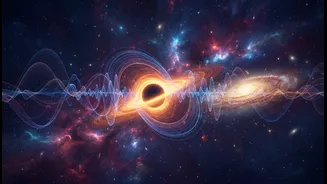
While sound as we know it can't travel through the vacuum of space, that doesn't mean space is silent. In 2022, NASA released an eerie, haunting audio clip derived from the black hole at the center of the Perseus galaxy cluster, 250 million light-years away. Scientists detected actual pressure waves—real sound waves—rippling through the hot gas surrounding the black hole. These waves were at a frequency 57 octaves below middle C, far too low for human ears. By scaling them up quadrillions of time, they made the inaudible audible, revealing a deep, otherworldly wail. This isn't just a gimmick; it's a new way to study the dynamics of galaxy clusters. Other sonification projects have turned data from the James Webb Space Telescope's view of the Carina Nebula into a buzzing soundscape and the Crab Nebula's X-ray data into a chorus of bell-like sounds.
The Science of Hearing Data
Sonification is more than just an artistic project; it is a powerful tool for scientific discovery and accessibility. The human ear is exceptionally good at detecting subtle patterns, rhythms, and changes over time that our eyes might miss in a complex visual chart. By listening to data, astronomers can identify new patterns in stellar life cycles, galactic structures, or the behavior of high-energy particles. Furthermore, sonification makes astronomy accessible to people who are blind or have low vision, opening up the wonders of the universe to a wider audience. Projects at NASA's Chandra X-ray Observatory specifically collaborate with accessibility experts to ensure these audio representations are both captivating and scientifically informative.
Seeing the Universe in a New Light
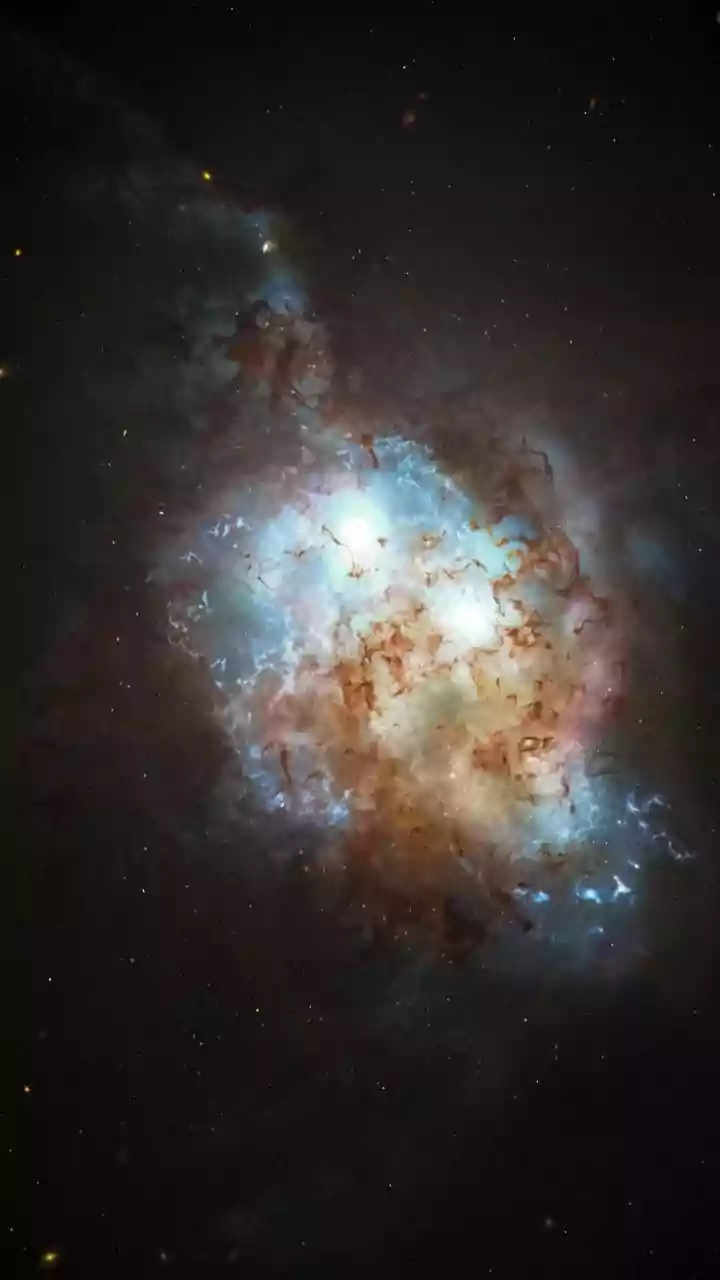
Just as sonification gives us a new way to hear data, advanced visualization techniques allow us to see it in ways that go far beyond a static image. Astronomers use false-colour imaging to represent different wavelengths of light, assigning colours to phenomena our eyes could never see, like X-rays (often shown as blue or purple) or infrared (often red). This allows scientists to highlight specific features, such as jets of gas shooting from a black hole or the temperature differences in a nebula. Other methods create interactive 3D models from data cubes, allowing researchers to virtually fly through a simulated galaxy collision or explore the structure of a comet's coma. These visualizations are not just illustrations; they are dynamic analytical tools that provide a deeper, more intuitive understanding of complex systems.